Ever stare at a long to-do list with no idea where to actually start? Prioritization systems exist to solve exactly that problem. But not every system works the same way, and choosing the right one matters more than people realize.
What Is the Eisenhower Matrix?
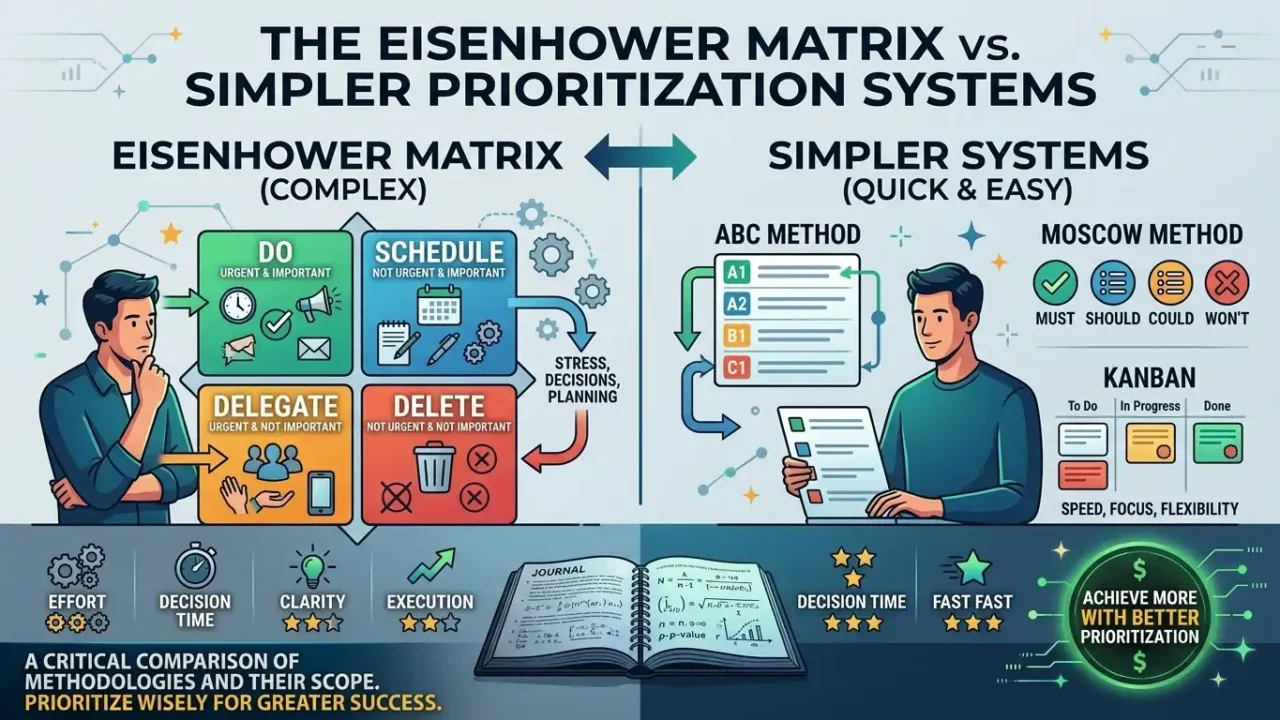
The Eisenhower Matrix sorts tasks into four categories based on urgency and importance. Tasks are labeled as urgent and important, important but not urgent, urgent but not important, or neither. This structure helps clarify what truly deserves your attention versus what simply feels pressing.
Why the Matrix Works So Well
This system forces a clearer distinction between what’s genuinely important and what’s just noisy or reactive. Many people spend too much time on urgent, low-value tasks while important work gets pushed aside. The Eisenhower Matrix directly addresses this common productivity trap.
Deep Work vs Multitasking: Which One Actually Makes You Productive?
The Downside of a Four-Box System
Despite its usefulness, sorting every task into four categories can feel time-consuming for smaller daily to-do lists. Not every task clearly fits neatly into one box, which can create unnecessary decision fatigue. For simple days with few tasks, this level of structure sometimes feels like overkill.
A Simpler Alternative: The One Big Thing Method
Some people prefer identifying just one essential task to complete each day before anything else. This method removes decision fatigue by focusing energy on a single, meaningful priority. It works especially well for people who feel overwhelmed by more complex prioritization frameworks.
The ABC Prioritization Method
The ABC method ranks tasks simply as A for must-do, B for should-do, and C for nice-to-do. This system offers more structure than picking just one task, without the complexity of a full matrix. It’s a solid middle-ground option for people who want clarity without extra steps.
Time-Based Prioritization Instead of Categories
Some prioritization systems focus purely on time estimates rather than urgency or importance labels. Tackling the shortest tasks first, for example, can create quick momentum early in the day. This approach works well for people motivated by visible progress rather than strict categorization.
The Hidden Cost of Constant Distractions
Which System Fits Which Type of Person
People who manage complex workloads with competing deadlines often benefit most from the Eisenhower Matrix’s structure. Those with simpler, more predictable days may find lighter systems like the ABC method more practical. Matching the system to your actual workload matters more than picking the most popular method.
Combining Systems for Better Results
Many productive people don’t rely on just one method, they blend approaches based on the day’s demands. Using the Eisenhower Matrix for major weekly planning while relying on simpler daily methods often works well. This flexible combination avoids over-complicating simple days while still handling complex weeks effectively.
Final Thoughts
The Eisenhower Matrix offers valuable structure for complex workloads, but it isn’t the only effective prioritization system available. Simpler methods can work just as well, especially for smaller, more predictable task lists. The best approach ultimately depends on your workload, personality, and how much structure actually helps you focus.
Call to Action
Which prioritization method works best for you? Share this article with someone drowning in their to-do list, and drop your thoughts in the comments below. Continue exploring Aziz Publishing Knowledge Library for more evidence-based articles on productivity, psychology, habits, and mindset to help you build systems that support deeper focus, better decisions, and lasting personal growth.