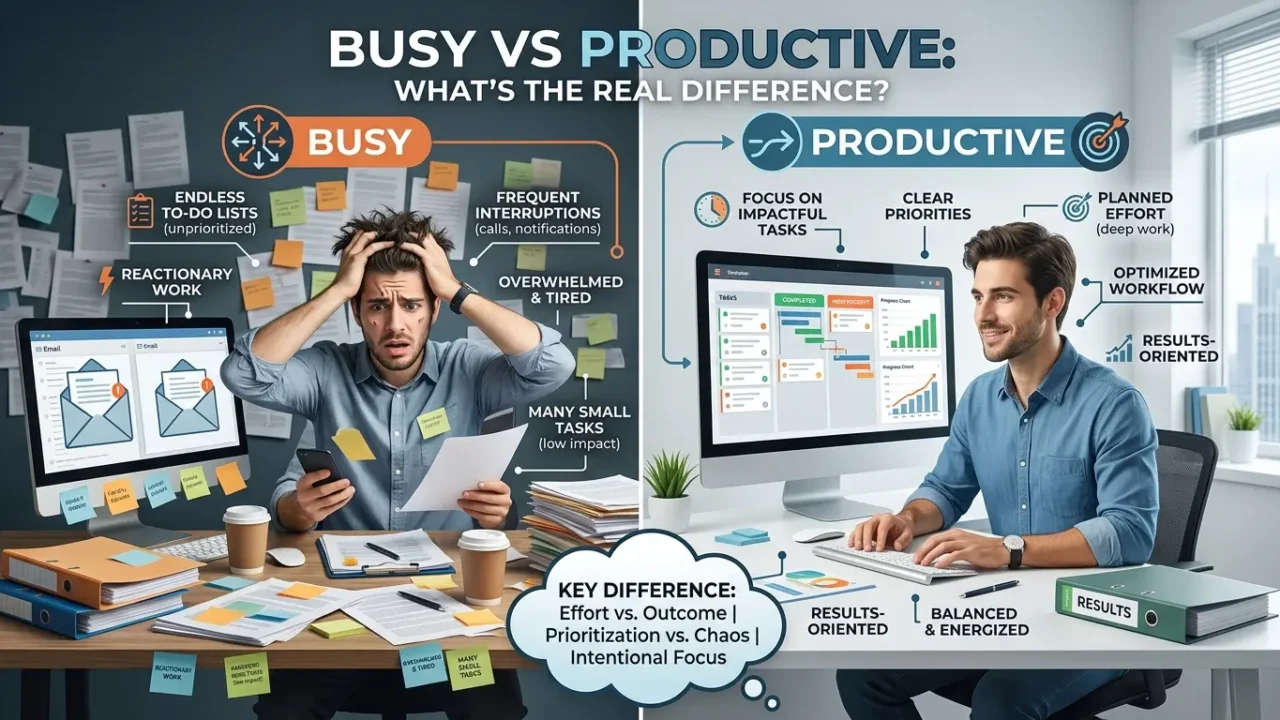
Ever end a jam-packed day and still feel like you got nothing done? You’re not lazy or disorganized — you’re just measuring the wrong thing.
Busy Feels Productive, But It Isn’t
Being busy gives you a rush of motion: emails answered, meetings attended, tasks checked off one after another. But motion isn’t the same as progress toward something that actually matters. You can spend eight hours “working” and still not move your biggest goals forward at all, and that gap between activity and achievement is exactly where the busy trap lives. It’s easy to mistake a full calendar for a productive life, until you realize the two rarely overlap as much as they should.
Why Our Brains Love Busyness
Busyness feels good because it mimics achievement without requiring hard decisions. Every small task you complete gives your brain a tiny dopamine hit, and that quick reward reinforces the cycle over and over again. This is why answering easy emails often feels more satisfying than tackling one big, important project that actually deserves your attention. Your brain naturally prefers quick, visible wins over slower, more meaningful ones, even when those meaningful tasks are the ones that would genuinely move your life or career forward.
Productivity Is About Outcomes, Not Hours
Real productivity isn’t measured by how long you worked, but by what actually changed because of that work. Two people can log the exact same number of hours and walk away with wildly different results, and the difference usually isn’t effort at all. It’s focus, clarity, and a clear sense of what truly matters versus what merely feels urgent in the moment. Once you start measuring your day by outcomes instead of hours logged, the whole concept of “productive” starts to look completely different.
Why Async Communication Is a Real Productivity Skill
The Myth of Multitasking
Juggling five tasks at once feels efficient, but in reality, it almost never is. Constant task-switching drains mental energy far faster than focused, single-tasked work ever does, and it quietly slows down your actual output. Research shows it can take over twenty minutes to fully refocus after even a small interruption, which means that “quick check” of your phone costs a lot more than it seems to in the moment. Multitasking often just creates the illusion of speed while actually making everything take longer.
Busywork Often Hides Avoidance
Sometimes staying busy is really just a clever way to avoid the harder, more important work sitting on your plate. Cleaning out your inbox or reorganizing your desk feels safer than starting a difficult, high-stakes project that carries real pressure. This kind of busyness isn’t laziness at all; it’s a subtle form of self-protection your brain uses to dodge discomfort. Unfortunately, it still leaves you exactly where you started, no matter how busy the day felt.
How to Spot the Difference in Your Own Day
A simple way to check yourself is to ask, at the end of each day, whether you moved something important forward. If the honest answer is no, you were likely busy rather than genuinely productive, regardless of how full your schedule looked. Another useful test is checking whether your tasks actually connect to a real goal you care about. If they don’t, they’re probably just filler dressed up as important work.
Shifting From Busy to Truly Productive
Start each day by picking one task that genuinely matters, rather than scattering your energy across ten small, low-impact ones. Finishing that single meaningful task will move the needle far more than a dozen minor tasks ever could combined. It also helps to protect blocks of focused, uninterrupted time and treat them as non-negotiable parts of your schedule. Fewer interruptions almost always translate into deeper work and noticeably better results by the end of the day.
25-Minute Pomodoro Too Short? What Science Says
Small Habits That Create Real Progress
Try time-blocking your calendar around your actual priorities instead of letting other people’s requests quietly dictate your entire day. This simple shift puts you back in control of your time, rather than constantly reacting to whatever lands in your inbox. It also helps to end each day with a short review of what genuinely moved forward, even if it’s just one thing. Over time, this small habit rewires the way you think, training you to value real impact over sheer activity.
Final Thoughts
Being busy will always feel urgent, but urgency isn’t the same thing as importance. Real productivity comes from clarity, sharp focus, and doing fewer things that truly matter instead of many things that don’t. Once you shift your mindset from hours worked to outcomes achieved, your days start feeling lighter, calmer, and far more meaningful.
Call to Action
If this hit home, share it with someone who’s always busy but never quite satisfied — and today, try picking just one task that actually moves the needle. Explore more evidence-based articles in the Aziz Publishing Knowledge Library to learn how psychology, habits, mindset, and decision-making shape the way we work, learn, and live.