
There is a learning trick used by Nobel Prize winning physicist Richard Feynman, and it is almost embarrassingly simple: if you cannot explain something to a twelve-year-old, you do not understand it yet. Here is the four-step technique built on that idea, the research behind it, and a 15-minute routine you can use today.
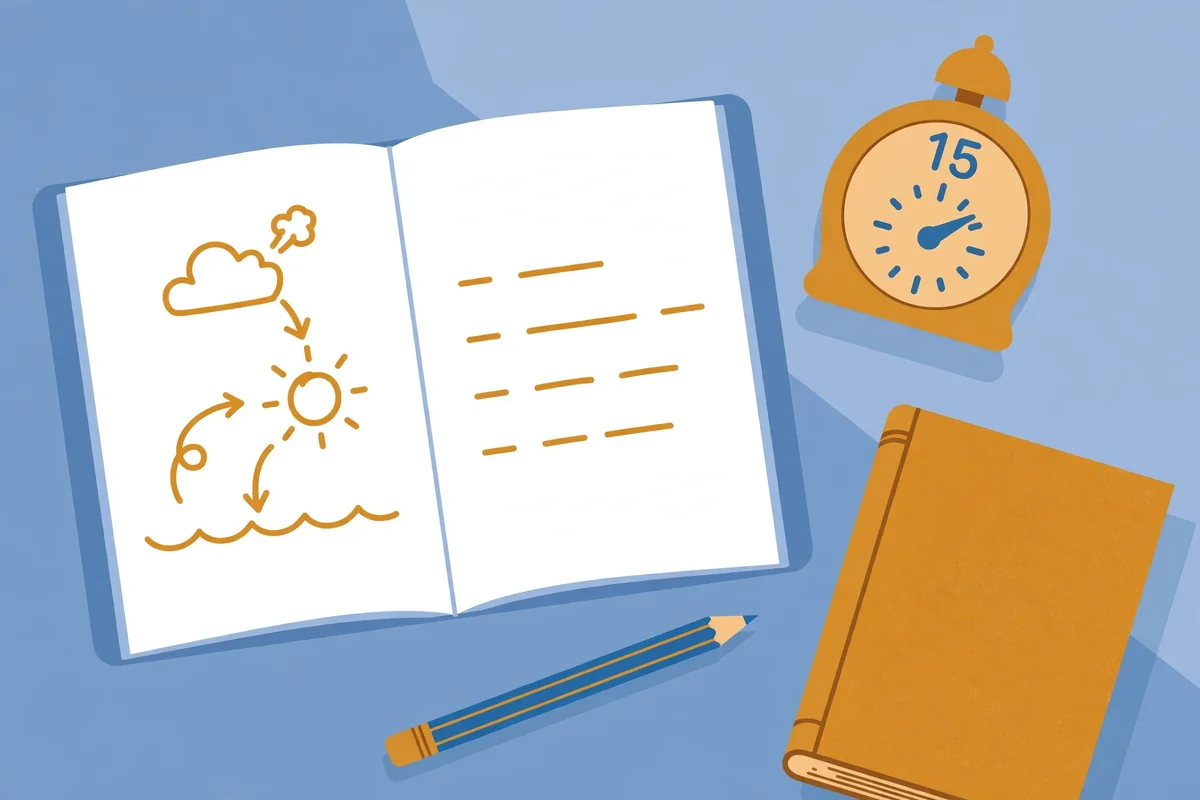
What the Feynman Technique Actually Is
The Feynman Technique is a study method with four steps: choose a concept, teach it in simple language, find the gaps in your explanation, and review and simplify until the explanation is clean. The name comes from Richard Feynman, famous for explaining quantum physics so clearly that students felt they understood it for the first time.
The method is summarized cleanly in Memo’s guide to the Feynman Technique: pick a topic, study it briefly, explain it as if teaching a beginner, then return to the source wherever your explanation wobbles. The wobbles are the whole point. They show you exactly what you have not learned yet.
Why Teaching Works Better Than Re-reading
Re-reading feels productive because the material looks familiar. That feeling is a trap. Familiarity is not knowledge, and it vanishes the moment someone asks you a question about it.
Teaching forces the opposite. To explain something, you must retrieve it from memory, organize it, and translate it into your own words. Each of those steps strengthens the memory. Research backs this up: a meta-analysis of self-explanation studies found an effect size of g = 0.55 across 64 reports, and testing beat restudying with a median effect of g = 0.55 across 159 effects from 61 studies. In plain language, these are medium-to-large effects, the kind that actually move exam results. A research-backed breakdown of the numbers is available in this October 2026 research review of the Feynman Technique.
The same principle connects to the site’s memory coverage. Spaced Repetition: The Memory Technique That Actually Works shows how timed review locks knowledge in, and How to Improve Memory explains the cognitive science behind retrieval. The Feynman Technique is the practice step that sits between learning and reviewing.
The 4 Steps, Worked Through
Here is the technique applied to a real example, learning how compound interest works:
- Step 1, choose and study: Pick one narrow concept. Read about compound interest for ten minutes: interest earned on both the original money and the interest already earned.
- Step 2, teach it simply: Explain it out loud as if to a twelve-year-old. “Your money earns money, and then that new money earns money too. That is why it grows faster over time.” No jargon allowed.
- Step 3, find the gaps: Notice where you stumble. Can you explain why monthly compounding beats yearly compounding? If not, that gap is your next study target.
- Step 4, review and simplify: Go back to the source, fill the gap, then re-teach the whole thing in even simpler words. Repeat until the explanation flows without notes.
A fuller guide with five practical applications, including 15 to 20 minute blocks and a “teaching vault” of explanations you keep, is available at Akiflow’s Feynman Technique guide, which also cites the 2025 research wave on retrieval practice.
Common Mistakes to Avoid
The technique fails in predictable ways. The first is teaching from notes instead of memory: if you are reading while explaining, you are not testing anything. Close the book first.
The second is hiding behind jargon. If your explanation needs the textbook’s words, you have memorized vocabulary, not understanding. The third is choosing topics that are too big. “Economics” is not a Feynman topic. “How supply and demand set a price” is.
The fourth is skipping step three. Most people re-teach the parts they already know because it feels good, and avoid the gaps because it feels bad. The gaps are where the learning lives.
A 15-Minute Daily Routine
You do not need an hour. Fifteen minutes a day is enough to make this a habit:
- Minutes 0 to 5: Pick one concept from something you studied today and explain it out loud, from memory, in plain words.
- Minutes 5 to 10: Note every gap and wobble, then check the source for exactly those points.
- Minutes 10 to 15: Re-teach the concept with the gaps filled, and write the clean explanation down. That note becomes your review material later.
Pair the routine with spaced review and the effect compounds: the Feynman Technique builds understanding, and spaced repetition keeps it. Used together, they cover both halves of learning.
Key Takeaways
- The Feynman Technique: choose a concept, teach it simply, find the gaps, review and simplify.
- Teaching beats re-reading because it forces retrieval, organization, and translation into your own words.
- Research supports it: self-explanation g = 0.55, testing vs restudying g = 0.55, teaching expectancy g = 0.48.
- Close the book before explaining, keep topics narrow, and never skip the gaps.
Frequently Asked Questions
What is the Feynman Technique in simple terms?
It is a study method where you learn something by teaching it in simple language. If you cannot explain it to a beginner, you have found a gap in your understanding.
What are the steps of the Feynman Technique?
Choose a concept, study it briefly, teach it in plain words from memory, identify where your explanation breaks down, then review the source and simplify until the explanation flows.
Does the Feynman Technique actually work?
Research says yes. Meta-analyses find medium-to-large effects for self-explanation and for testing over restudying, and teaching expectancy improves learning too.
How long does the Feynman Technique take?
Fifteen minutes a day is enough for one concept: five minutes teaching, five minutes checking gaps, five minutes re-teaching and writing the clean explanation down.
Final Thoughts
The Feynman Technique is humbling in the best way. It shows you, quickly and honestly, what you actually know and what you only recognize. That honesty is the whole advantage. Spend fifteen minutes a day teaching what you learned, and the gaps will close themselves.
Call to Action
If this gave you a better way to study, share it with someone who is stuck re-reading the same chapter. Explore the Aziz Publishing Knowledge Library for more guides on productivity, including deep work and atomic habits explained.

