Ever get into deep focus right as your 25-minute timer goes off? That frustrating interruption has left many people questioning the classic Pomodoro method. Science actually has some interesting insights into why this happens.
Where the 25-Minute Rule Actually Came From
The original Pomodoro Technique set 25-minute work sessions somewhat arbitrarily, based on personal preference rather than research. It wasn’t designed around specific brain science or attention span studies. This origin explains why the exact timing doesn’t work equally well for everyone.
What Science Says About Attention Spans
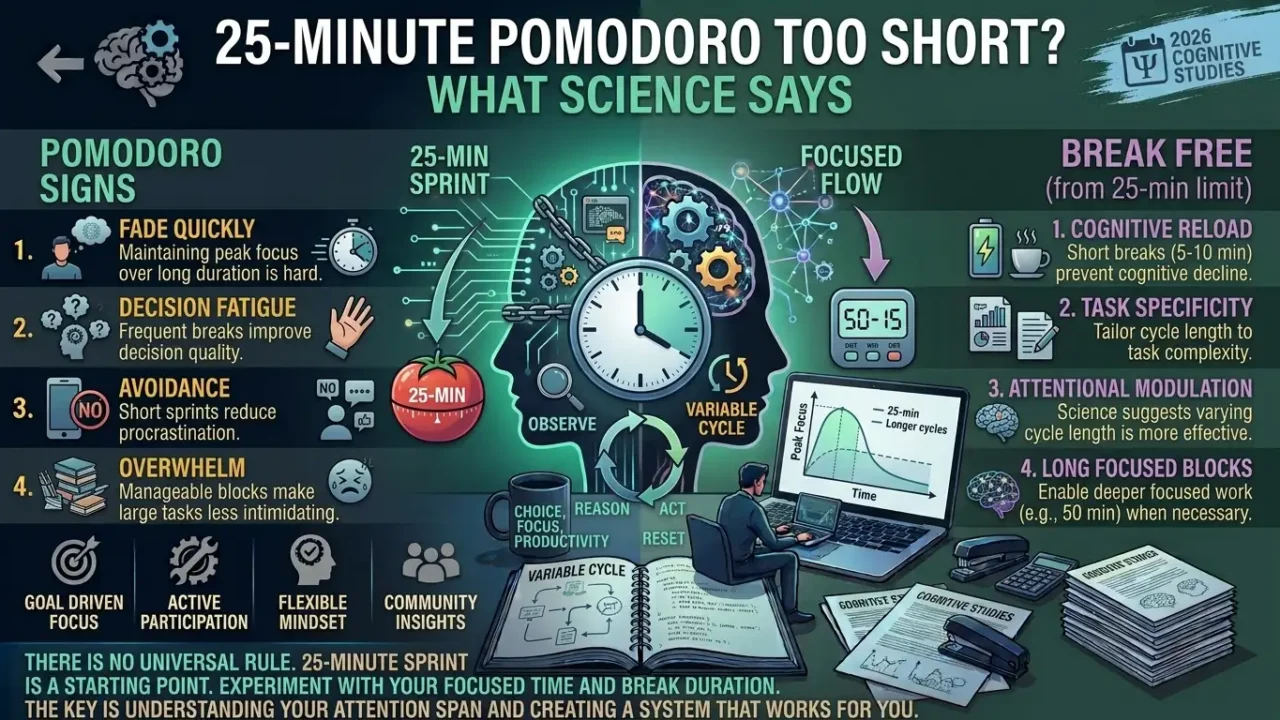
Research on sustained attention suggests focus naturally fluctuates rather than following one fixed, universal pattern. Some studies point to natural focus cycles lasting closer to 90 minutes for certain types of tasks. This suggests shorter, rigid time blocks may not align well with the brain’s natural rhythm.
Deep Work Explained: How to Focus Without Distractions
Why Shorter Sessions Work for Some Tasks
For simple, repetitive, or low-engagement tasks, shorter focus sessions can actually improve consistency and motivation. Frequent breaks help prevent boredom and mental fatigue during less stimulating work. In these cases, the traditional 25-minute Pomodoro format still holds real practical value.
Why Longer Sessions Work Better for Deep Work
Complex, creative, or highly engaging tasks often benefit from longer, uninterrupted focus periods instead. Constantly stopping every 25 minutes can disrupt the deeper thinking needed for problem-solving or creative work. Many people report better results extending focus sessions to 50 or 90 minutes for this type of task.
The Role of Ultradian Rhythms
Ultradian rhythms refer to natural cycles of alertness and energy that occur multiple times throughout the day. These rhythms suggest working in sync with your body’s natural energy peaks may be more effective than rigid time blocks. Paying attention to your own energy patterns can help determine your ideal focus session length.
Personalizing Your Focus Sessions
Rather than strictly following one fixed method, many productivity experts now recommend adjusting session length based on task type. Simple tasks might suit shorter Pomodoro-style sessions, while complex work benefits from extended focus blocks. This flexible approach often produces better results than rigidly sticking to one universal number.
Deep Work vs Multitasking: Which One Actually Makes You Productive?
How to Test What Works Best for You
Experimenting with different session lengths, like 25, 50, and 90 minutes, can help identify your personal focus sweet spot. Tracking energy levels and task completion during each format provides useful, personalized insight. This trial-and-error approach tends to be more effective than blindly following generic productivity advice.
The Bigger Lesson Beyond Timing
The real value of the Pomodoro Technique isn’t the exact 25-minute number, it’s the structured approach to focused work. Understanding this distinction allows people to adapt the method without losing its core benefits. Flexibility, guided by self-awareness, often outperforms rigid adherence to any single productivity rule.
Final Thoughts
The 25-minute Pomodoro isn’t inherently wrong, but it isn’t a perfect fit for every task or person either. Science suggests attention naturally varies, making personalized session lengths more effective than one fixed rule. Experimenting with different focus durations can help you find a system that truly matches how your brain works best.
Call to Action
Have you tried adjusting your Pomodoro sessions before? Share this article with someone who struggles with focus, and drop your thoughts in the comments below. Explore more evidence-based articles in the Aziz Publishing Knowledge Library to learn how psychology, habits, mindset, and decision-making shape the way we work, learn, and live.