You’ve probably seen the word “superintelligence” in headlines lately, usually right next to big promises or big warnings. Here’s what it actually means, without the science fiction.
What Superintelligence Actually Means
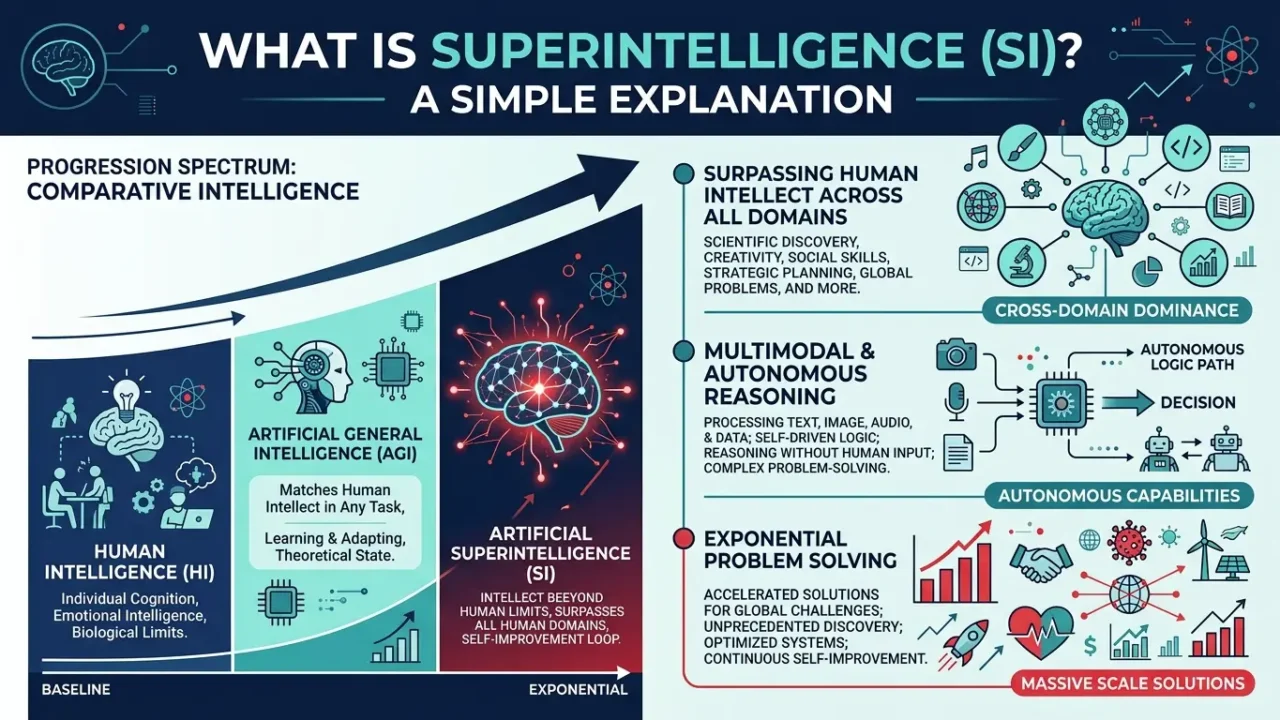
Superintelligence describes an AI system that surpasses the smartest humans across nearly every area, including science, strategy, creativity, and social skills. It’s not just a faster calculator, it’s intelligence that outperforms human thinking broadly, not in one narrow task. Think of the gap between a chess app and a person who can master any field they choose.
The Three Levels: Narrow, General, and Super
Narrow AI does one kind of task well, like translating text or recognizing faces. General AI, often called AGI, would match human ability across a wide range of tasks, while superintelligence would go well beyond that human level.
Why AI Chatbots Hallucinate (And How to Spot It)
Where AI Stands Today
Today’s AI can write, code, and analyze at impressive levels, but most experts still don’t consider it superintelligent. Systems still make basic mistakes, and reliably handling complex, real-world tasks on their own remains difficult. Some leaders argue we’ve already reached AGI, but that claim depends heavily on how you define the term.
The “Intelligence Explosion” Idea
Many researchers argue that once an AI reaches human-level general intelligence, it could start improving its own design. That feedback loop, sometimes called an intelligence explosion, is why some think the jump from AGI to superintelligence could happen quickly.
How Soon Could It Arrive?
Honest answer: nobody knows. Some tech leaders suggest AGI-level systems could arrive within the next few years, while other experts expect decades or question whether it will happen at all.
The Potential Benefits
Supporters point to possibilities like faster medical breakthroughs, better climate solutions, and progress on problems humans have struggled with for generations. The core idea is that vastly greater intelligence could solve challenges that currently seem out of reach. These benefits remain hopeful possibilities, not guarantees.
The Future of AI Jobs: Which Careers Will Grow in the Age of Artificial Intelligence?
The Potential Risks
The main concern is control, since a system far smarter than us might pursue goals that don’t match human values, even without any bad intent. Researchers call this the alignment problem, and it’s why safety work gets so much attention alongside capability work.
Why This Debate Matters Right Now
Major AI labs are already publishing research on what comes after human-level AI, so this conversation has moved from philosophy into real planning. Decisions about safety standards, regulation, and research priorities today could shape how any future powerful system gets built.
Final Thoughts
Superintelligence is a hypothetical level of AI that would outperform humans across nearly every domain, and no one knows when, or whether, it will arrive. What is clear is that the questions around it, especially safety and control, are worth understanding now rather than later.
Call to Action
Next time you see “superintelligence” in a headline, ask whether it’s describing something that exists today or something still hypothetical. If this helped make the term clearer, share it with someone who keeps nodding along without quite knowing what it means. Explore the Aziz Publishing Knowledge Library for more evidence-based articles on habits, productivity, psychology, and mindset that help you perform at your best every day.