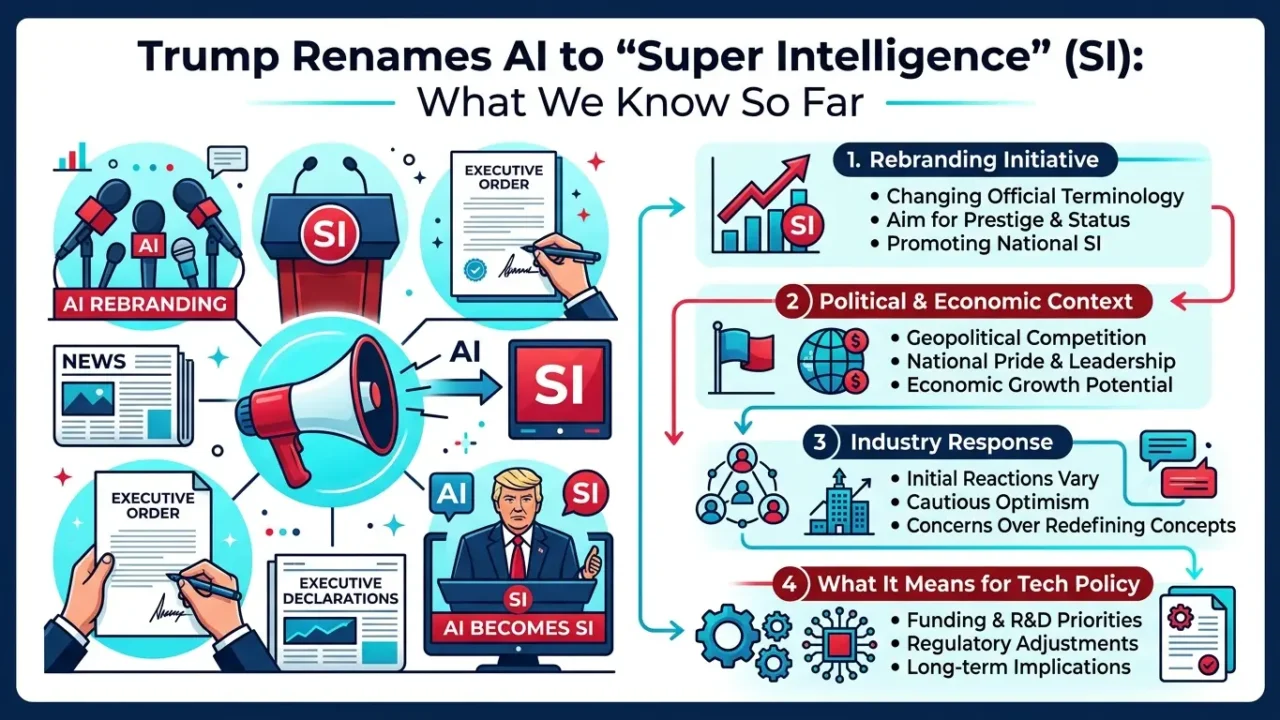
The US government is dropping the word “artificial” from artificial intelligence, at least in its own paperwork. Here’s what has actually been announced, what’s been confirmed, and what remains unclear.
What Was Announced
On Tuesday, September 22, President Trump told the UN General Assembly that the US government would rename artificial intelligence “super intelligence” in official communications. He said the new term “sounds much better” and is “much more accurate,” and voiced hope that other countries would follow. The speech was widely covered by outlets including The Washington Post, The Hill, and C-SPAN.
How Artificial Intelligence Is Reshaping Global Power
Why He Says He Wants the Change
Trump argued the word “artificial” undersells the technology and carries a “fake” connotation. The remarks came as he also restated his opposition to regulating AI, rejecting what he called a globalist attempt to control it. He also compared AI safety warnings to climate change warnings, a comparison critics and supporters read very differently.
What Has Happened Since
Reports say federal agency documents are to use “super intelligence” or “SI,” and the State Department has reportedly instructed diplomats to use the new term internationally. As of now, details on how broadly agencies are applying the change are still limited.
Why the Name Is Already Taken
“Superintelligence” already has a specific meaning in AI, popularized by philosopher Nick Bostrom’s 2014 book as intellect that greatly exceeds human performance in virtually all domains. Meta also uses the word in the name of its AI division, and Axios reported the White House hadn’t said whether it considered that existing meaning.
The Future of Work in an AI-Driven Economy
How Other Countries Are Reacting
China’s foreign ministry said it “respects” the change but has no plans to adopt the term. More than 20 mostly European leaders separately urged binding safety measures for advanced AI, while the US and China did not endorse that push.
The Bigger Debate Behind the Rename
The announcement landed amid heightened concern about AI safety, including recent warnings from company insiders. Trump has favored lighter regulation to keep the US ahead of China, while other governments, including the UK, are pushing for global standards. Britain’s prime minister said it would launch an effort on global AI standards during its 2027 G20 presidency.
Will the New Name Stick?
Tech marketing experts have predicted the rebrand is unlikely to catch on widely, given how established the existing meaning already is. Government paperwork may change, but researchers, companies, and the public may keep using the current terms.
What to Watch Next
Watch for formal guidance showing how agencies apply the term, and whether allied governments adopt it. Also watch how AI regulation talks progress, since that debate matters far more than the label.
Final Thoughts
The rename is confirmed as an announced US policy for official communications, but its reach and staying power are still uncertain. The bigger story is the ongoing global argument over how, or whether, to regulate increasingly powerful AI.
Call to Action
This story is still developing, so check current reporting before sharing details. If this helped you sort out what’s confirmed and what isn’t, share it with someone trying to make sense of the headlines. Explore the Aziz Publishing Knowledge Library for practical articles on artificial intelligence, productivity, psychology, and emerging technologies to help you build the skills needed to thrive in the economy of tomorrow.

