Ever ask an AI chatbot a question and get an answer that sounds confident but turns out completely wrong? That’s called hallucination, and it happens more often than most people realize. Understanding why it happens helps you use these tools far more safely.
What AI Hallucination Actually Means
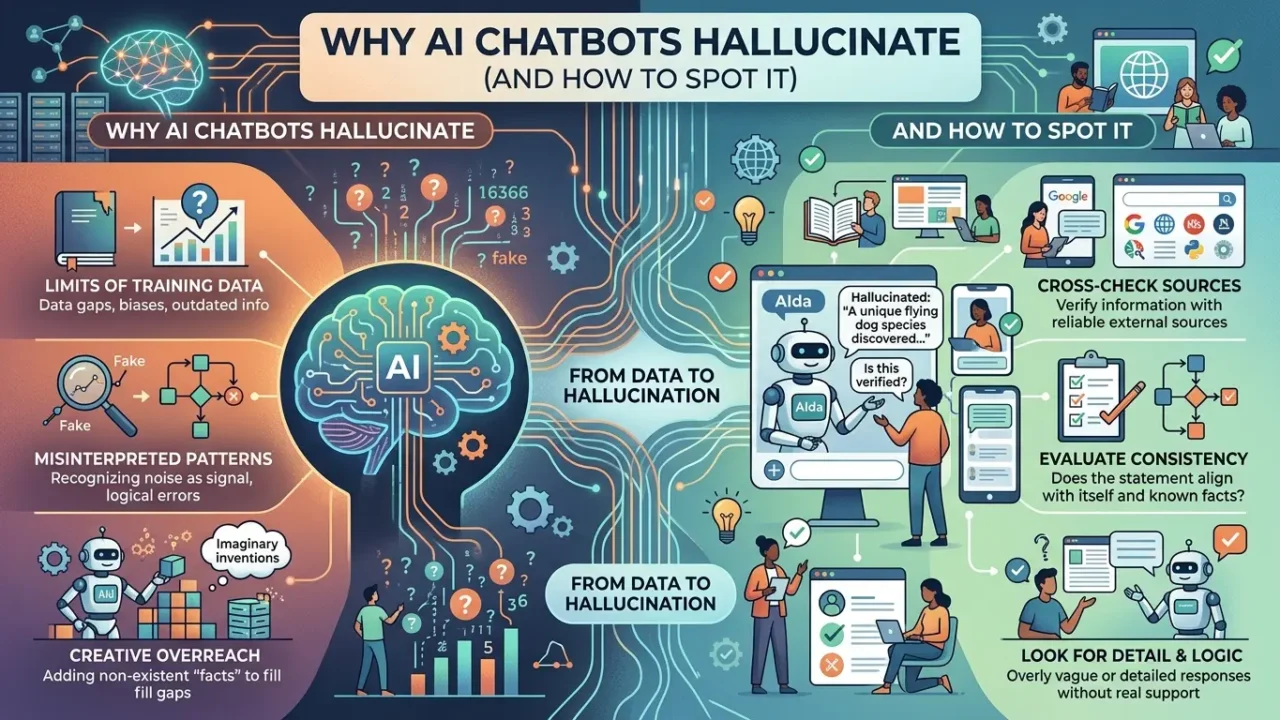
Hallucination refers to an AI generating information that sounds plausible but isn’t factually accurate. The model isn’t lying intentionally, it’s predicting likely-sounding text based on patterns, not verified facts. This distinction matters because it explains why errors can sound so convincing.
Why Language Models Generate False Information
AI chatbots work by predicting the next most likely word based on patterns learned from massive amounts of text. This process doesn’t inherently include fact-checking or real-time verification of accuracy. When a model lacks reliable information on a topic, it can still generate a confident-sounding, incorrect response.
Which AI Careers Are Worth Pursuing in 2026?
Why Confidence Doesn’t Equal Accuracy
One of the trickiest aspects of hallucination is that false answers often sound just as confident as accurate ones. AI models don’t naturally express uncertainty the way a cautious human expert might. This makes it easy for users to mistake fluent, well-structured writing for verified truth.
Common Situations Where Hallucinations Happen
Hallucinations tend to appear more frequently with very specific facts, dates, citations, or niche topics. Requests for exact statistics, quotes, or obscure historical details are especially prone to this issue. Being extra cautious in these specific scenarios can help you catch errors before relying on them.
How to Spot a Likely Hallucination
Watch for oddly specific details, like exact numbers or quotes, that seem too precise to verify easily. If a chatbot cites a source you can’t independently locate, that’s a strong warning sign. Cross-checking any critical information against a reliable, independent source remains your best defense.
How AI Agents Work: The Next Evolution Beyond Chatbots
Why Fabricated Sources Are a Major Red Flag
AI models sometimes generate citations or references that sound legitimate but don’t actually exist. This is one of the most common and easily overlooked forms of hallucination. Always verify cited sources independently before including them in anything important.
Practical Ways to Reduce Hallucination Risk
Asking AI models to clarify uncertainty, rather than just answering directly, can sometimes reduce confidently wrong responses. Providing more context or source material within your prompt also improves accuracy significantly. Treating AI output as a helpful draft, rather than a final verified answer, remains the safest overall approach.
Final Thoughts
AI hallucinations happen because language models predict plausible text rather than verifying absolute truth. Understanding this limitation helps you use AI tools more effectively without blindly trusting every response. Staying alert to red flags and verifying important details keeps you safely in control of the information you use.
Call to Action
Have you ever caught an AI chatbot hallucinating? Share this article with someone who relies on AI tools daily, and drop your thoughts in the comments below. Explore the Aziz Publishing Knowledge Library for more evidence-based articles on habits, productivity, psychology, and mindset that help you perform at your best every day.