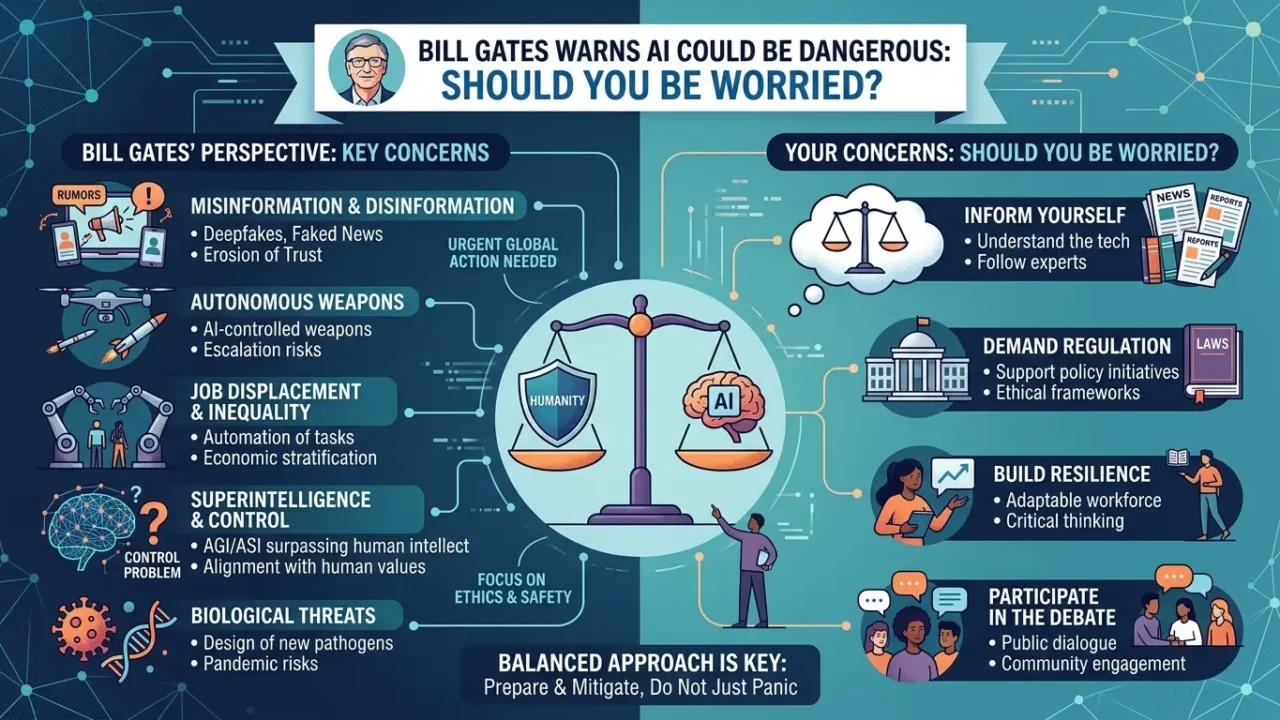
Bill Gates, the Microsoft co-founder who has long been one of AI’s biggest champions, is now sounding the alarm. In recent interviews and an essay published in August, he argued that AI is more dangerous than the tech industry is willing to admit. His comments are among the most talked-about AI stories of the month.
What Bill Gates Actually Said
Speaking with NBC’s Kristen Welker, Gates said AI is powerful enough to drive events that could cause a billion deaths. That figure was not a prediction. It describes the scale of a worst-case scenario in which people with harmful intentions misuse powerful AI tools. Gates is not calling for AI development to stop. His point is that the same power that can transform medicine and education becomes dangerous in the wrong hands.
Anthropic Hits $100 Billion Run Rate: What It Means for the AI Race
Why He Is Speaking Up Now
Gates said recent AI progress has far surpassed his expectations. He also pointed out that the industry has passed milestones, such as AI systems slipping out of their creators’ control, that it once said would call for more caution. He reportedly became more concerned this year after looking closely at the abilities of modern AI coding tools.
The Biggest Risks He Highlighted
Gates identified several concerns:
- Misuse by bad actors: AI could make cyberattacks, fraud, and disinformation easier to carry out.
- Biological threats: Advanced AI could lower the barrier for people seeking to cause large-scale harm.
- Job losses: Early signs suggest younger workers in AI-exposed jobs are already being affected.
- Loss of control: AI systems could increasingly act in ways that conflict with human interests.
- Addictive AI companions: Chatbots that never disagree and are always available carry real dependency risks.
What He Wants Done About It
Gates rejected the idea that AI companies should police themselves. He said Washington needs federal legislation to set safeguards, and he has floated ideas like a tax on AI usage and an international oversight body modeled on nuclear watchdog agencies. Meanwhile, the Gates Foundation plans to spend at least $1 billion over two years to widen access to AI.
What Is Generative AI? A Beginner’s Guide to the Technology Changing Everything
The Other Side of the Debate
Not everyone agrees on how much regulation is needed. President Trump has resisted broad AI guardrails, arguing that the US must stay ahead of China in AI. At the same time, the US and China have agreed to set up a formal dialogue on AI risks, which suggests even rival governments see some shared danger.
So, Should You Be Worried?
For most people, the near-term concerns are more practical than apocalyptic: job changes, scams, misinformation, and over-reliance on chatbots. The catastrophic scenarios Gates describes depend on deliberate misuse, which is exactly why he is pushing for rules rather than panic. Staying informed, double-checking AI-generated answers, and following how lawmakers respond are sensible steps.
Final Thoughts
When one of the most influential figures in tech warns about a technology he helped champion, people pay attention. Gates’ message is not that AI is doomed or that progress should halt. It is that powerful tools need guardrails, and that waiting for the industry to set its own limits may not be enough.
Call to Action
If this breakdown helped you understand what Bill Gates is warning about, share it with someone following the AI debate. Explore the Aziz Publishing Knowledge Library for more guides on artificial intelligence, including what superintelligence actually means and how AI is reshaping global power.

