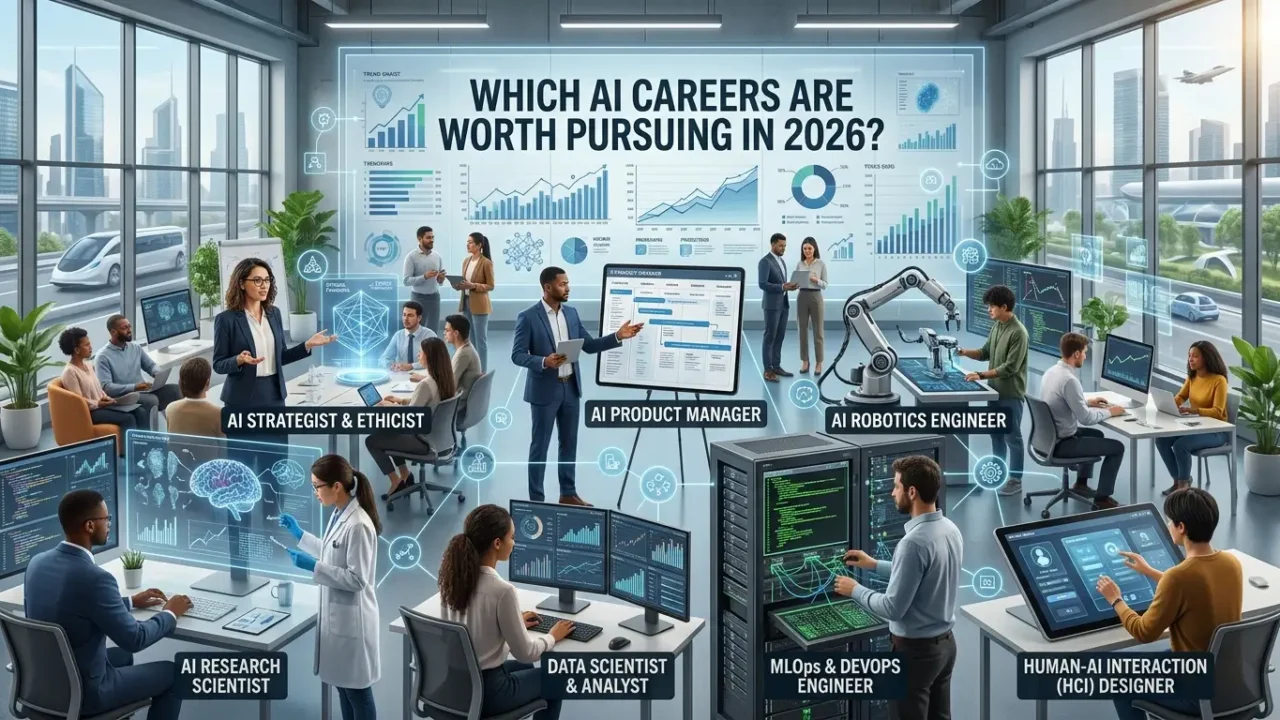
Everyone’s telling you to “learn AI,” but nobody’s explaining which jobs actually pay off. With so many buzzwords flying around, it’s easy to waste time chasing the wrong skills. Let’s cut through the noise and look at AI careers genuinely worth your effort.
Machine Learning Engineer
Machine learning engineers build and train the models that power AI applications across countless industries. This role requires strong programming skills, a solid grasp of statistics, and hands-on experience with real-world data. Demand for this position continues growing rapidly as more companies integrate AI directly into their core products.
AI Prompt Engineer
Prompt engineering has emerged as a surprisingly valuable skill in the world of generative AI tools. This role focuses on crafting effective inputs that get AI models to produce accurate, useful, and reliable outputs. While some call it a passing trend, companies are increasingly hiring specialists specifically to optimize how their teams interact with AI systems.
10 AI Agents Building Billion-Dollar Businesses in 2026
Data Scientist
Data scientists analyze massive datasets to uncover patterns that inform business decisions and power AI systems. This career blends statistics, programming, and business strategy into one highly valuable skill set. As companies collect more data than ever before, skilled data scientists remain consistently in high demand across nearly every industry.
AI Ethics and Policy Specialist
As AI becomes more powerful, companies and governments increasingly need experts who understand its ethical and legal implications. This role involves evaluating AI systems for bias, fairness, and compliance with emerging regulations. With AI legislation expanding worldwide, this career path is quickly transitioning from niche to genuinely essential.
AI Product Manager
AI product managers bridge the gap between technical AI capabilities and real-world business applications. This role requires understanding both the technology itself and the practical needs of end users and customers. Companies increasingly value professionals who can translate complex AI features into products people actually want to use.
Robotics and Automation Engineer
Robotics engineers combine AI with physical systems to build machines capable of performing complex, real-world tasks. This career spans industries from manufacturing and logistics to healthcare and agriculture. As automation continues expanding, professionals who understand both hardware and AI software remain especially valuable.
What Is Agentic AI? A Clear, Simple Explanation
AI Cybersecurity Specialist
AI is increasingly used both to strengthen and threaten cybersecurity systems, creating demand for specialized defense expertise. This role focuses on protecting AI systems from manipulation while also using AI to detect and prevent cyber threats. As AI becomes further embedded in critical infrastructure, this career path will only grow in importance.
AI Trainer and Data Annotator
Not every valuable AI career requires advanced coding skills, some focus on training and refining AI systems directly. This role involves labeling data, evaluating AI outputs, and helping improve model accuracy over time. While often overlooked, this career path offers accessible entry points into the AI industry without requiring a technical background.
Final Thoughts
The AI job market is evolving quickly, but certain careers clearly offer long-term stability and genuine growth potential. Whether you’re drawn to technical roles like machine learning engineering or more strategic positions like AI policy work, real opportunities exist across skill levels. Choosing the right path depends on your strengths, interests, and how deeply you want to dive into the technical side of AI.
Call to Action
Which of these AI careers interests you the most? Share this article with someone exploring a career change, and let us know your thoughts in the comments below. Explore the Aziz Publishing Knowledge Library for practical, evidence-based guides on artificial intelligence, emerging technologies, productivity, and digital innovation to stay informed and build the skills needed in the AI era.