Ever wonder if scientists could actually edit the code that makes you, you? That’s not science fiction anymore, it’s CRISPR. This gene-editing tool has scientists, ethicists, and everyday people asking huge questions about the future of human biology.
What Exactly Is CRISPR?
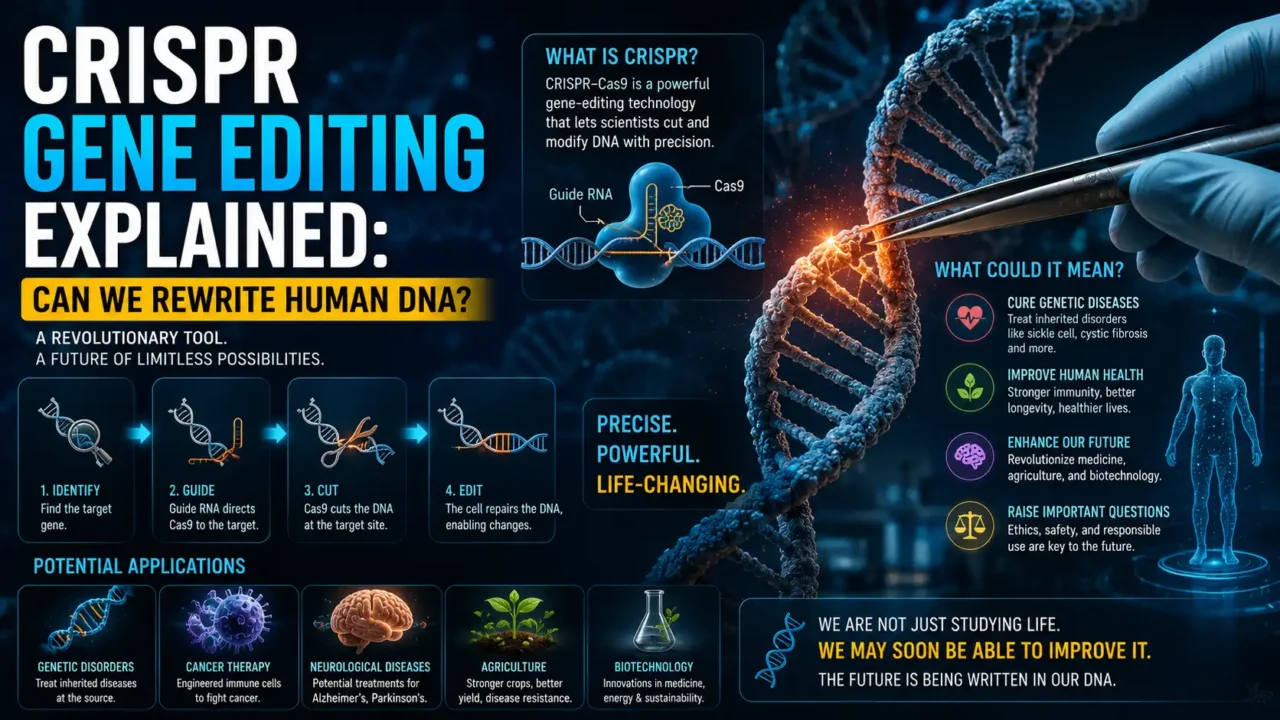
CRISPR is a gene-editing technology that allows scientists to precisely cut and modify specific sections of DNA. It works like a pair of molecular scissors, guided to an exact location in the genome. This precision makes it far more accurate and affordable than earlier gene-editing methods.
How CRISPR Actually Works
CRISPR uses a guide molecule to locate a specific DNA sequence, then an enzyme called Cas9 cuts it. Once cut, scientists can remove, replace, or repair that section of genetic code. This simple but powerful process has made genetic editing dramatically faster and more accessible than before.
Artificial General Intelligence (AGI): How Close Are We to Human-Level AI?
Treating Genetic Diseases
One of CRISPR’s most promising applications is correcting mutations responsible for inherited genetic diseases. Conditions like sickle cell anemia and certain inherited blindness disorders are already being targeted in clinical trials. Early results suggest CRISPR could offer real treatments, or even cures, for diseases once considered untreatable.
Editing Crops and Agriculture
Beyond human health, CRISPR is transforming agriculture by creating crops that are more resistant to disease and drought. Scientists can edit plant genes to improve yield, nutrition, or resilience without introducing foreign DNA. This application is helping address food security challenges in a rapidly changing climate.
The Controversial Idea of Editing Embryos
Perhaps the most debated use of CRISPR involves editing human embryos before birth. This could theoretically prevent genetic diseases before a baby is even born, but it also raises serious ethical questions. Editing embryos means changes could be passed down to future generations, making mistakes potentially permanent.
Humanoid Robots Explained: Are We Entering the Age of Intelligent Machines?
The Ethical Debate Around “Designer Babies”
Critics worry CRISPR could eventually be used not just to treat disease, but to select traits like height or intelligence. This possibility raises concerns about inequality, consent, and the long-term consequences of altering human genetics. Most scientists agree strict regulations are essential before this technology moves further in this direction.
Current Regulations and Safety Concerns
Many countries currently restrict or ban editing human embryos for reproductive purposes due to safety and ethical concerns. Unintended genetic changes, called off-target effects, remain a real technical risk that researchers are still working to minimize. These safety concerns are why most CRISPR research still focuses on treating existing diseases rather than altering future generations.
What the Future of CRISPR Might Look Like
As the technology matures, CRISPR could play a major role in treating diseases, improving food production, and even fighting pandemics. Continued research aims to make the technology safer, more precise, and more widely accessible over time. Its long-term impact will likely depend as much on ethical guidelines as on scientific progress.
Final Thoughts
CRISPR has opened the door to rewriting genetic code with a level of precision once thought impossible. While its potential to treat disease and improve agriculture is exciting, the ethical questions it raises are just as significant. As this technology continues advancing, thoughtful regulation will be key to using it responsibly.
Call to Action
Does the idea of editing human DNA excite or worry you more? Share this article with someone curious about science, and drop your thoughts in the comments below. Continue exploring the Aziz Publishing Knowledge Library for practical, evidence-based articles on artificial intelligence, science, productivity, psychology, and global trends to better understand the innovations shaping the future.