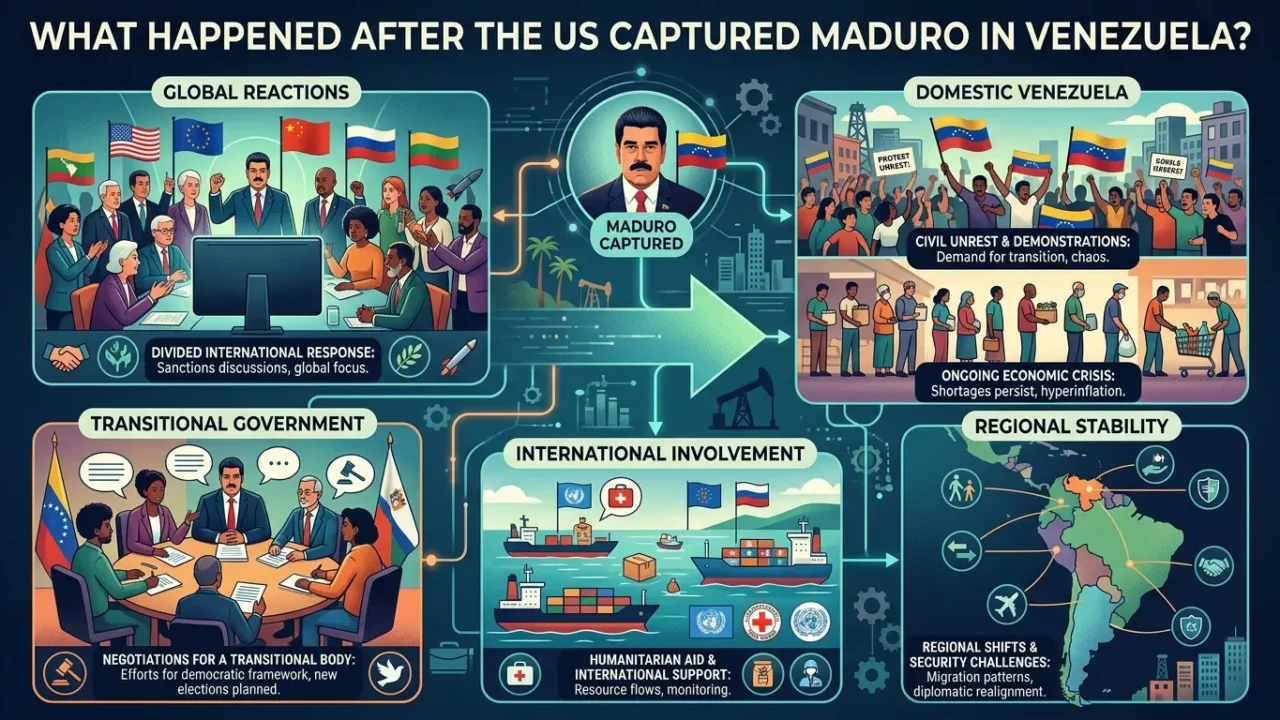
In one overnight raid, decades of tension between Washington and Caracas ended with US forces capturing Venezuela’s president. Here’s what actually happened, and what’s followed since.
How the Capture Actually Happened
On January 3, 2026, US special forces raided Caracas in an operation codenamed Operation Resolve, capturing President Nicolás Maduro and his wife, Cilia Flores, at their compound. He was flown to the USS Iwo Jima, then transferred to New York to face longstanding drug trafficking charges.
What Trump Said About the Plan
Trump announced the US would “run” Venezuela until a “judicious transition” could happen, while also saying US forces had no immediate plans for further military action. He said the operation would ultimately be paid for through Venezuela’s oil, not US taxpayers. He said US oil companies would invest billions in the country, with proceeds used to fund the transition.
Trump Renames AI to “Super Intelligence” (SI): What We Know So Far
The New Government in Caracas
Vice President Delcy Rodríguez was sworn in as acting president on January 5, keeping much of the existing government structure in place. Despite Maduro’s removal, his own government largely remained intact, with Rodríguez now managing relations with Washington directly. She had previously served under Maduro as vice president, foreign minister, and economy minister.
The Oil Deal That Followed
In late August, the US announced what Trump called the “biggest oil deal in history,” giving a US-linked private venture majority effective control over 65 billion barrels of Venezuelan reserves. North American Blue Energy Partners received 100-year rights to 17 oil fields, with a Pentagon-linked entity holding a 35% stake in the parent company.
How Rodríguez Has Defended the Agreement
Rodríguez has called the deal a chance to modernize Venezuela’s oil industry and turn the country into an “energy powerhouse.” She’s described the broader energy partnership as running 25 years, distinct from the 100-year field-specific leases.
The International Reaction
Russia, China, and Iran condemned the capture as a violation of Venezuelan sovereignty, while Israel’s prime minister voiced support for the operation. Reactions inside Venezuela to the oil arrangement have been mixed, with some viewing it as a necessary economic reset and others questioning how much control has shifted to US-linked companies.
What’s Changed Inside Venezuela
Since the transition, Venezuela has released 621 political prisoners under an amnesty bill and lifted longstanding US sanctions on oil trade. Rodríguez has promised elections but has not set a date, drawing criticism from opposition figures and protesters who call her government illegitimate. Opposition leader María Corina Machado, the 2025 Nobel Peace Prize winner, has pushed for a clear election timetable.
10 Real Examples of Soft Power in Action
Where Things Stand Now
At the UN General Assembly in late September, Rodríguez thanked Trump for his willingness to restore ties, a striking shift from her past criticism of US policy as Maduro’s vice president. The bigger question, whether this leads to genuine democratic elections or a long-term US-aligned government, remains unresolved.
Final Thoughts
What began as a single military raid has turned into one of the most significant shifts in US-Latin America relations in decades, combining regime change with a sweeping oil agreement. Whether it leads to lasting stability or deeper controversy in Venezuela is still an open question.
Call to Action
This is an ongoing, fast-moving situation, so check current reporting before sharing details. If this breakdown helped you follow what’s actually happened, share it with someone still catching up on the story. Explore the Aziz Publishing Knowledge Library for in-depth guides on world affairs, artificial intelligence, international trade, and the forces shaping the future of global power.