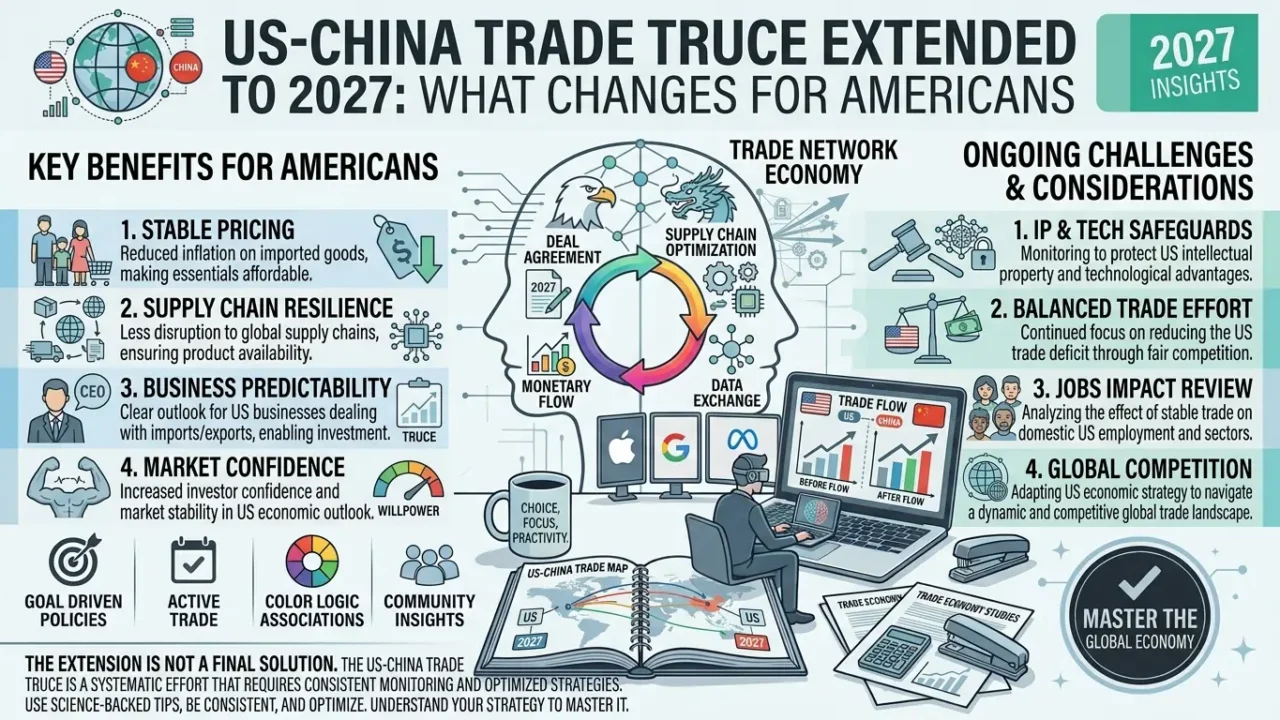
The United States and China have agreed to extend their trade truce, pushing the deadline from November 10, 2026, to January 10, 2027. The move came during Chinese President Xi Jinping’s first state visit to Washington in over a decade, as both sides look for more time to negotiate a broader deal.
What Was Actually Announced
Treasury Secretary Scott Bessent confirmed the two-month extension of what’s known as the Busan Agreement, originally struck by Trump and Xi in South Korea back in May 2026. The extension came just ahead of Xi’s arrival in Washington for a three-day state visit, his first since 2015, and set the tone for a summit focused on trade, technology, and security.
Inside the AI Agent Boom: Why Every Tech Giant Is Racing to Build One
Why Both Sides Chose to Extend Rather Than Finalize
Bessent said the goal was to give negotiators room to pursue a larger, more comprehensive agreement rather than settle for a series of smaller deals. China has reportedly raised the possibility of a broader arrangement covering agriculture, critical minerals, and financial services, but no details have been finalized. Analysts note this is a familiar pattern in US-China trade talks: deadlines approach, both sides buy time, and the expiration date moves rather than resolving.
What’s Still on the Table
Beyond tariffs, the truce extension touches rare-earth mineral flows, technology restrictions, and even a proposed rapid-reporting mechanism for AI-related safety incidents between the two countries. Taiwan and broader security tensions were also part of the discussions during Xi’s visit, even though they fall outside the trade agreement itself.
What This Means for American Consumers and Businesses
For now, the extension keeps existing tariff relief and trade conditions in place, meaning no sudden price shocks or new tariff escalations for at least the next few months. Businesses that rely on Chinese imports, or rare-earth materials used in electronics and manufacturing, get a bit more predictability heading into 2027. However, since this is only a two-month extension rather than a long-term resolution, uncertainty around pricing and supply chains isn’t fully off the table.
The Rise of Digital Warfare: How Cyber Conflict Is Changing Modern Warfare
What Happens Next
The short extension leaves room for two more high-level meetings already being planned, including a possible APEC summit in Shenzhen in November and a G20 meeting in Miami in December. Whether those meetings produce a lasting agreement, or simply another short-term rollover, remains to be seen.
Final Thoughts
The extended truce buys Washington and Beijing more time without resolving the deeper disagreements over trade, technology, and security that still divide the world’s two largest economies. For Americans, it means near-term stability, but not a final answer on where US-China trade relations are headed.
Call to Action
If this breakdown helped you understand what the trade truce extension actually means, share it with someone trying to follow US-China relations. Explore the Aziz Publishing Knowledge Library for more guides on world affairs and the forces shaping global trade.

