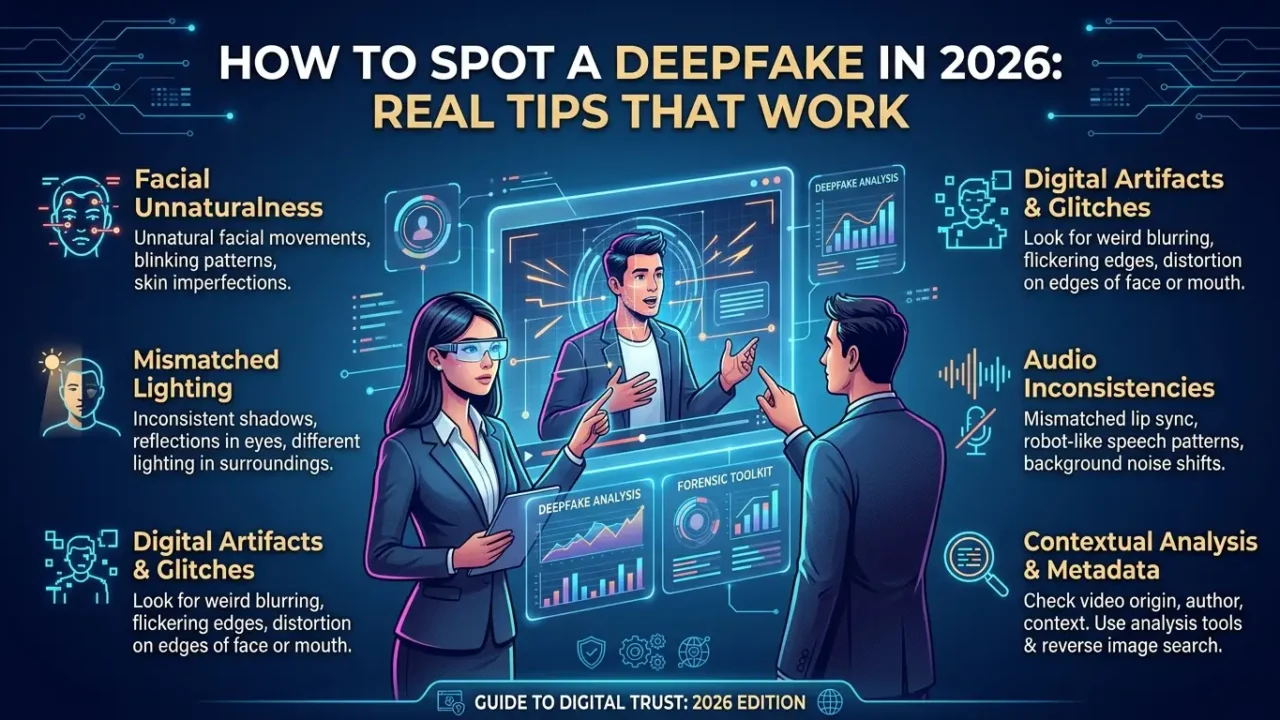
Ever watched a video and felt something was just slightly off? In 2026, that gut feeling matters more than ever. Deepfakes have gotten scarily convincing, but there are still real ways to spot them.
Look Closely at Facial Movements
Deepfake technology has improved, but facial movements can still look slightly unnatural. Pay attention to blinking patterns, since many deepfakes still struggle with realistic eye movement. Awkward or inconsistent expressions are often one of the first signs something isn’t right.
Check for Inconsistent Lighting and Shadows
Lighting is one of the trickiest elements for deepfake technology to replicate accurately. Look for shadows that don’t match the environment or lighting that shifts unnaturally across a face. These small inconsistencies often reveal manipulation that’s otherwise hard to detect.
The Basics of Blockchain — Beyond Cryptocurrency
Pay Attention to Audio Sync Issues
Even highly advanced deepfakes can struggle to perfectly match audio with lip movements. Watch closely for slight delays or mismatches between spoken words and mouth movements. This audio-visual disconnect remains one of the more reliable red flags to watch for.
Examine Skin Texture and Details
AI-generated faces sometimes have skin that looks unusually smooth or oddly textured. Look closely for a lack of natural imperfections like pores, wrinkles, or subtle blemishes. Overly polished or artificial-looking skin can be a strong indicator of manipulation.
Watch for Unnatural Background Movement
Deepfake technology typically focuses most of its processing power on the face itself. This means backgrounds can sometimes appear blurry, glitchy, or oddly static compared to the subject. Unusual background behavior is often an overlooked but telling sign of manipulation.
Use Reverse Image and Video Search Tools
If a video or image seems suspicious, try tracing its original source using reverse search tools. Finding the original, unaltered content can quickly confirm whether something has been manipulated. This simple verification step remains one of the most effective ways to fact-check suspicious media.
Space Exploration in the New Era: The Future Beyond Earth Explained
Rely on Deepfake Detection Software
Several tools now exist specifically designed to analyze media for signs of AI manipulation. These detection systems examine pixel patterns, metadata, and inconsistencies invisible to the human eye. While not perfect, these tools add an extra layer of verification for particularly convincing fakes.
Consider the Source and Context
Even with strong technical clues, always evaluate where a video or image originally came from. Content from unreliable or unknown sources deserves extra scrutiny, especially if it seems designed to provoke a strong reaction. Context often reveals as much about authenticity as the visual details themselves.
Final Thoughts
Deepfakes have become increasingly convincing, but they’re rarely flawless if you know what to look for. Paying attention to facial movement, lighting, audio sync, and source credibility can help you spot manipulation more confidently. As this technology keeps evolving, staying informed remains your best defense against being fooled.
Call to Action
Have you ever spotted a deepfake yourself? Share this article with someone who could use these tips, and drop your thoughts in the comments below. Continue exploring the Aziz Publishing Knowledge Library for practical, evidence-based articles on artificial intelligence, science, productivity, psychology, and global trends to better understand the innovations shaping the future.