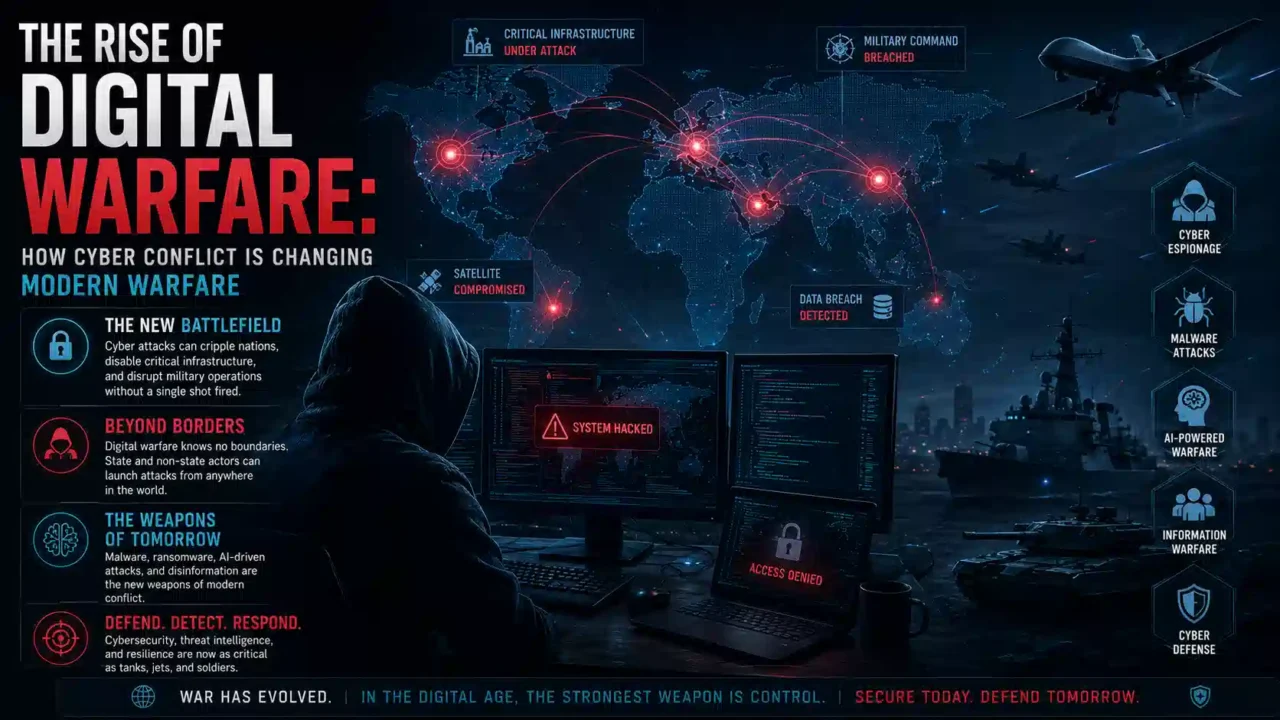
Ever think a war could be fought entirely without a single soldier crossing a border? That’s exactly what’s happening in the world of cyber conflict today. Modern warfare increasingly plays out on screens and networks, not just battlefields.
What Digital Warfare Actually Looks Like
Digital warfare involves using computer systems and networks to disrupt, damage, or gain intelligence on an adversary. Unlike traditional combat, it often happens quietly, without obvious explosions or visible destruction. A single cyberattack can cripple infrastructure, steal sensitive data, or disable communication systems without a single shot fired.
Space Exploration in the New Era: The Future Beyond Earth Explained
Why Cyberattacks Are So Appealing to Nations
Cyber operations offer a low-cost, high-impact way to weaken an adversary without the risks of conventional warfare. Attribution is often difficult, allowing countries to conduct operations while maintaining plausible deniability. This combination of affordability and deniability makes cyber warfare an attractive tool for nations of nearly any size.
Critical Infrastructure Is a Prime Target
Power grids, water systems, and financial networks have become increasingly attractive targets for cyber operations. Disrupting these essential services can cause widespread chaos without requiring any physical invasion. Several real-world incidents have already demonstrated how vulnerable critical infrastructure can be to sophisticated digital attacks.
Espionage in the Digital Age
Traditional spying has evolved dramatically thanks to digital technology and interconnected global networks. Nations now conduct large-scale intelligence gathering through hacking, surveillance software, and data breaches rather than physical infiltration alone. This shift has made cyber espionage one of the most active and persistent forms of modern international conflict.
The Future of AI Jobs: Which Careers Will Grow in the Age of Artificial Intelligence?
Non-State Actors Are Joining the Fight
Cyber warfare isn’t limited to governments alone, criminal organizations and independent hacker groups play a growing role too. Some groups act independently for financial gain, while others align themselves with specific national interests. This blurred line between state and non-state actors makes attribution and response significantly more complicated.
The Challenge of International Rules
Unlike conventional warfare, there’s no widely accepted international framework governing acceptable behavior in cyberspace. This lack of clear rules creates ambiguity around what constitutes an act of war in the digital realm. Many experts argue that establishing clearer international norms is essential to prevent unintended escalation between nations.
Defense Strategies Are Evolving Rapidly
Governments and organizations are investing heavily in cybersecurity infrastructure to defend against increasingly sophisticated threats. Artificial intelligence is now being used on both offense and defense, detecting threats faster than human analysts alone ever could. This constant back-and-forth has turned cybersecurity into an ongoing arms race rather than a one-time investment.
AI and National Security: How Artificial Intelligence Is Reshaping Global Power
Everyday Life Is Increasingly Affected
Cyber conflict isn’t limited to governments and militaries, it increasingly touches everyday businesses and individuals too. Data breaches, ransomware attacks, and disrupted services have real consequences for regular people far removed from geopolitics. This growing overlap means digital warfare’s impact extends well beyond traditional military and government targets.
Final Thoughts
Digital warfare has fundamentally changed how conflicts unfold, shifting critical battles from physical territory to interconnected networks. Its low cost, difficult attribution, and wide-reaching impact make it an increasingly central feature of modern geopolitical competition. As technology continues advancing, understanding cyber conflict will only become more essential to grasping global security.
Call to Action
Did this change how you think about modern warfare? Share this article with someone interested in cybersecurity or global affairs and let us know your thoughts in the comments below. Explore the Aziz Publishing Knowledge Library for clear, evidence-based articles on science & technology, artificial intelligence, and the innovations that are transforming our understanding of the world.

