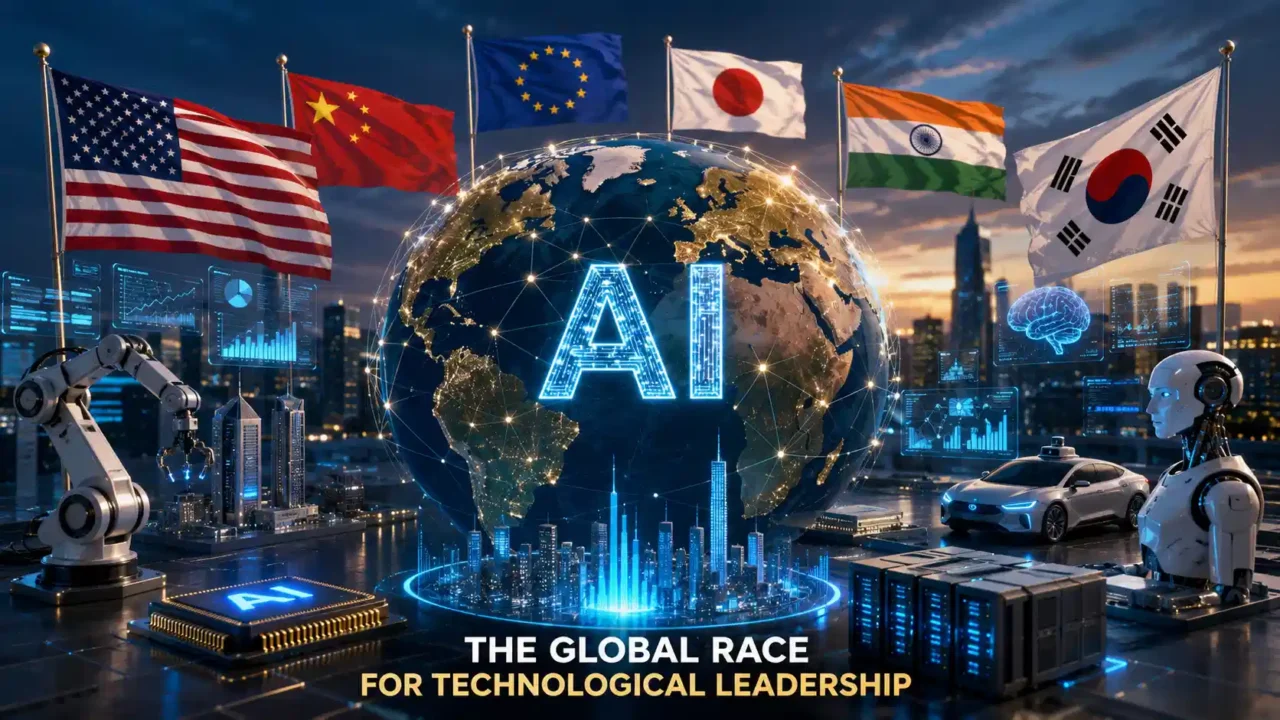
Ever wonder why governments keep announcing massive AI funding packages like it’s a national emergency? In many ways, it actually is. Artificial intelligence has become the new frontier for global power, and no country wants to fall behind.
AI Is Now Viewed as a National Priority
Governments around the world increasingly treat AI development as essential to national strength, not just economic growth. Countries are launching dedicated AI strategies, funding research institutions, and setting ambitious technological targets. This shift reflects a broader belief that AI leadership will directly shape future global influence.
Why Semiconductor Chips Have Become Strategic: The Technology Powering Global Competition
The Economic Stakes Are Massive
AI is projected to add trillions of dollars to the global economy over the coming decade. Industries from healthcare to manufacturing are being transformed by AI-driven efficiency and innovation. Countries that lead in AI development stand to capture a disproportionate share of this enormous economic opportunity.
Military Applications Are Raising the Urgency
AI’s potential military applications have added significant urgency to this global technological race. Autonomous systems, intelligence analysis, and advanced simulation tools are increasingly powered by artificial intelligence. Nations worry that falling behind in AI could translate directly into a meaningful strategic disadvantage in future conflicts.
The U.S. and China Are Leading the Charge
The United States and China have emerged as the two dominant players in the global AI race. Both countries are investing heavily in research, talent development, and infrastructure to maintain their competitive edge. This rivalry has pushed other nations to accelerate their own AI ambitions simply to avoid falling too far behind.
Talent and Research Are Becoming Scarce Resources
Skilled AI researchers and engineers have become some of the most sought-after professionals in the world today. Countries are competing fiercely to attract top talent through generous funding, visa incentives, and world-class research institutions. This global talent race has become just as important as the technology itself in determining long-term AI leadership.
Data and Computing Power Matter Just as Much
Access to massive datasets and powerful computing infrastructure has become a critical factor in AI development. Countries with strong domestic tech industries and abundant data resources hold a significant advantage in training advanced AI models. This has made investment in data centers and computing infrastructure a strategic priority for many governments.
Smaller Nations Are Finding Their Own Niche
Not every country can compete at the same scale as the U.S. or China, but many are carving out specialized roles. Nations like Israel, Singapore, and the UAE are focusing on specific AI applications where they can build genuine expertise. This specialization allows smaller countries to remain relevant contributors within the broader global AI ecosystem.
AI and National Security: How Artificial Intelligence Is Reshaping Global Power
Regulation Is Becoming Part of the Competition
How countries choose to regulate AI is also becoming a factor in this global race for leadership. Some nations favor light regulation to accelerate innovation, while others prioritize stricter oversight to manage potential risks. This regulatory divergence is shaping where companies choose to develop and deploy their most advanced AI systems.
Final Thoughts
The global race for AI leadership reflects a deeper belief that this technology will define economic and military power for decades to come. Countries are investing heavily in talent, infrastructure, and research because falling behind carries real strategic consequences. As this competition intensifies, AI development will likely remain one of the defining stories of global politics in the years ahead.
Call to Action
Which country do you think will lead the AI race in the long run? Share this article with someone who follows global tech trends, and let us know your thoughts in the comments below. Explore the Aziz Publishing Knowledge Library for evidence-based analysis of world affairs, geopolitics, science, and emerging technologies to better understand the forces shaping the global economy.