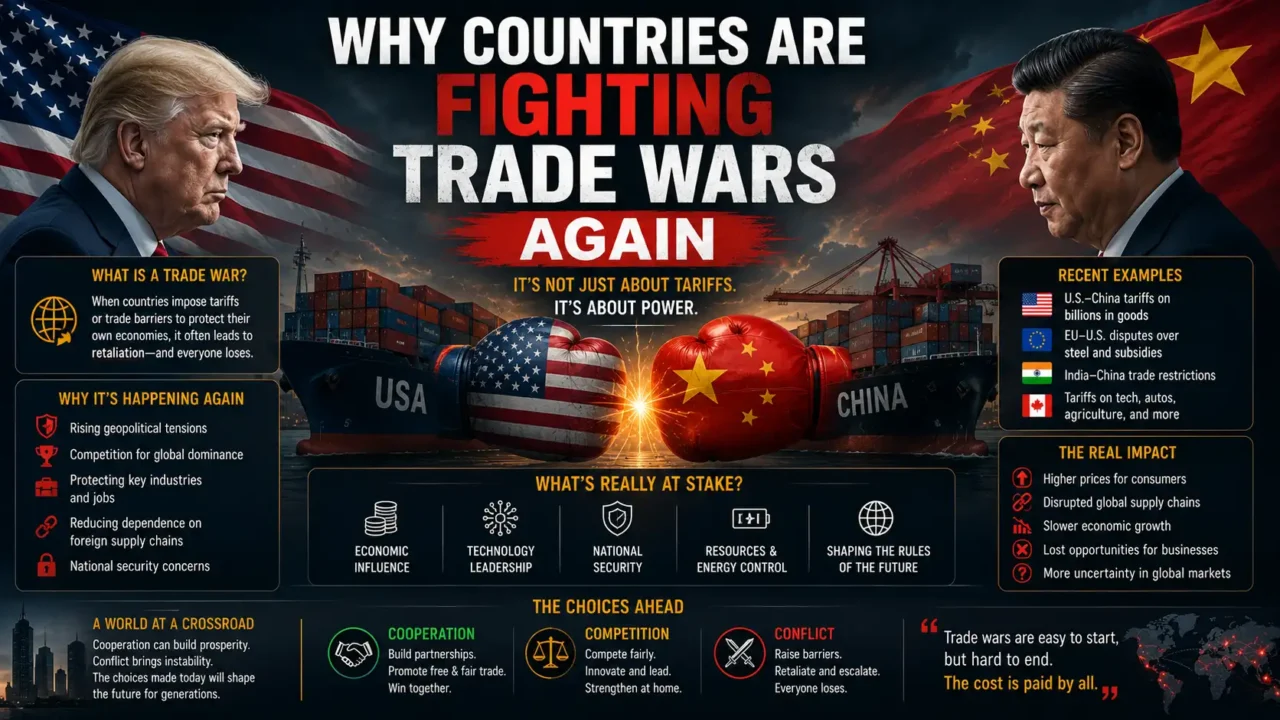
Ever notice prices creeping up on things that have nothing to do with inflation at the grocery store? A lot of that traces back to trade wars quietly heating up again around the world. What once felt like an outdated Cold War tactic is now a defining feature of modern global economics.
Trade Wars Are Making a Comeback
After decades of increasingly open global trade, tariffs and trade restrictions are back in fashion among major economies. Countries are once again using trade policy as a tool for political leverage rather than pure economic cooperation. This shift marks a significant departure from the free trade consensus that dominated the late twentieth century.
Protecting Domestic Industries Takes Priority
Many governments are prioritizing the protection of domestic industries over the benefits of cheaper imported goods. Tariffs on steel, electronics, and agricultural products are being used to shield local businesses from foreign competition. This protectionist approach often comes at the cost of higher prices for everyday consumers.
How the U.S.–China Rivalry Is Reshaping the Global Economy
National Security Concerns Are Driving Policy
Trade decisions are increasingly framed around national security rather than purely economic considerations. Governments worry that overreliance on foreign suppliers for critical goods could leave them vulnerable during a crisis or conflict. This security-first mindset has made trade policy far more political and far less predictable than it used to be.
Technology Has Become a Trade War Battleground
Restrictions on semiconductors, software, and advanced technology exports have become central to modern trade disputes. Countries are limiting access to cutting-edge technology in order to slow down rival nations’ development. This technological dimension has added an entirely new layer of complexity to traditional trade war tactics.
Supply Chains Are Being Rebuilt From Scratch
Businesses are relocating manufacturing operations to avoid tariffs and reduce exposure to geopolitical risk. Countries like Vietnam, Mexico, and India are becoming attractive alternatives to previously dominant manufacturing hubs. This shift represents one of the most significant restructurings of global supply chains in recent memory.
Why Critical Minerals Have Become the World’s Most Valuable Strategic Resource
Consumers Are Feeling the Financial Impact
Tariffs and trade restrictions ultimately trickle down to everyday consumers through higher prices on everyday goods. Electronics, clothing, and even groceries have seen price increases tied directly to ongoing trade disputes. This economic ripple effect makes trade wars far more personal than most people initially realize.
Smaller Economies Are Caught in the Crossfire
Countries not directly involved in major trade disputes still feel significant economic ripple effects from these conflicts. Export-dependent economies can suffer when larger trading partners impose tariffs or restrict market access. Many smaller nations are now diversifying trade relationships specifically to reduce this kind of exposure.
Is Global Cooperation Still Possible?
Despite rising trade tensions, complete economic isolation remains impractical given how interconnected global markets have become. International organizations continue pushing for negotiated solutions rather than escalating restrictions indefinitely. Most economists believe some form of cooperation will persist, even as competition and protectionism continue shaping trade policy.
Final Thoughts
Trade wars have returned not as a temporary disruption, but as a defining feature of today’s global economic landscape. National security, technology competition, and domestic protectionism are reshaping how countries approach international trade. As this new era of economic competition continues, businesses and consumers alike will need to adapt to a less predictable global marketplace.
Have rising prices or shifting trade policies affected you personally? Share this article with someone who follows global economics, and let us know your thoughts in the comments below.
Call to Action
The global economy is changing faster than ever, driven by technology, geopolitics, and shifting economic strategies. Explore the Aziz Publishing Knowledge Library for in-depth guides on world affairs, artificial intelligence, international trade, and the forces shaping the future of global power.