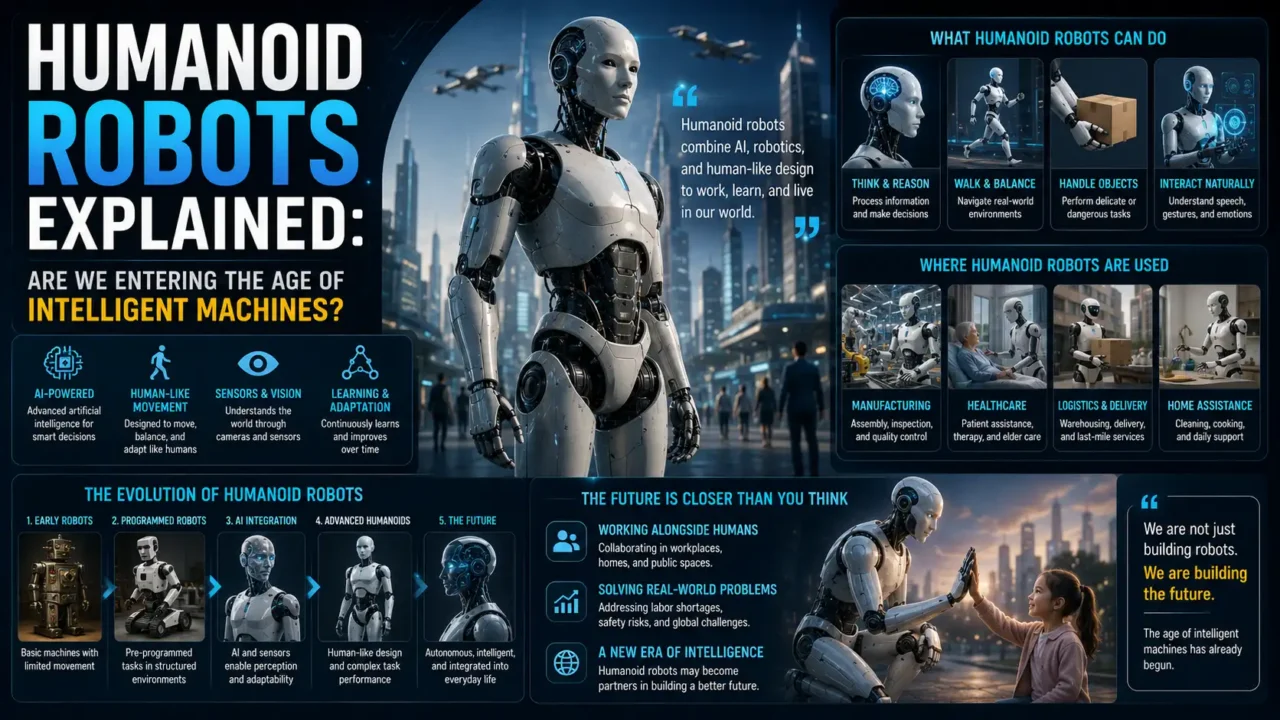
Ever seen a robot walk, talk, and react almost like a real person, and felt a little unsettled? That reaction makes sense, humanoid robots are advancing faster than most people realize. We might be closer to the age of intelligent machines than we think.
What Exactly Are Humanoid Robots?
Humanoid robots are machines designed to resemble and mimic human movement, appearance, or behavior. They typically include arms, legs, and sometimes facial features to interact more naturally with people. The goal is to create machines that can operate smoothly within spaces originally built for humans.
Why Companies Are Betting Big on Them
Major tech and automotive companies are investing heavily in humanoid robots for warehouses, factories, and even homes. The appeal lies in their ability to use existing human-designed tools, tasks, and environments without major modifications. This adaptability makes humanoid robots more versatile than traditional, single-purpose industrial machines.
Artificial General Intelligence (AGI): How Close Are We to Human-Level AI?
The Role of AI in Making Robots “Smart”
Modern humanoid robots rely heavily on AI to process their surroundings and make real-time decisions. Advanced sensors and machine learning allow these robots to recognize objects, navigate spaces, and respond to unpredictable situations. This combination of physical design and AI intelligence is what separates today’s robots from earlier, more rigid machines.
Real-World Applications Already in Motion
Humanoid robots are already being tested in warehouses, manufacturing plants, and even customer service roles. Companies are using them to handle repetitive, physically demanding tasks that are difficult to staff consistently. These early deployments are helping refine the technology before wider adoption becomes realistic.
The Challenge of Human-Like Movement
Replicating human movement is far more difficult than it might appear, requiring precise balance, coordination, and adaptability. Walking on uneven surfaces or picking up delicate objects still challenges even the most advanced robotic systems. Engineers continue refining these mechanics to make humanoid robots more reliable in unpredictable real-world environments.
CRISPR Gene Editing Explained: Can We Rewrite Human DNA?
Concerns About Jobs and the Workforce
As humanoid robots become more capable, concerns about job displacement in physical labor industries are growing louder. Warehouse work, manufacturing, and even some service roles could see significant automation in the coming years. Experts remain divided on whether this shift will primarily eliminate jobs or simply transform them.
Ethical and Social Questions Worth Considering
Beyond economics, humanoid robots raise deeper questions about human interaction, trust, and emotional attachment to machines. As robots become more lifelike, some worry about blurred boundaries between human relationships and artificial ones. These questions will likely become more urgent as robots grow more integrated into daily life.
How Close Are We to Widespread Adoption?
Despite rapid progress, fully autonomous humanoid robots operating safely alongside humans remain a work in progress. Cost, reliability, and safety concerns still limit large-scale deployment outside controlled environments. Most experts predict gradual adoption over the next decade, rather than a sudden, dramatic shift.
Final Thoughts
Humanoid robots represent a genuine step toward a future where intelligent machines work alongside humans in everyday spaces. While challenges around movement, safety, and job displacement remain, progress is happening faster than many expected. Whether this leads to a smooth transition or major disruption will depend heavily on how thoughtfully this technology is developed.
Call to Action
Does the rise of humanoid robots excite or concern you more? Share this article with someone curious about future technology, and drop your thoughts in the comments below. Continue exploring the Aziz Publishing Knowledge Library for practical, evidence-based articles on artificial intelligence, science, productivity, psychology, and global trends to better understand the innovations shaping the future.

