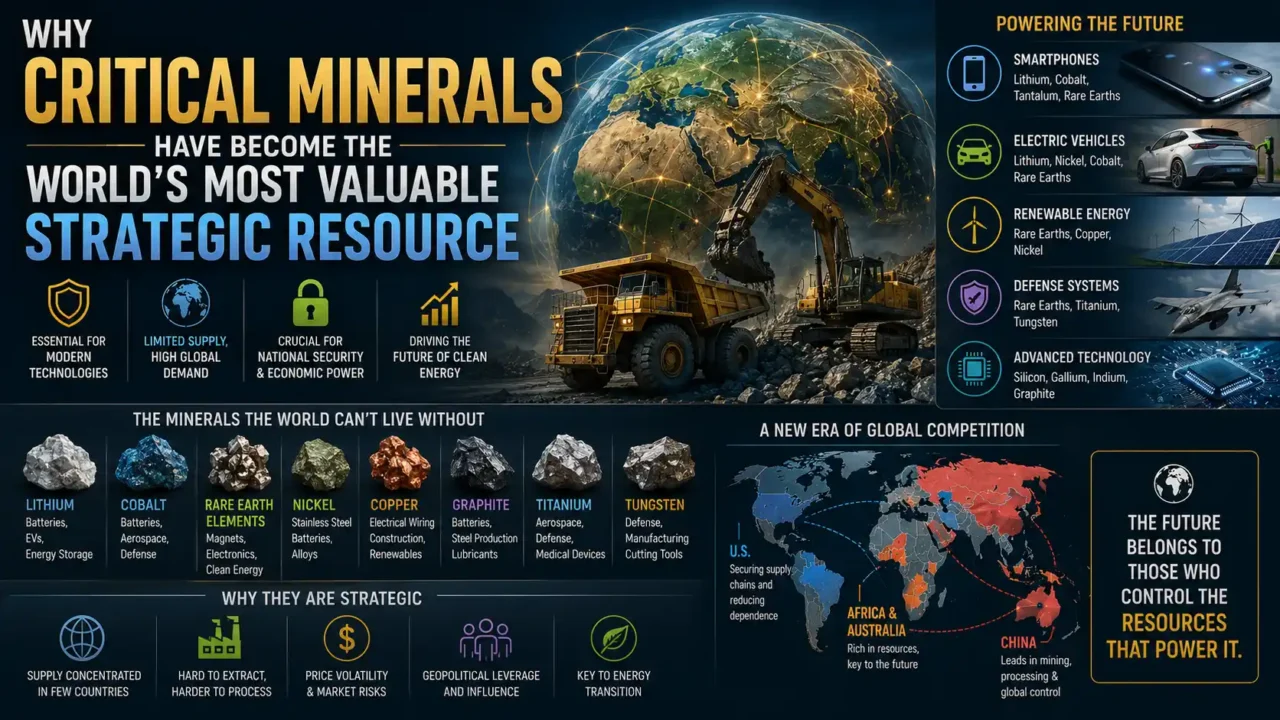
Ever think about what’s actually inside your smartphone battery or electric car? Chances are, it starts with a handful of rare minerals most people have never heard of. These materials have quietly become some of the most fought-over resources on the planet.
What Exactly Are Critical Minerals?
Critical minerals are raw materials essential to modern technology, energy systems, and national defense. Elements like lithium, cobalt, nickel, and rare earth metals power everything from smartphones to wind turbines to missile guidance systems. Their importance lies not just in scarcity, but in how irreplaceable they are for building the technology we rely on daily.
The Clean Energy Boom Changed Everything
The global push toward renewable energy and electric vehicles has dramatically increased demand for these materials. Batteries, solar panels, and wind turbines all require significant quantities of specific critical minerals to function efficiently. As countries race to meet climate goals, competition for these resources has intensified far faster than most people expected.
How the U.S.–China Rivalry Is Reshaping the Global Economy
A Few Countries Control Most of the Supply
Unlike oil, which is spread across many regions, critical mineral production is heavily concentrated in just a handful of countries. China alone dominates global processing capacity for rare earth elements, giving it significant leverage over global supply chains. This concentration creates real vulnerability for countries that depend heavily on imports for their own technology and defense industries.
Why This Has Become a National Security Issue
Governments increasingly view critical minerals as essential to national security, not just economic competitiveness. Military technology, from fighter jets to precision-guided systems, relies heavily on these specialized materials. Losing access to a stable supply could directly compromise a country’s defense capabilities, making mineral security a top government priority.
The Race to Diversify Supply Chains
Countries and companies are actively searching for new mineral sources outside of traditionally dominant suppliers. Nations like Australia, Canada, and several African countries are receiving major investment to expand mining and processing capacity. This diversification effort aims to reduce dependence on any single country and build more resilient global supply networks.
Environmental and Ethical Concerns Complicate Mining
Extracting critical minerals often comes with significant environmental damage and, in some regions, serious ethical concerns around labor practices. Cobalt mining in certain areas has faced criticism over unsafe working conditions and environmental degradation. Balancing the urgent need for these minerals with responsible sourcing practices remains one of the industry’s biggest ongoing challenges.
Recycling Could Ease the Pressure
As demand grows, recycling critical minerals from old electronics and batteries is gaining serious attention as a solution. Advanced recycling technology can recover valuable materials from discarded devices, reducing reliance on new mining altogether. While still developing, this approach could significantly ease future supply pressures if scaled effectively across industries.
The Global Race Is Just Getting Started
Governments worldwide are now treating critical mineral access with the same strategic urgency once reserved for oil reserves. New trade agreements, mining partnerships, and domestic production incentives are being introduced at a rapid pace. This growing competition suggests that securing these resources will remain a defining economic and geopolitical priority for years to come.
How Artificial Intelligence Is Reshaping Global Power
Final Thoughts
Critical minerals have quietly become one of the most valuable and contested resources in the modern world economy. From clean energy to national defense, these materials now sit at the center of major geopolitical and economic decisions. As demand continues rising, expect competition over these resources to shape global politics for the foreseeable future.
Did you know how much these overlooked minerals actually shape our daily lives? Share this article with someone curious about global resources, and let us know your thoughts in the comments below.
Call to Action
From electric vehicles and renewable energy to artificial intelligence and advanced manufacturing, critical minerals are becoming one of the defining strategic resources of the twenty-first century. Explore the Aziz Publishing Knowledge Library for evidence-based analysis of world affairs, geopolitics, science, and emerging technologies to better understand the forces shaping the global economy.