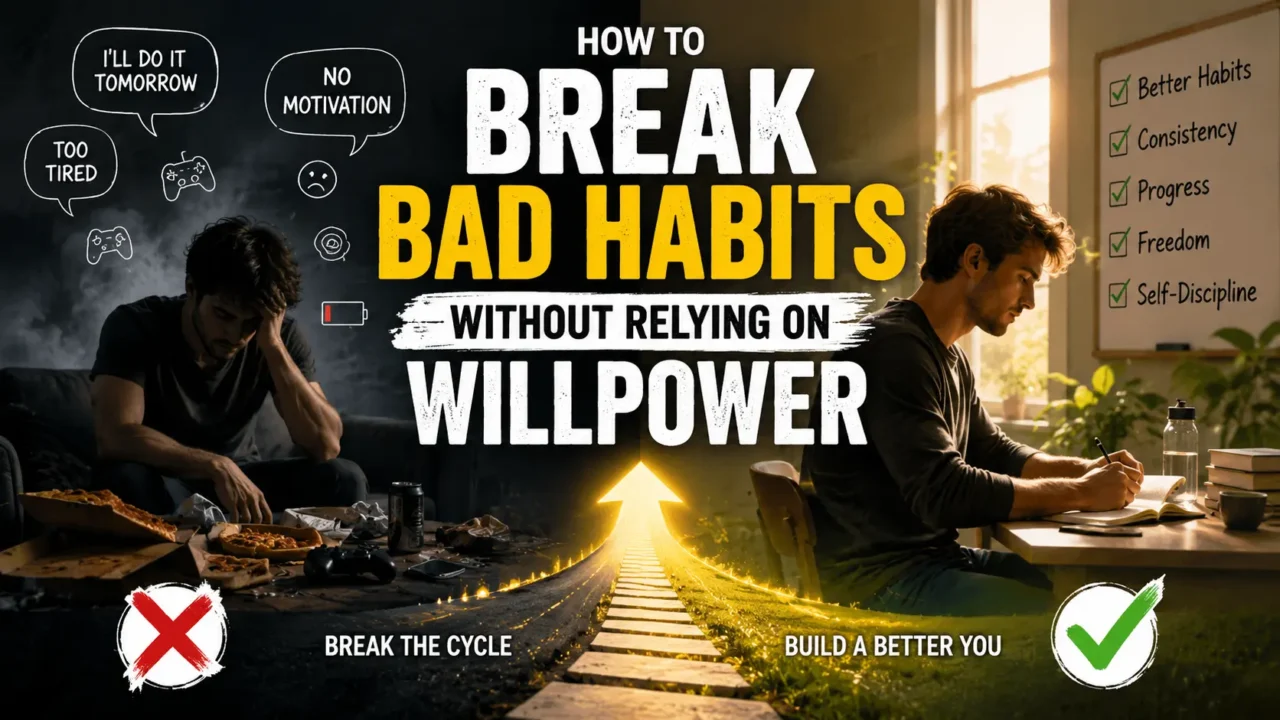
You’ve tried to just “stop” the habit through sheer willpower before, and it worked for about three days. Here’s a more reliable approach that doesn’t depend on gritting your teeth.
Willpower Is a Depleting Resource, Not a Fixed Trait
Willpower fluctuates throughout the day based on stress, sleep, and decision fatigue, which is why it fails you exactly when you need it most. Building a strategy that requires constant willpower sets you up to fail on your most depleted days.
Remove the Cue Instead of Resisting the Craving
Habits run on a loop, a cue triggers a routine, which delivers a reward, so removing the cue is far easier than resisting the craving it produces. Deleting an app, hiding snacks, or rearranging a room removes the trigger before the craving even starts.
The Science of Limiting Beliefs: How They Secretly Control Your Life
Add Friction Between You and the Habit
Increasing the number of steps required to engage in a bad habit reduces how often you’ll actually follow through with it. Logging out of accounts, leaving your phone in another room, or storing tempting items out of reach all add useful friction.
Replace the Routine, Not Just the Reward
Simply removing a habit often leaves the original craving unmet, which is why replacing the routine with something that delivers a similar reward tends to work better. If stress eating is the habit, a short walk can deliver a similar sense of relief.
Change Your Environment, Not Just Your Intentions
A significant amount of habitual behavior is triggered by environmental cues you might not even consciously notice. Changing where you sit, what’s visible on your desk, or your daily route can quietly reduce exposure to a habit’s usual triggers.
Use Identity, Not Punishment, as Your Motivation
Framing habit change as “I’m becoming someone who doesn’t need this” tends to outlast harsh self-criticism, which often backfires and triggers the very behavior you’re trying to stop. Self-compassion after a slip predicts better long-term outcomes than guilt does.
Why Fear of Failure Is Keeping You Stuck
Track Consistency Instead of Perfection
Missing one day rarely derails a habit change long-term, what matters is the overall pattern across weeks, not an unbroken streak. Obsessing over a single slip often causes people to abandon the effort entirely, which does far more damage than the slip itself.
Build a System That Requires Less Willpower Over Time
The real goal isn’t summoning more willpower, it’s designing an environment and set of routines that require progressively less willpower to maintain. A well-designed system keeps working even on your lowest-motivation days.
Final Thoughts
Breaking a bad habit isn’t about willpower alone, it’s about removing cues, adding friction, replacing routines, and building an environment that makes the old habit genuinely harder to fall back into. These structural changes work even when motivation doesn’t show up.
Call to Action
The habits you repeat each day shape the person you become. Continue exploring the Aziz Publishing Knowledge Library for evidence-based articles on psychology, habits, productivity, and mindset to build systems that support lasting personal growth instead of depending on temporary motivation.

