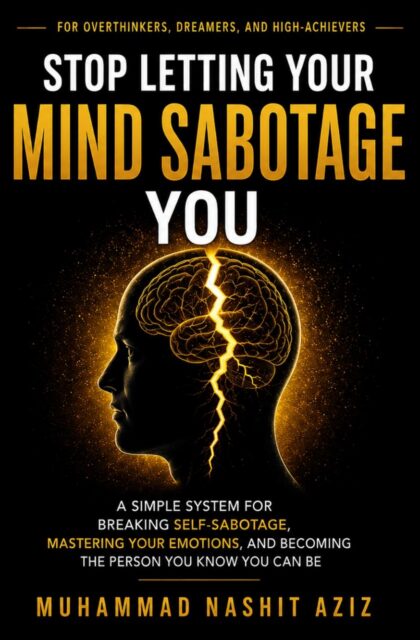
Every person has experienced a moment when they hesitated before pursuing an opportunity—not because the opportunity was impossible, but because they quietly believed they were not capable of achieving it. One person avoids applying for a promotion because they assume they are not qualified enough. Another delays starting a business because they believe successful entrepreneurs possess talents they lack. Someone else stays in an unhappy situation because they have convinced themselves that meaningful change is unrealistic.
These decisions often appear rational.
In reality, many are driven by limiting beliefs—deeply held assumptions about ourselves, other people, or the world that quietly influence our choices without us fully recognizing their presence.
Psychology suggests that beliefs are more than opinions. They function as mental filters through which we interpret experience. Two people can encounter the same challenge and reach entirely different conclusions because each views the situation through a different internal belief system. One sees possibility. The other sees proof of inevitable failure.
Understanding the science of limiting beliefs is not about positive thinking or repeating motivational affirmations. It is about understanding how the brain constructs beliefs, why those beliefs persist even when evidence changes, and how replacing inaccurate beliefs can gradually transform behavior.
How Limiting Beliefs Are Formed
Few limiting beliefs appear suddenly in adulthood.
Most develop gradually through repeated experiences, early environments, cultural expectations, and personal interpretations of success and failure.
Imagine a child who repeatedly hears that they are “not good at mathematics.” After enough repetition, that description stops feeling like temporary feedback and becomes part of their identity. Later, they avoid mathematics courses, hesitate to pursue technical careers, and interpret every mistake as confirmation that the original belief was true.
Psychologists refer to this process as schema formation. Schemas are mental frameworks that help the brain organize information efficiently. They simplify decision-making by creating expectations about ourselves and the world.
The difficulty is that schemas are not always accurate.
Once established, they influence what we notice, remember, and believe. Information supporting the existing belief receives greater attention, while contradictory evidence is often ignored. This tendency, known as confirmation bias, helps explain why limiting beliefs can survive even after circumstances have changed.
The belief becomes self-reinforcing.
Why the Brain Prefers Familiar Beliefs
From an evolutionary perspective, the brain values predictability.
Certainty conserves mental energy and reduces perceived risk. Even negative beliefs can feel psychologically comfortable simply because they are familiar.
This explains why people often remain trapped in situations they dislike.
An employee stays in an unfulfilling job because they believe they would fail elsewhere.
An aspiring writer never publishes because they assume rejection is inevitable.
A talented student avoids difficult opportunities because they fear discovering they are not as capable as others believe.
These decisions protect emotional comfort in the short term.
Unfortunately, they also prevent growth in the long term.
The brain frequently chooses familiar discomfort over unfamiliar uncertainty.
Understanding this tendency shifts the conversation away from willpower.
Many people are not resisting success.
They are protecting deeply established beliefs that make success feel psychologically unsafe.
The Self-Fulfilling Prophecy
One of the most powerful psychological effects associated with limiting beliefs is the self-fulfilling prophecy.
Expectations influence behavior.
Behavior influences outcomes.
Outcomes reinforce expectations.
Consider someone convinced they perform poorly during public speaking.
Because they expect failure, anxiety increases before every presentation. Anxiety reduces concentration, weakens delivery, and makes mistakes more likely. Those mistakes then appear to confirm the original belief.
The belief seems objectively true.
Yet it helped create the outcome it predicted.
Research on self-efficacy, introduced by psychologist Albert Bandura, demonstrates that people who believe they can successfully perform a task are generally more willing to practice, persist through setbacks, and recover after failure. Their confidence does not guarantee success, but it increases behaviors that make success more likely.
Beliefs therefore shape performance not through magic but through repeated behavioral choices.
Changing Beliefs Through Evidence, Not Affirmations
Many self-help approaches encourage replacing negative beliefs with positive statements.
While optimism has value, psychology suggests that lasting belief change usually requires evidence.
The brain trusts experience more than declarations.
Instead of saying, “I am confident,” begin collecting small experiences that demonstrate growing competence.
Complete one difficult task.
Have one uncomfortable conversation.
Learn one new skill.
Finish one meaningful project.
Each action provides concrete evidence that challenges the previous belief.
Over time, repeated evidence gradually reshapes identity.
This process is known in cognitive psychology as cognitive restructuring. Rather than accepting every automatic thought as fact, individuals learn to question whether a belief is supported by objective evidence or simply inherited from past experiences.
The question changes from:
“Is this belief true?”
to:
“What evidence actually supports it?”
That single shift often reveals how many assumptions have quietly directed important life decisions.
The Psychology of Overthinking: Why Your Brain Won’t Let You Relax
Building Empowering Beliefs
Replacing limiting beliefs does not mean believing anything is possible.
It means developing beliefs that are both realistic and constructive.
An empowering belief acknowledges difficulty without assuming impossibility.
Instead of saying, “I’m simply not talented enough,” the belief becomes, “I may not have mastered this yet, but I can improve through deliberate practice.”
This subtle difference changes behavior dramatically.
Growth-oriented beliefs encourage experimentation instead of avoidance.
They promote learning instead of perfectionism.
They allow failure to become information rather than identity.
Over time, these beliefs influence careers, relationships, health, leadership, creativity, and resilience because they expand the range of actions people consider possible.
Why Smart People Still Sabotage Their Own Progress
Conclusion
Limiting beliefs rarely announce themselves openly. They appear as ordinary thoughts, cautious decisions, or seemingly reasonable explanations for avoiding uncertainty. Yet beneath those everyday choices often lies an invisible psychological framework quietly shaping behavior.
The encouraging news is that beliefs are not fixed traits.
They are mental models.
Mental models can evolve.
Through greater self-awareness, careful examination of evidence, and repeated experiences that challenge outdated assumptions, individuals gradually rewrite the stories they tell themselves about what is possible.
The most significant barriers to growth are not always found in external circumstances.
Often, they exist in unquestioned beliefs that have been accepted for years without examination.
Changing those beliefs does not instantly transform life.
But it changes something even more important.
It changes the decisions that shape life every single day.
Call to Action
The beliefs you question today can become the foundation of a different future tomorrow. Continue exploring the Aziz Publishing Knowledge Library for evidence-based articles on psychology, mindset, habits, and personal growth that help you understand how your mind works—and how to use that understanding to create lasting, meaningful change.