World Affairs

The Future of Work in an AI-Driven Economy

Artificial intelligence is reshaping the workplace. Explore how AI is changing jobs, the skills that will matter most, and practical ways to prepare for the future of work.

The Future of Work in an AI-Driven Economy

For centuries, every major technological breakthrough has reshaped the way people work. The steam engine transformed manufacturing. Electricity revolutionized industry. Computers changed offices forever. The internet connected businesses across continents. Each innovation created uncertainty before it created opportunity.

Artificial intelligence is following a similar pattern—but at a much faster pace.

Unlike previous technologies that primarily automated physical labor, AI increasingly performs tasks once considered uniquely human. It can draft reports, analyze contracts, write software, summarize research, create marketing campaigns, translate languages, and assist with scientific discovery. As a result, one of the most common questions today is no longer “Will AI change the workplace?” It is “How should I prepare for an AI-driven economy?”

This question matters because the future of work is unlikely to be defined by humans competing against machines. It will be shaped by humans who know how to work alongside increasingly capable AI systems. The individuals and organizations that adapt early will gain significant advantages, while those who ignore these changes may struggle to remain competitive.

Understanding this transition requires moving beyond fear and hype. Rather than asking which jobs will disappear, a more practical question is: Which skills will become more valuable when AI can perform routine cognitive tasks?


AI Is Transforming Tasks More Than Jobs

A common misconception is that AI replaces entire professions overnight. History suggests otherwise.

Technology usually changes tasks before it changes jobs.

Consider the role of an accountant. Modern accounting software already automates calculations, generates reports, and identifies financial inconsistencies. Yet accountants remain essential because their work extends beyond calculations. They interpret results, advise clients, understand regulations, and make professional judgments that require experience and context.

The same pattern appears in medicine, law, education, engineering, journalism, and software development. AI increasingly handles repetitive, predictable, and data-intensive work, allowing professionals to spend more time on complex problem-solving, communication, creativity, and decision-making.

The practical implication is important.

Instead of asking whether your profession will disappear, ask which parts of your work are repetitive and which require uniquely human judgment.

The repetitive tasks are the most likely to change.

Your ability to create value beyond those tasks will increasingly define your career.


The Skills That Will Matter Most

As AI becomes better at processing information, the competitive advantage of human workers will shift.

Technical knowledge will remain valuable, but it will no longer be sufficient on its own. Information is becoming easier to access than ever before. What becomes scarce is the ability to interpret that information wisely.

Critical thinking will therefore become increasingly important. AI can generate multiple solutions to a problem, but humans must evaluate which solution best fits ethical, financial, cultural, or strategic realities.

Communication will also become more valuable.

Organizations will continue needing people who can explain complex ideas clearly, negotiate effectively, build relationships, lead teams, and inspire trust. These abilities depend upon emotional intelligence as much as technical expertise.

Creativity represents another area where humans retain a significant advantage.

Although AI can generate text, images, music, and code, meaningful innovation often emerges from connecting ideas across disciplines, understanding human needs, and recognizing opportunities that data alone cannot reveal.

Perhaps the most important skill of all is adaptability.

The future workplace will reward people who continuously learn, experiment with new technologies, and update their skills throughout their careers rather than relying solely on qualifications earned years earlier.


AI Will Create New Careers as Well as Change Existing Ones

Every technological revolution has eliminated certain kinds of work while creating entirely new professions.

Few people predicted careers such as app developer, cloud engineer, cybersecurity analyst, social media strategist, or data scientist before the internet transformed the global economy.

Artificial intelligence is likely to follow the same pattern.

Organizations increasingly need professionals who can design AI workflows, evaluate AI-generated content, ensure responsible implementation, improve prompt engineering, oversee AI governance, protect cybersecurity, and integrate AI into business operations.

Beyond technical positions, AI is creating demand for educators who teach AI literacy, consultants who redesign workflows, legal specialists who understand AI regulation, and managers capable of leading human-AI collaboration.

The important lesson is that technological change does not simply remove opportunities.

It redistributes them.

People who learn emerging skills often benefit from entirely new career paths that previously did not exist.

ChatGPT vs Claude vs Gemini: Which AI Assistant Is Right for You?


Practical Strategies for Individuals

Preparing for an AI-driven economy does not require becoming a machine learning engineer.

It requires becoming someone who works effectively with intelligent tools.

Begin by learning how AI can improve your own profession. Writers can use AI for brainstorming and editing. Marketers can accelerate campaign development. Teachers can create personalized learning materials. Programmers can increase development speed. Entrepreneurs can automate repetitive business processes.

Treat AI as a productivity partner rather than a replacement.

Equally important is investing in skills that remain valuable regardless of technological change. Strong writing, analytical reasoning, leadership, negotiation, emotional intelligence, and decision-making become increasingly powerful when combined with AI rather than competing against it.

Finally, adopt a mindset of continuous learning.

In an AI-driven economy, careers will increasingly reward people who update their knowledge consistently instead of assuming education ends after graduation.


What Businesses Must Do

Organizations face a similar challenge.

Companies that simply purchase AI tools without redesigning workflows often achieve disappointing results. Successful adoption requires understanding which tasks benefit from automation and which require human oversight.

Leaders must also invest in employee training rather than assuming technology alone creates productivity. Workers who understand both their profession and AI capabilities become significantly more valuable than those who possess only one of those strengths.

Trust also becomes a competitive advantage.

Customers increasingly expect businesses to use AI responsibly while protecting privacy, maintaining transparency, and ensuring human accountability for important decisions.

The organizations that balance technological efficiency with human judgment are likely to build stronger long-term relationships than those relying entirely on automation.


Conclusion

The future of work will not be defined by artificial intelligence alone.

It will be defined by how people choose to use it.

History repeatedly demonstrates that technology rewards adaptability more than certainty. Those who remain curious, continue learning, and embrace new tools generally discover opportunities that were invisible during periods of change.

Artificial intelligence is not eliminating the need for human contribution.

It is changing the nature of that contribution.

Routine work will increasingly become automated.

Human work will increasingly center on judgment, creativity, leadership, ethical reasoning, collaboration, and solving problems that require understanding people as much as technology.

The most valuable professional in the coming decade is unlikely to be the person who knows the most about AI.

It will be the person who understands how to combine human strengths with artificial intelligence to create better outcomes than either could achieve alone.

That future has already begun.

The question is no longer whether work will change.

It is whether we choose to change with it.


Call to Action

The workplace is evolving faster than ever, and understanding AI is becoming a professional advantage rather than a technical specialty. Explore the Aziz Publishing Knowledge Library for practical articles on artificial intelligence, productivity, psychology, and emerging technologies to help you build the skills needed to thrive in the economy of tomorrow.

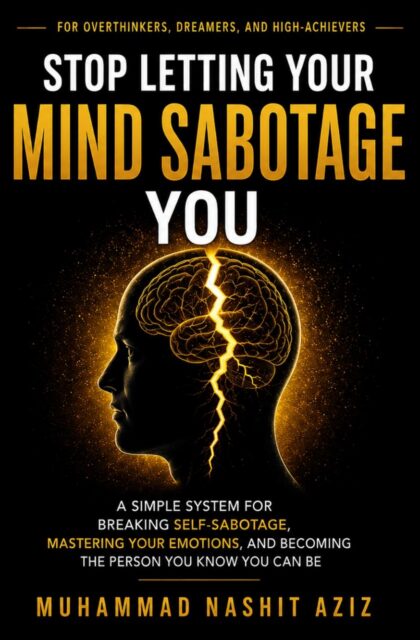
Stop Letting Your Mind Sabotage You

Continue with the Book

Stop Letting Your Mind Sabotage You

Explore the deeper framework for understanding self-sabotage, rebuilding self-trust, and creating meaningful personal change.