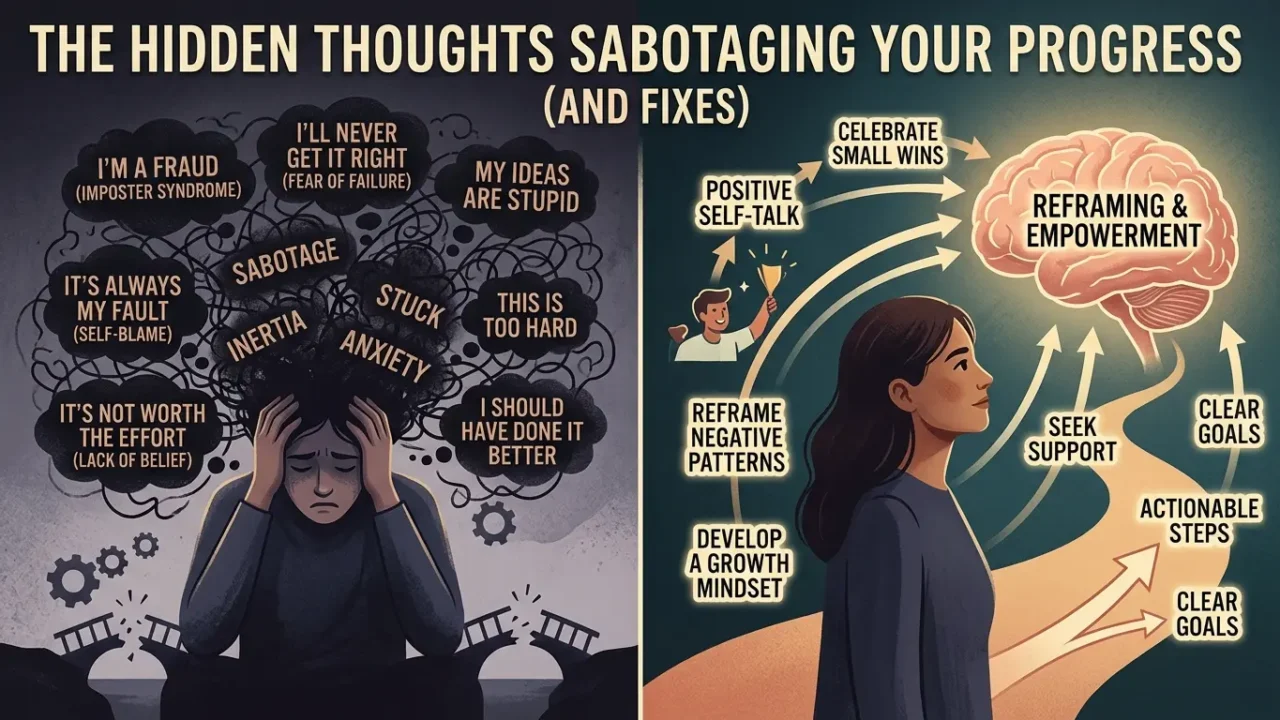
Some of the most damaging thoughts don’t feel dramatic or obviously harmful, they feel like quiet, reasonable observations you’d never think to question. That’s exactly what makes them so effective at holding you back. Here are the ones worth catching before they quietly shape another decision.
“I’ll Start When I Feel Ready”
This thought sounds responsible, like you’re simply waiting for the right conditions, but readiness is often a feeling that only arrives after you’ve already started, not before. Waiting for it means waiting indefinitely, since confidence and competence typically build through the doing, not through additional preparation alone. This thought quietly protects you from the discomfort of an imperfect beginning by disguising avoidance as patience. Noticing when “not ready yet” has been true for months, not days, is a clear sign this thought is running the show.
“If They Really Knew Me, They Wouldn’t Like Me”
This thought treats your worth as something perpetually on trial, waiting to be discovered as insufficient the moment someone looks closely enough. It often traces back to conditional approval earlier in life, affection or attention that had to be earned rather than simply given. Left unchecked, it quietly drives people-pleasing, oversharing to preempt rejection, or avoiding real closeness altogether to prevent being “found out.” Separating this old belief from your actual, current relationships is often the first step toward loosening its grip.
Why Imposter Syndrome Isn’t About Confidence at All
“This Failure Proves I’m Not Cut Out for This”
This thought collapses one event into a permanent verdict, treating a single setback as conclusive evidence about your fundamental capability rather than information about one specific attempt. Athletes and researchers tend to avoid this trap naturally, since their fields are built around iteration, no serious scientist treats one failed experiment as proof they shouldn’t be a scientist. The distinction that actually helps is separating outcome from identity, asking what the failure reveals about your method, not about your worth. This single reframe changes what you do next far more than what the setback itself was.
“Everyone Else Has It Figured Out Except Me”
This thought runs on an unfair comparison, judging your own visible uncertainty against everyone else’s carefully curated exterior. You see other people’s confident decisions and finished results without seeing their private doubt, failed attempts, or behind-the-scenes struggle. This creates a systematic distortion where everyone else appears more capable and certain than you, simply because you can’t see their unfiltered internal experience the way you see your own. Remembering that this comparison was never fair to begin with takes some of its power away.
“I Should Already Know How to Do This”
This thought treats normal unfamiliarity as evidence of inadequacy, as if everyone else arrived already knowing the thing you haven’t yet learned. It often shows up when comparing your beginning to someone else’s middle or end, an unfair timeline mismatch dressed up as a fair comparison. The accurate version is considerably kinder and more useful, not knowing something yet is simply the honest starting condition for learning it. This shift removes the shame that often keeps people from asking the very questions that would actually help them.
“If I Set a Boundary, I’ll Damage the Relationship”
This thought conflates causing someone discomfort with causing them genuine harm, two things that frequently get fused together but aren’t actually the same. A boundary that disappoints someone hasn’t necessarily wronged them, even though it might feel that way in the moment it’s set. This thought often develops in environments where conflict felt genuinely dangerous, teaching early on that keeping the peace was safer than being honest. Distinguishing discomfort from harm is often the exact shift that makes boundary-setting feel less catastrophic.
Fixed Mindset at Work: How It Limits Career Growth and Success
“It’s Too Late to Change Course Now”
This thought is powered by comparison to a handful of visible outliers and a subtle miscalculation about how much time actually remains ahead of you. Someone convinced it’s “too late” to switch careers or start something new is often thinking in terms of years already spent, rather than the considerably larger number of years still available. Treating the present moment as an early start rather than a late one changes what feels rational to attempt. This reframe is arithmetic as much as psychological, and it’s usually more accurate than the panic suggests.
Final Thoughts
None of these thoughts announce themselves as harmful, they arrive dressed as reasonable observations, which is exactly why they’re worth pausing on the next time one shows up uninvited. Noticing the sentence before acting on it is often the real work, more than any single grand insight or motivational push.
Call to Action
Pick one thought from this list that felt uncomfortably familiar and simply notice the next time it shows up this week, without acting on it immediately. If this breakdown helped you spot a pattern in your own thinking, share it with someone who might be quietly carrying the same sabotaging thought. Continue exploring the Aziz Publishing Knowledge Library for evidence-based articles on psychology, mindset, habits, productivity, and emotional well-being. The more you understand how your mind works, the more intentionally you can shape the way you think, decide, and live.