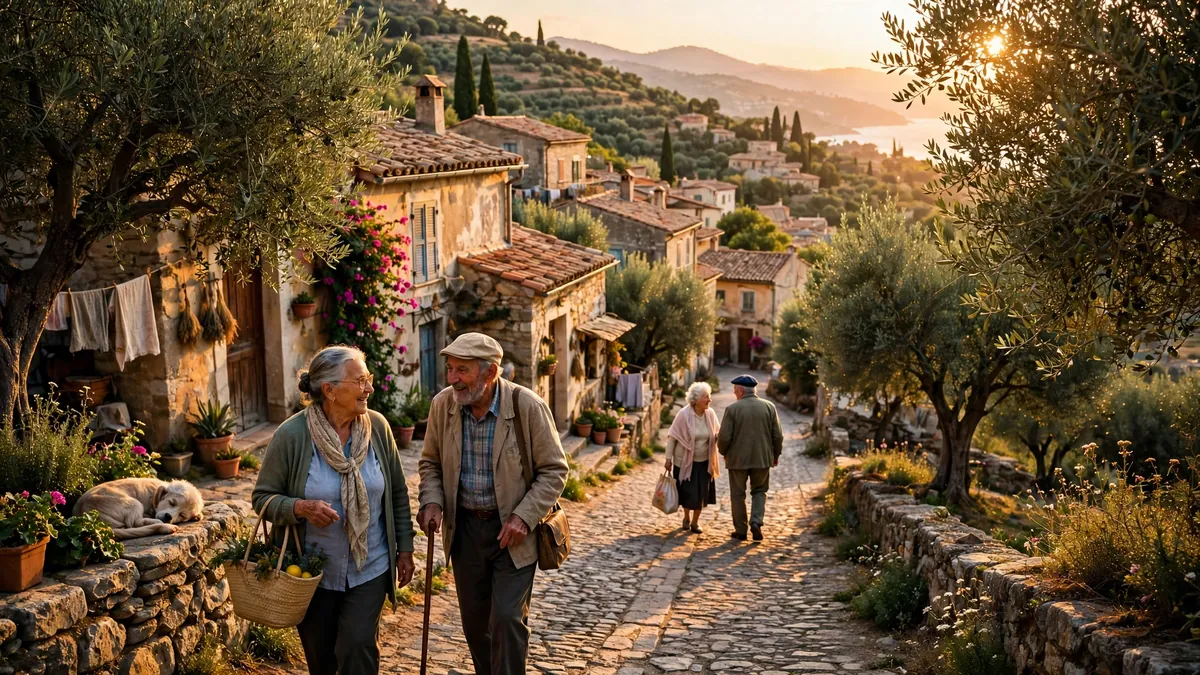
A mountain village in Sardinia may join the most exclusive club on earth: researchers reported in October 2026 that women in Bolotana who reach 70 have a 13.8% chance of living to 100, nearly four times the US rate.
Here is what blue zones are, the five original regions, and the nine habits researchers say matter more than genes.
What Blue Zones Actually Are
A blue zone is a place where people live unusually long lives, with many reaching 100. The term comes from Dan Buettner, a National Geographic explorer who worked with demographers to find where people live longest and healthiest. They circled five regions in blue marker on a map, and the name stuck.
People in these regions reach 100 at roughly ten times the US rate, with far lower heart disease, diabetes, and dementia. Only about 20% to 25% of lifespan comes down to genes; the rest comes from habits and environment, which you can borrow without moving anywhere.
The 5 Original Blue Zones
Okinawa, Japan is home to some of the longest lived women on earth, who credit ikigai, a sense of purpose, and a plant heavy diet. Sardinia’s mountain highlands have the highest concentration of male centenarians in the world, where families still live close across generations.
The Nicoya Peninsula in Costa Rica is home to people with strong social lives and a clear plan de vida, their version of a life purpose. Ikaria, a small Greek island, has strikingly low dementia and heart disease, and its residents are famous for naps and unhurried days. The fifth zone is Loma Linda, California, a Seventh-day Adventist community built around a plant based diet, rest, and faith. A March 2026 report also named Bergen, Norway among the cities with the best odds of reaching 100, as covered in WorldHealth.net’s report on the world’s new blue zones.
A New Blue Zone in Sardinia
The newest candidate arrived in October 2026. Bolotana is a terracotta tiled village of about 2,300 people in the mountains of Sardinia, and a Frontiers in Aging study found its older women survive at an extraordinary rate. Researchers verified ages using records going back centuries, which makes the finding hard to dismiss, as reported by UIC Today on the Sardinian village longevity study.
About 13.8% of women in Bolotana who reach 70 live to 100, vs about 3.5% in Italy and 3.6% in the US, and ten residents are already 100 or older, roughly 11 times the US average, according to ConsumerAffairs on the Bolotana longevity findings. Researchers still call Bolotana a candidate, not an established zone. That caution matters, because the real lesson is the habits, not the map.
The Power 9: 9 Habits They Share
Across all five zones, Buettner found nine shared habits, called the Power 9. None requires a gym or a special diet.
- Move naturally: The longest lived people do not run marathons. They garden, walk uphill to neighbors, and do housework by hand.
- Purpose: Okinawans call it ikigai, Nicoyans call it plan de vida. A reason to get up is worth up to 7 extra years.
- Downshift: Stress drives chronic inflammation. Residents shed it daily: Okinawans honor ancestors, Adventists pray, Ikarians nap, Sardinians enjoy happy hour.
- 80% rule: Okinawans recite hara hachi bu before meals, a reminder to stop at 80% full, and eat their smallest meal in the late afternoon.
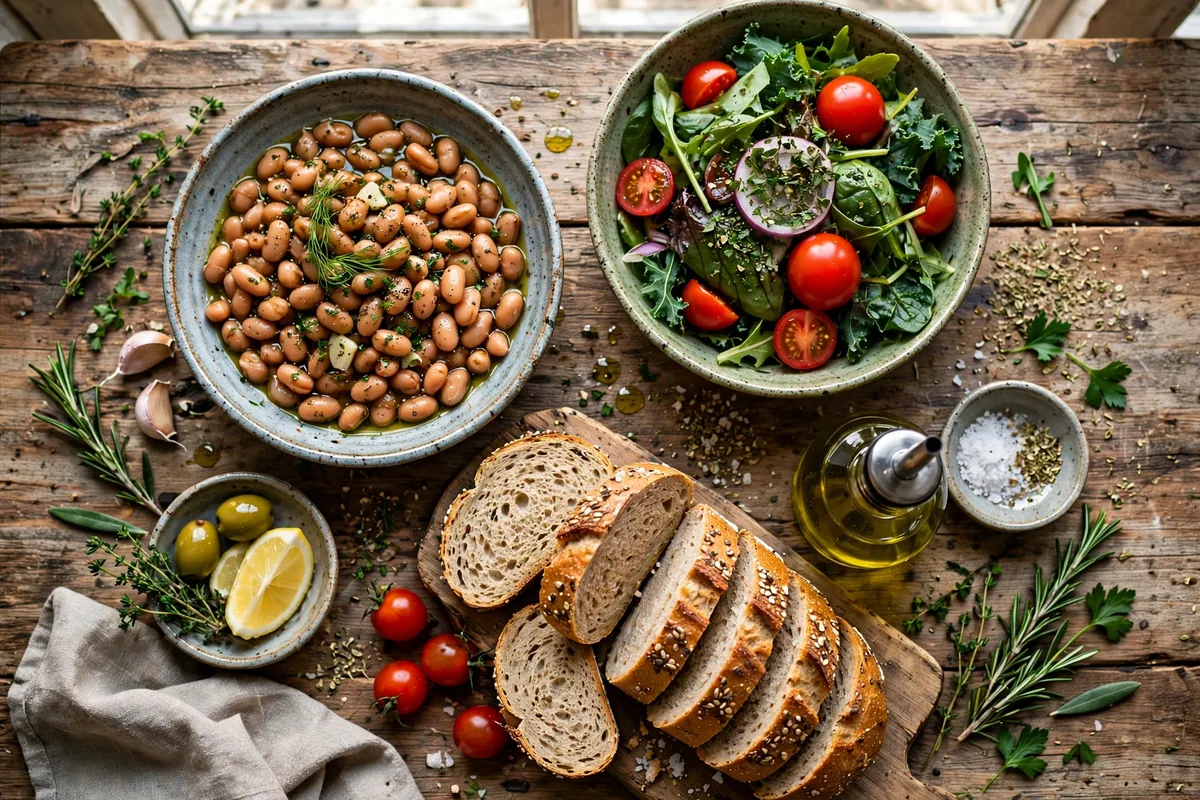
- Plant slant: Beans are the cornerstone of centenarian diets. Meat, mostly pork, appears only about 5 times a month in 3 to 4 ounce portions.
- Wine at 5: Most residents drink moderately, usually wine with friends in the late afternoon, not alone and not to excess.
- Belong: Nearly all centenarians belong to a faith based community, and regular attendance is linked to extra years of life.
- Loved ones first: Families stay close, with aging parents nearby and children committed to their grandparents.
- Right tribe: Okinawans form moai, circles of friends committed for life, and the healthiest people pick friends whose habits support their own.
Nothing on the list is extreme, which is why it works: the habits are built into daily life, much like why small daily habits matter more than big goals.
What the Research Actually Shows
The strongest evidence is demographic: verified ages, high centenarian rates, and low chronic disease across five very different cultures. The shared habits appear in every zone, which is why researchers take them seriously.
The fair criticism is that some blue zone ages have been questioned over record keeping gaps, and Bolotana is still only a candidate. The honest takeaway: these habits are backed by wider health research and cost almost nothing to try.
How to Borrow Blue Zone Habits
Start with habits that fit your life: walk or garden daily, eat beans and vegetables more often, and keep meat portions small.
Then add the social habits most people skip: one meal a day with people you like, a wind down routine, and a small purpose beyond work. Sleep helps too, and a healthy sleep routine is one of the simplest habits to copy. Pick one habit, not nine.
Key Takeaways
- Blue zones are five regions where people reach 100 at roughly ten times the US rate, with far lower chronic disease.
- Bolotana, Sardinia is the newest candidate blue zone: 13.8% of women who reach 70 live to 100, vs 3.6% in the US.
- The Power 9 are ordinary: natural movement, purpose, stress routines, the 80% rule, plant slant, wine at 5, belonging, family first, and the right tribe.
- Only about 20% to 25% of lifespan is genetic. The rest is habits and environment, which means these lessons are borrowable.
Frequently Asked Questions
What are the blue zones?
Blue zones are five regions where people live unusually long lives: Okinawa in Japan, Sardinia in Italy, the Nicoya Peninsula in Costa Rica, Ikaria in Greece, and Loma Linda in California, identified by Dan Buettner and National Geographic researchers.
What are the Power 9 habits?
The Power 9 are nine habits shared across all five zones: move naturally, purpose, downshift, the 80% rule, plant slant, wine at 5, belong, loved ones first, and right tribe. None requires a gym or a special diet.
Is Bolotana officially a blue zone?
Not yet. Researchers proposed Bolotana as a candidate blue zone in October 2026, but they caution that more evidence is needed before it officially joins the list.
Can I live like a blue zone resident without moving there?
Yes. The habits are the point, not the location. Walk daily, eat mostly plants, stop at 80% full, keep a stress routine, and stay close to family and friends.
Final Thoughts
The blue zones are not a secret waiting to be unlocked. They are a reminder that the ordinary parts of life, movement, real food, people you love, and a reason to get up, add up to a long one.
Call to Action
If this gave you a simpler way to think about living longer, share it with someone tired of complicated health advice. Explore the Aziz Publishing Knowledge Library for more guides on science and technology, including CRISPR gene editing and cold showers and mental health.