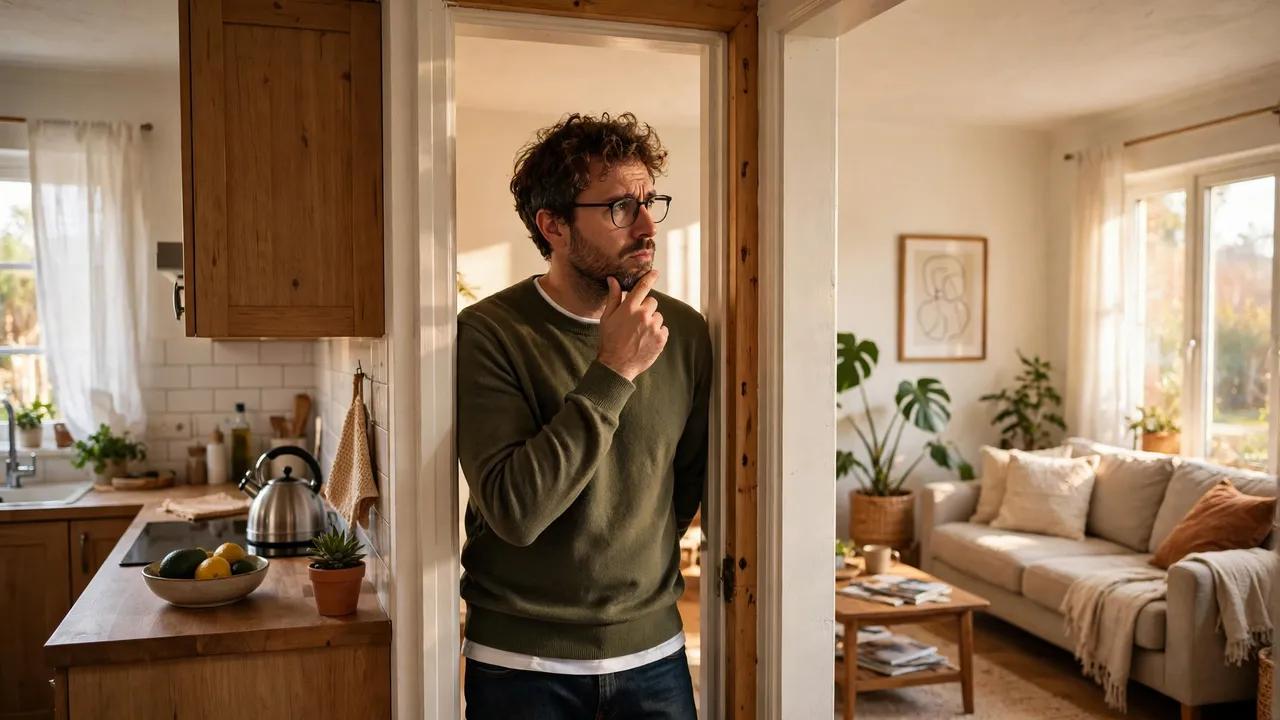
You walk into the kitchen to get something, and by the time you arrive you have no idea what it was. It happens to sharp, healthy brains at every age, and it even has a name: the doorway effect. Here is what the research actually found, why the effect is smaller than the headlines suggest, and how to stop losing your thought at the threshold.
What the Doorway Effect Actually Is
The doorway effect is the finding that passing through a doorway can make you more likely to forget what you were just thinking about or holding in mind. It is also called the location updating effect. The idea is simple: your brain treats each room as a separate scene, and crossing into a new one tells it to close the previous scene and open a fresh one, which makes the thought from the last room harder to reach.
The research line begins with Gabriel Radvansky, a cognitive psychologist at the University of Notre Dame. In studies published in 2006 and 2011, he asked students to carry objects through virtual rooms on a computer screen and later through real rooms in a lab, then quizzed them on what they were carrying. Memory was worse after passing through a doorway, even when the distance walked was exactly the same as for people who stayed in one room, as described in a 2026 guide to the doorway effect updated in October 2026.
In one study the error rate roughly tripled, from about 5 percent to 14 percent, just from passing through a doorway. Physical distance and elapsed time did not explain the drop. The only thing that changed was the scene. That result made the doorway effect famous, and it is why the blank moment in the kitchen feels so universal.
Why Your Brain Files Life Into Events
The leading explanation is event segmentation. Your mind does not record life as one continuous stream. It chops experience into chunks, or events, the way a book is divided into chapters. A doorway is a natural boundary between events, so crossing one prompts the brain to file away the previous chapter and start a new one.
In Radvansky’s words, the details of the previous event are filed away when the boundary is crossed. That filing is usually helpful. It keeps memories organised so you can find them later. But it has a cost: a thought that belonged to the last chapter, like “I came in to get the scissors,” becomes harder to reach once the new chapter has begun.
The effect does not even need a real door. Radvansky reproduced it with computer windows on a screen and by asking people to imagine moving through a doorway. What matters is the perception of a boundary, not the wood and hinges. That is why the same blank feeling can hit when you switch tabs, open a new app, or walk into a different part of the office, as explained in a guide to why walking into a room makes you forget.
What the Newer Research Actually Shows
The story got more complicated after the early studies. A well powered 2021 study by Jessica McFadyen, Oliver Baumann, and colleagues, published in BMC Psychology, tried to reproduce the effect across four experiments using immersive virtual reality, passive video, and real world walking. They found no general effect of doorways on forgetting. The doorway only tripped people up when their working memory was already loaded down, for example when they were counting backward while moving. Under that load, people were more likely to falsely recognise things they had not seen.
Two virtual reality experiments published since then keep the picture messy in a useful way. In January 2026, Julie Lamont and David Bilkey at the University of Otago in New Zealand published a study in Memory and Cognition in which 90 adults aged 18 to 63 wore a headset and wandered through a five room virtual building, handling objects as they went. A smaller study published in npj Science of Learning in May 2025 separated two kinds of boundary that a doorway usually bundles together. And a 2023 study reported that merely anticipating an approaching event boundary appears sufficient to trigger forgetting, before the boundary is even reached.
The honest summary as of late 2026 is that the doorway effect is contested rather than established or debunked. Some studies replicate it, others do not, and the conditions that produce it look narrower than a decade of popular coverage suggested. Crossing a boundary can make recently held information harder to access, especially when your head is already busy, but a doorway alone is unlikely to wipe your mind, as reported in an October 2026 explainer on the doorway effect research.
When It Is Normal and When to Pay Attention
Walking into a room and forgetting why you went there is almost always normal. It usually happens because your attention got divided, not because anything is wrong with your memory, and it is not a sign of dementia. The blank moment is more likely when you are tired, stressed, multitasking, or carrying several intentions at once, which is exactly when the research says the effect appears.
That said, there is a difference between an occasional blank moment and a pattern worth checking. If forgetting is frequent, getting worse, and starts interfering with work, conversations, or daily tasks, or if it comes with confusion about familiar places or people, that is worth discussing with a doctor. The doorway effect explains a normal quirk. It does not explain everything, and persistent memory problems deserve a proper check rather than a psychology article.
For most people, the doorway moment is a reminder about attention, not memory. Your memory did not fail. Your attention was split across too many things, and the doorway gave your brain a reason to file the intention away. That is why the same trick that fixes it is always about attention, as covered in why we forget and how memory decay works.
How to Stop Losing Your Thought at the Door
You cannot remove doorways from your life, but you can make your intentions harder to lose. The fixes are small, and each one works by giving the intention a stronger anchor than the room it was formed in.
- Say it out loud: Before you move, say the intention in a short sentence: “I am going to the kitchen for the scissors.” Speaking turns a fragile thought into a spoken plan, and spoken plans survive boundaries better than silent ones.
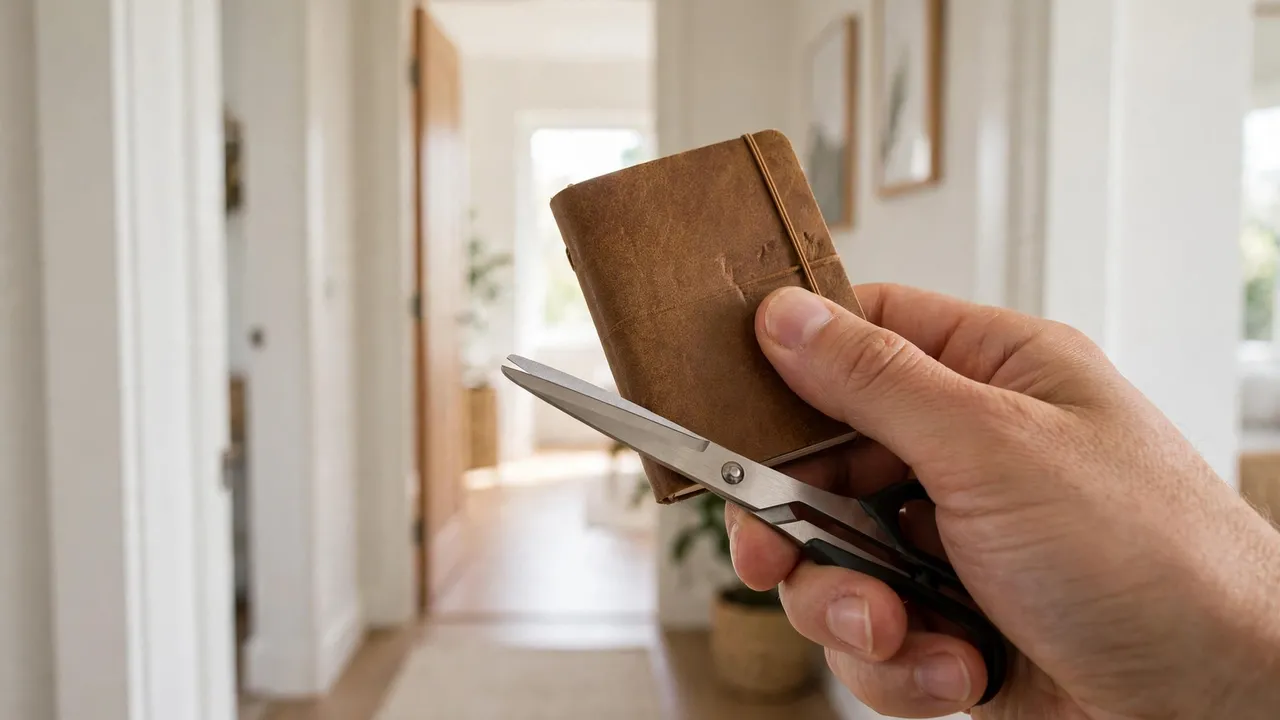
- Carry a visible cue: Hold something connected to the task, or point at it, as you walk. A physical cue keeps the intention in your hand even after your brain files the last room away.
- Pause before you cross: Stop for two seconds at the doorway and repeat the goal to yourself. The pause breaks the automatic filing and gives the intention a moment to settle before the new room takes over.
- Retrace your steps: If the thought is gone, walk back to the room where you formed it. Returning to the original context often brings the intention back, because the room itself is part of the memory.
- Lighten the load: The research is clear that the effect appears mainly under cognitive load. If you are juggling three things, finish one before you move. A quieter head loses fewer thoughts at the door.
Try one fix for a week and notice the difference. Most people find the out loud trick alone cuts the blank moments sharply. The goal is not a perfect memory. It is fewer trips back to a room you just left, as explained in how to improve your memory with cognitive science.
- The doorway effect is the finding that passing through a doorway can make you forget what you were holding in mind. In one early study, error rates roughly tripled, from about 5 percent to 14 percent.
- Gabriel Radvansky at the University of Notre Dame showed the effect in 2006 and 2011. The leading explanation is event segmentation: the brain files experience into separate events, and a doorway closes one chapter and opens another.
- A well powered 2021 study found no overall effect except when working memory was already loaded. A January 2026 Otago study with 90 adults added new virtual reality evidence.
- Walking into a room and forgetting why is almost always normal, not a sign of dementia. It happens most when attention is divided, tired, or overloaded.
- Say the intention out loud, carry a visible cue, pause at the doorway, retrace your steps to recover a lost thought, and lighten your mental load before you move.
Frequently Asked Questions
What is the doorway effect?
The doorway effect is the finding that passing through a doorway can make you more likely to forget what you were just thinking about or holding in mind. The leading explanation is event segmentation: your brain treats each room as a separate event, and crossing a doorway closes one mental chapter and opens another, which makes the previous chapter harder to reach.
Is the doorway effect real?
It is real under some conditions, but smaller than the headlines suggest. Early studies by Gabriel Radvansky found clear effects, while a well powered 2021 study found no overall effect except when working memory was already loaded. New virtual reality studies in 2025 and 2026 keep the picture mixed. The fair summary is that boundaries can disrupt memory, mainly when your head is already busy.
Does forgetting why you entered a room mean dementia?
No, not on its own. Walking into a room and forgetting why is almost always normal and happens to sharp, healthy brains at every age. It usually means your attention was divided, not that your memory is failing. If forgetting is frequent, getting worse, and interfering with daily life, talk to a doctor.
How can I stop forgetting when I walk into a room?
Say the intention out loud before you move, carry a visible cue connected to the task, pause for two seconds at the doorway and repeat the goal, and lighten your mental load before you move. If the thought is already gone, walk back to the room where you formed it, because returning to the original context often brings it back.
Final Thoughts
The doorway is not erasing your memory. It is closing a chapter while your attention is somewhere else. Give your intention a voice, a cue, or a two second pause before you cross, and the blank moment in the kitchen becomes rare instead of routine.
Call to Action
If this guide explained a moment you have had a hundred times, share it with someone who keeps walking into rooms and forgetting why. Explore the Aziz Publishing Knowledge Library for more guides on psychology, including the psychology of overthinking and the hidden cost of constant distractions.

