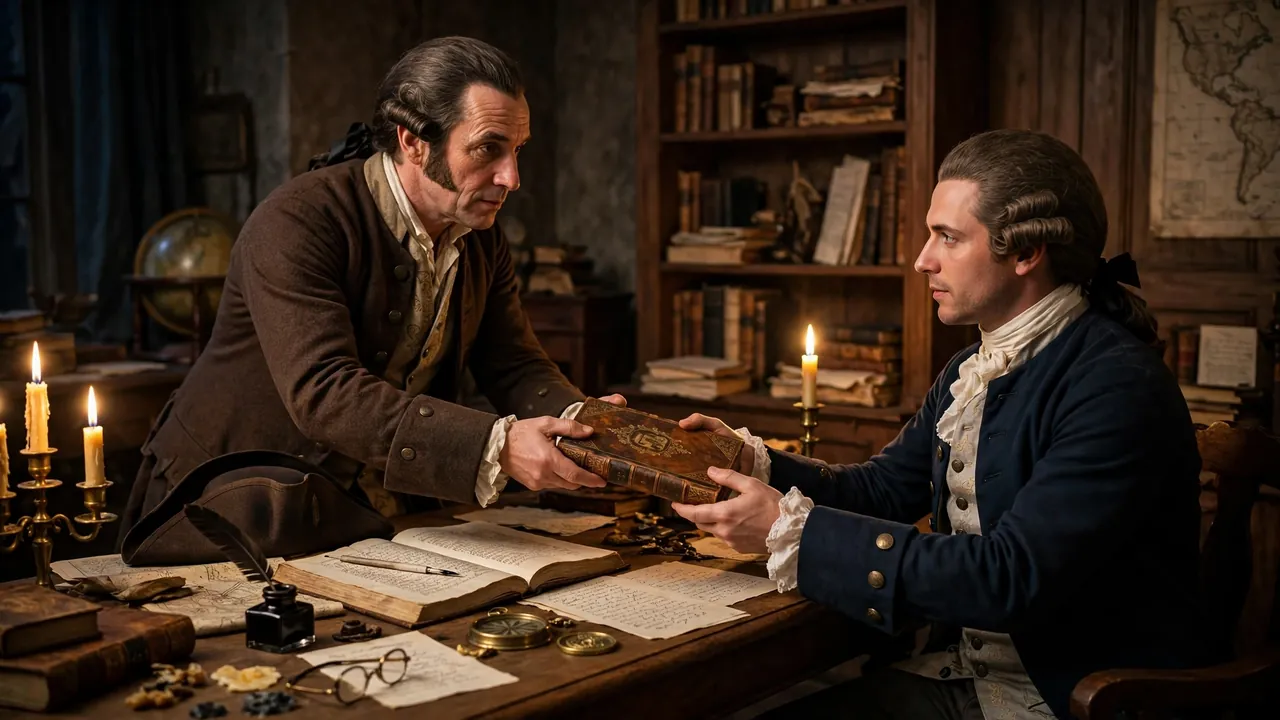
Most people assume you win someone over by doing them a favor. The Benjamin Franklin effect says the arrow points the other way. When someone does a favor for you, they tend to like you more afterward, not less. It sounds backwards, and that is exactly why it has fascinated psychologists for more than fifty years. Here is what the Benjamin Franklin effect really is, what the research actually shows, and how to use it without turning it into a trick.

What the Benjamin Franklin Effect Is
The Benjamin Franklin effect is the tendency to like someone more after doing them a favor. It runs against the usual assumption that liking causes favors. Here the favor comes first and the liking follows. The effect is named after Benjamin Franklin, who described the pattern in his Autobiography, and it has since been tested in psychology experiments that show the same direction: behavior can lead, and feeling can follow.
The core idea is simple. When you help someone, your mind needs a reason for why you did it. If you did not already like the person, the easiest explanation your brain reaches for is that you must like them more than you thought. You did the favor, so you must care. The action edits the attitude, quietly and without you noticing.
This is not the same as reciprocity, the familiar rule that people repay favors they receive. Reciprocity is about returning a kindness. The Benjamin Franklin effect is about the person who gives the kindness changing how they feel about the person who received it.
The Story Behind the Effect
The story comes from Franklin himself, and it is worth telling in his own terms. In the 1730s, Franklin was clerk of the General Assembly in Pennsylvania, and a fellow member of the legislature actively disliked him and had said so in public. Franklin did not try to win the man over with flattery or by doing him a favor. Instead, he heard that the man owned a rare and curious book, so he wrote and asked to borrow it. The man lent it, Franklin returned it a week later with a warm note of thanks, and the two became lasting friends.
Franklin summed up the lesson with a maxim he said was old even in his day: he that has once done you a kindness will be more ready to do you another than he whom you yourself have obliged. In plain terms, the person who helps you once is more likely to help you again than the person you helped. Let a man do you a favor, and something warmer happens than if you do one for him.
It is worth being precise about what this story is. It is a single first person anecdote about one relationship, written decades after the fact in a memoir meant partly to entertain. It is a great illustration of the idea, but it is not data. The data came later, from researchers who tested whether the story held up in a laboratory.
What the Research Actually Says
The first real test came in 1969, from psychologists Jon Jecker and David Landy. They ran a contest where students answered questions for cash prizes, and everybody who took part won something. Afterward, the man who had run the contest came back to one group and asked them, as a personal favor, to give the money back. He explained that he had paid the prizes out of his own pocket and was now running short. A comparison group was never asked for anything back.
When the students later rated how much they liked the experimenter, those who had done him the favor of returning their money rated him more favorably, about 7.2 out of 12, than those who had not been asked at all, about 5.8. The amount of money did not even matter. What mattered was that he had asked them directly for a favor, and they had said yes.
One sharp detail from that study matters a lot. The effect only worked when the experimenter asked in person. When a third party asked on his behalf, the effect faded. The favor has to feel like it is for that person, not a form you are filling out. That detail has held up in later work. In 2016, psychologist Yu Niiya ran newer studies with both Japanese and American participants, as described in a 2026 guide to the Benjamin Franklin effect. She found the same pattern: people asked directly for help liked that person more afterward, but people who helped the same person without being asked showed no change at all. The effect is not in the helping. It is in being asked and saying yes.
Why It Works: Three Explanations
Psychologists still argue about why the effect happens, and three explanations share the stage. Each one captures part of the truth, and together they explain why a small request can change a relationship.
- Cognitive dissonance: This is the classic account. Your brain hates holding two facts that clash. “I did a favor for this person” and “I do not like them” do not fit together. To resolve the tension, the mind quietly edits the attitude to match the behavior. Cognitive dissonance is the discomfort of holding two conflicting beliefs, and here it resolves in favor of liking the person you helped.
- Self-perception theory: Daryl Bem proposed that people often do not know how they feel until they watch what they do. You see yourself helping someone, and you conclude you must like them. There is no inner tension to resolve. You simply read your own behavior as evidence of genuine liking, the same way you might infer that you enjoy running because you keep going for runs.
- The signaling account: Niiya’s work points to a different mechanism. When someone asks you for a small favor, they are showing they are open to you. They trust you enough to ask, and they want a connection. We are wired to warm up to people who reach out, and the request itself is a compliment. This also explains why the effect needs a direct ask: an unprompted favor carries no such signal.
Which explanation is right? The honest answer is that the effect is real enough to keep showing up, but it is more modest than the legend, and the why is still being argued. The three accounts are not rivals so much as three lenses on the same behavior.
How to Use It Well
Used honestly, the Benjamin Franklin effect is a tool for starting and repairing relationships, not for manipulating people. The difference is in the size of the ask and the sincerity behind it. Franklin asked for a book, not a loan. A small ask is a compliment. A large one is a burden, and a burden produces exactly what you would think: the person does it, resents it, and is further away than when you started.
Start with something easy, specific and flattering to the other person. Ask a difficult colleague for their opinion on a draft, because their judgment is the one you trust. Ask a new neighbor to recommend a good coffee shop nearby. Ask a classmate to explain a concept they clearly understand well. Each of these asks is small, costs the other person almost nothing, and signals that you value something about them. That is the whole mechanism, and it works because it is genuine.
The effect also has a practical use in sales and negotiation. A 2016 study by Blanchard, Carlson and Hyodo found that requesting a favor from consumers can seal the deal, because the request itself builds a small bond. The same principle applies at work: when you need a favor from someone senior, asking for their advice is often more effective than asking for their time, because advice is a small favor that flatters the giver. As noted in a recent guide to the Ben Franklin effect, the ask works best when it is framed as a genuine request for help, not as a tactic.
Where the Effect Goes Wrong
There are two limits you should know before you try this. The first is the evidence itself. The empirical case rests mainly on the 1969 study and the 2016 follow up. It has not accumulated the large replication record that would let anyone call the effect a settled law. A genuinely famous historical anecdote and a genuinely real, if narrow, experimental finding point in the same direction, which is more than you can say for a lot of pop psychology claims, but it is still short of a proven law about how human liking works. Treat it as a plausible, well illustrated mechanism, not a guarantee.
The second limit is ethical. The effect works because the other person does not notice it working. That is a reason to use it carefully, not a reason to use it constantly. If you ask for favors you do not need, from people you do not respect, purely to make them like you, you are not building a relationship. You are running a trick, and people can usually tell the difference over time. The rule that keeps it honest is simple: only ask for favors you genuinely want, from people you genuinely respect, and be ready to return the kindness. The halo effect shows how first impressions color everything after them, and a favor asked in bad faith creates exactly the wrong first impression.
There is also a practical limit. The effect is small. It nudges a relationship, it does not transform it. If someone dislikes you for a real reason, a borrowed book will not fix it. What the effect does well is break the ice: it turns a neutral or mildly cold relationship into a slightly warmer one, and that small opening is often all you need.
- The Benjamin Franklin effect is the tendency to like someone more after doing them a favor. The favor comes first, and the liking follows, which runs against the usual assumption that liking causes favors.
- Franklin won over a rival legislator by asking to borrow a rare book, then returning it with a warm note. The story is a famous anecdote, not data, but it illustrates the pattern clearly.
- Jecker and Landy tested it in 1969: students who returned their contest winnings as a personal favor rated the experimenter about 7.2 out of 12, versus about 5.8 for those never asked. The effect faded when a third party asked instead.
- Niiya’s 2016 studies with Japanese and American participants confirmed the pattern: liking rose only when people were asked directly for help, not when they helped without being asked.
- Three explanations share the stage: cognitive dissonance, self-perception theory, and the signaling account that a small request shows trust and openness. The evidence is real but narrow, so treat the effect as a plausible mechanism, not a settled law.
- Use it honestly with a small, easy, flattering ask. Franklin asked for a book, not a loan. A large ask is a burden and produces resentment instead of warmth.
Frequently Asked Questions
What is the Benjamin Franklin effect?
The Benjamin Franklin effect is the tendency to like someone more after doing them a favor, rather than after receiving a favor from them. It takes its name from Franklin’s Autobiography, where he describes winning over a rival legislator by asking to borrow a rare book. The effect runs against the usual assumption that liking causes favors: here the favor comes first and the liking follows.
Is there real evidence for the Benjamin Franklin effect?
Yes, but the evidence is narrower than the legend. The main support is a 1969 study by Jon Jecker and David Landy, in which students who returned their contest winnings as a personal favor rated the experimenter more favorably than students who were never asked. A 2016 study by Yu Niiya with Japanese and American participants confirmed the pattern: liking rose only when people were asked directly for help. The effect is real enough to keep showing up, but it has not accumulated the large replication record that would make it a settled law.
Why does doing someone a favor make you like them more?
Psychologists offer three explanations. Cognitive dissonance says the mind edits your attitude to match your action, because “I did a favor for this person” clashes with “I do not like them”. Self-perception theory says you infer your feelings by watching your behavior, so helping someone tells you that you must like them. The signaling account says asking for a small favor signals trust and openness, and people warm to people who reach out. Each explanation captures part of the truth.
How can I use the Benjamin Franklin effect in real life?
Start with a small, easy, flattering ask. Ask a difficult colleague for their opinion on a draft, ask a new neighbor to recommend a coffee shop, or ask a classmate to explain a concept they understand well. The ask must be direct and personal, because the effect fades when a third party asks on your behalf. Only ask for favors you genuinely want, from people you genuinely respect, and be ready to return the kindness. A large ask is a burden and produces resentment instead of warmth.
Final Thoughts
The Benjamin Franklin effect is a small, strange truth about how liking works. We assume we help the people we like, and we do. But the reverse is just as real: we come to like the people we help, especially when they ask us directly and the ask is small. Franklin understood it in the 1730s, and the research has been catching up ever since. The next time you want to win someone over, consider asking them for a small favor instead of doing one for them. You might be surprised by what comes back.
Call to Action
If this guide changed how you think about favors and friendship, share it with someone who is trying to win over a difficult colleague. Explore the Aziz Publishing Knowledge Library for more guides on psychology, including how to be kinder to yourself when you slip and why familiarity makes things more likable.

