In October 2026, a widely shared practical guide argued that first principles thinking is becoming more valuable in the AI era, because AI can copy existing solutions but cannot question your assumptions for you. Here is what first principles thinking is, how Elon Musk used it to rebuild rockets and batteries, and how you can use it on your own problems.

What First Principles Thinking Is
First principles thinking means breaking a problem down to the basic facts you know are true, then rebuilding a solution from those facts instead of copying what others do. The idea goes back to Aristotle, who described first principles as the starting points of a science that cannot be derived from anything more basic. A first principle is a fact you cannot break down further, like the laws of physics or the raw cost of a material.
In business, the method is associated with Elon Musk, who contrasted it with reasoning by analogy in a 2012 Wired interview. Reasoning by analogy means doing something because it looks like what other people already do, with small tweaks. Reasoning from first principles means ignoring the usual solution and asking what is actually true, as explained in FourWeekMBA’s guide to first principles thinking.
Reasoning by Analogy vs Reasoning From Scratch
Most of the working world runs on analogy, and most of the time that is fine. You inherit a report format, a hiring process, or a weekly meeting, and you make it slightly better each year without asking whether it should exist at all. Analogy is fast, and for routine problems it is usually good enough.
First principles thinking is slower, and that is the point. It forces you to separate what you need to achieve from how you currently achieve it. A customer support report delivered as a spreadsheet every Friday is a choice, not a requirement. The requirement is that a manager gets accurate waiting time information early enough to adjust staffing. Once you see that clearly, you can change the format, the schedule, or the whole approach. AI makes this skill more valuable, not less, because tools that generate answers from existing patterns will happily rebuild the old spreadsheet faster, as argued in Evan Reiser’s October 2026 guide to first principles thinking in the AI era. That matters for anyone working with AI, as explained in how AI is reshaping the world.
The Rocket and Battery Examples
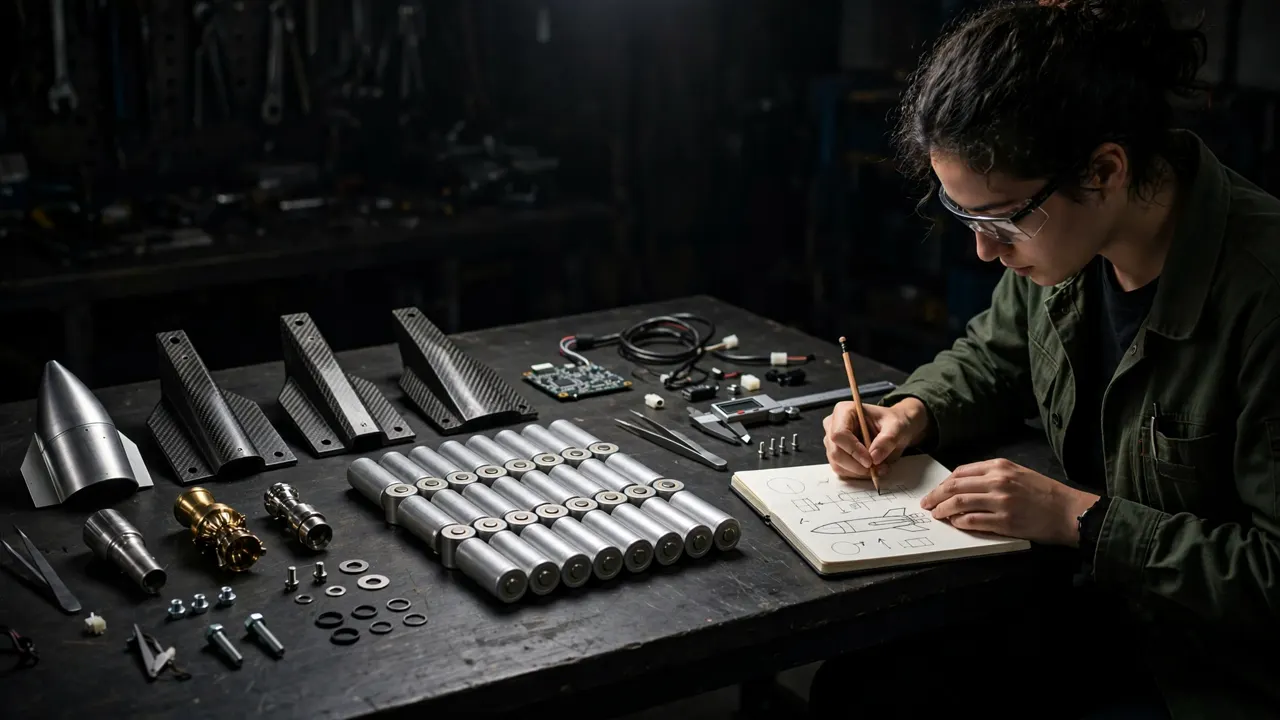
Musk’s favorite example starts with a rocket. Instead of accepting the going price of a launch, he asked what a rocket is made of: aerospace grade aluminum alloys plus some titanium, copper, and carbon fiber. He told Wired in 2012 that those materials cost about 2% of a typical rocket price on the open market. Everything else was convention, markup, and expendable design. That gap became SpaceX, which rebuilt rockets around reusable parts and dramatically cut launch costs.
The same thinking reshaped batteries. Tesla faced battery packs priced around $600 per kilowatt hour, so Musk’s team broke the pack down to its raw materials, lithium, nickel, cobalt, and graphite, and priced those directly. The materials cost a fraction of the pack price, and rebuilding from them pushed costs down toward $80 per kilowatt hour over time. Both breakthroughs came from refusing to accept the existing price as a fact of nature, as detailed in Elon Explained’s account of first principles thinking at SpaceX and Tesla. Physics sets the floor, and quantum computing is another field where fundamentals, not analogy, decide what is possible.
A Simple Four Step Method
Four steps work for almost any problem, from a stalled project to a personal decision.
- Name the assumption: Write down the belief everyone takes for granted, like the price of a product, the way a job is done, or the deadline you assume is fixed. If it is not written down, it cannot be questioned.
- Break it into parts: Ask what the thing is made of, why each part costs what it does, and what each step is actually for. Keep asking why until you reach facts you cannot break down further.
- Keep only what is certainly true: Separate physical, legal, and economic constraints from habits and conventions. Habits can be changed, and constraints cannot, and confusing the two is the most common error.
- Rebuild from the facts: Design a new solution from the constraints that remain, then test it against reality rather than against what competitors do. If the new design survives contact with real costs and real users, it is worth keeping.
Try it on something small first, like a meeting that eats your week. Small wins teach the method faster than one giant attempt.
When First Principles Is the Wrong Tool
First principles thinking is powerful, but it is not always worth it. It is slow, it demands evidence, and it can miss what experience already knows. For routine problems with proven solutions, analogy wins: you do not need to derive plumbing from physics to fix a tap, and you do not need to reinvent a hiring process that already works.
There is also a tension worth knowing. Psychologists Daniel Kahneman and Dan Lovallo showed that the outside view, starting from how similar past cases actually turned out, often beats the inside view of reasoning a single case out from scratch. When you estimate a cost or a timeline, base rates from comparable projects protect you from optimism. The wise approach uses both: first principles to question the design, base rates to check the forecast. Use first principles when the problem is expensive, stuck, or built on old assumptions, and use analogy and base rates when the problem is routine, cheap, or time pressured.
How to Use It at Work This Week
Pick one frustrating process and run the four steps on paper, not in your head. Writing forces precision, and precision is where hidden assumptions show up. Ask three Socratic questions of each step: why is it done this way, how do we know that is true, and what if the opposite were true? The third question is the most productive, because it breaks the habit of defending the current design.
Then state what you are assuming and how you could check it. When you lack evidence, say so plainly instead of dressing a guess up as a fact. That honesty is the whole method in one habit. You may decide to keep the current process, and that is a valid outcome, as long as you can now explain why it still fits.
Key Takeaways
- First principles thinking breaks a problem down to facts that cannot be broken down further, then rebuilds a solution from those facts instead of copying others.
- Reasoning by analogy is fast and fine for routine problems, but it preserves old assumptions; first principles is slow and best for expensive, stuck, or assumption heavy problems.
- SpaceX found rocket materials cost about 2% of a typical rocket price, and Tesla rebuilt battery packs from raw material costs down from about $600 per kilowatt hour.
- The four step method: name the assumption, break it into parts, keep only what is certainly true, and rebuild from the facts.
- Balance it with the outside view: use base rates from comparable past cases to check costs and timelines, since inside view reasoning alone breeds optimism.
Frequently Asked Questions
What is first principles thinking in simple terms?
First principles thinking means breaking a problem down to the basic facts you know are true, then building a solution up from those facts instead of copying how others solved it. It starts from fundamentals, not from tradition.
What is the difference between first principles and reasoning by analogy?
Reasoning by analogy copies what others do with small tweaks, which is fast but preserves old assumptions. First principles thinking ignores the usual solution, questions each assumption, and rebuilds from verified facts, which is slower but can produce breakthroughs.
What is a famous example of first principles thinking?
Elon Musk applied it at SpaceX by pricing a rocket’s raw materials, aluminum alloys, titanium, copper, and carbon fiber, and finding they cost about 2% of a typical rocket price. That gap led to reusable rockets and dramatically lower launch costs.
When should I not use first principles thinking?
Skip it for routine, cheap, or time pressured problems where a proven solution already works. Use it when a problem is expensive, stuck, or built on old assumptions, and pair it with base rates from similar past cases when estimating costs or timelines.
Final Thoughts
First principles thinking will not solve every problem, and it should not try. Its value is narrower and sharper: it breaks the hold of how things have always been done, exactly when that hold is costing you the most. Used on the right problems, it turns an accepted price or process back into a question, and questions are where better answers start.
Call to Action
If this helped you see an old problem in a new way, share it with someone stuck on a process everyone accepts without question. Explore the Aziz Publishing Knowledge Library for more guides on science and technology, including CRISPR gene editing explained and humanoid robots explained.