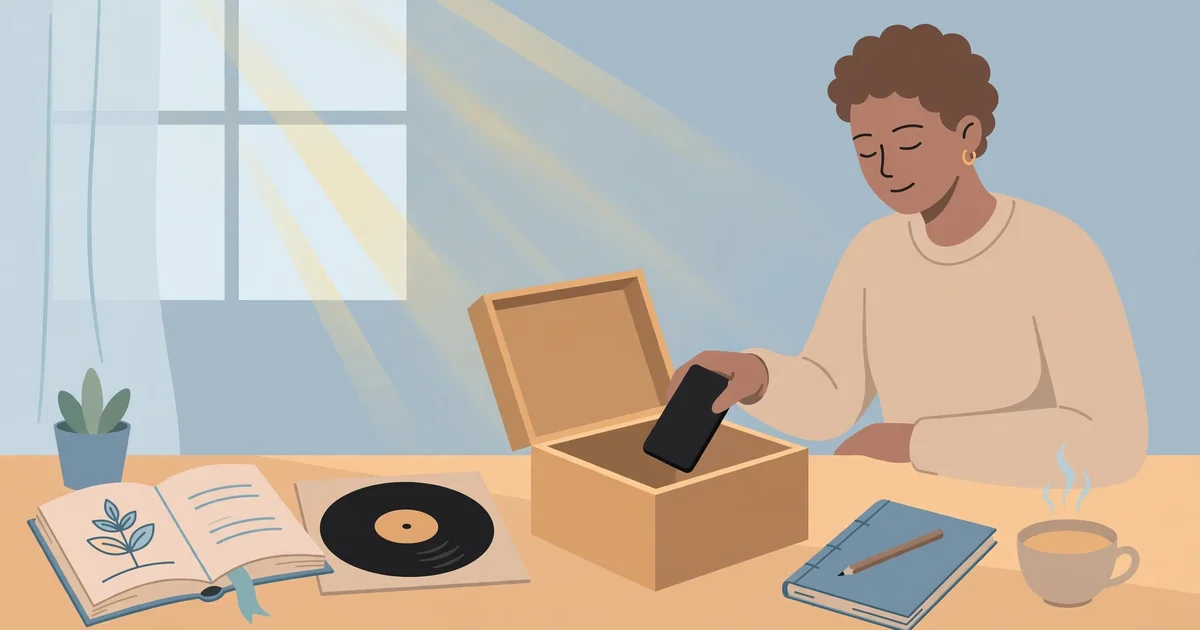
Your phone was designed to keep you scrolling, and it is very good at its job. Digital minimalism is the growing movement of people who refuse to play along, and in 2026 it is turning into something bigger than a trend. Here is what it actually means, and how to try it without throwing your phone away.
What Digital Minimalism Actually Is
Digital minimalism is a philosophy of technology use in which you focus your online time on a small number of carefully selected activities that strongly support the things you value, and happily miss out on everything else. The term comes from author Cal Newport, who laid it out in his 2019 book Digital Minimalism.
Newport’s argument rests on three principles, summarized well in Dave Chaffey’s digital minimalism glossary: clutter is costly, optimization is important, and intentionality is satisfying. In plain terms: every app that earns a little of your attention costs you a little of your focus, so the apps you keep should earn their place.
Why It Is Taking Off in 2026
This is not just a self-help idea anymore. It is showing up in sales data. Payment provider Clearpay recorded a 24% annual jump in dumbphone sales in the twelve months to June 2026, and UK feature-phone sales rose from around 400,000 in 2023 to around 450,000 in 2024, according to CCS Insight figures. A recent GenZ NewZ report on the dumbphone comeback frames it as a search for focus, not nostalgia: young people are trading endless scrolling for intention.
The movement has a name in the wider culture too: the analog revival. People are returning to vinyl, physical books, paper notebooks, and weekend dumbphone swaps, not because the old tools are better, but because they do not fight for attention the way a smartphone does.
What the Research Says
The case for cutting back is not just vibes. A study published in PNAS Nexus found that blocking mobile internet for two weeks improved participants’ well-being, mental health, and sustained attention, with 70% reporting better mental health. A separate University of Pennsylvania study found that limiting social media to 30 minutes a day reduced loneliness and depression within a month.
That fits what the site’s own coverage of the problem already shows. What Doomscrolling Does to Your Brain explains how endless feeds hijack your reward system, and The Hidden Cost of Constant Distractions shows what the interruptions do to your work. Digital minimalism is the answer side of that same coin.
The 30-Day Digital Declutter
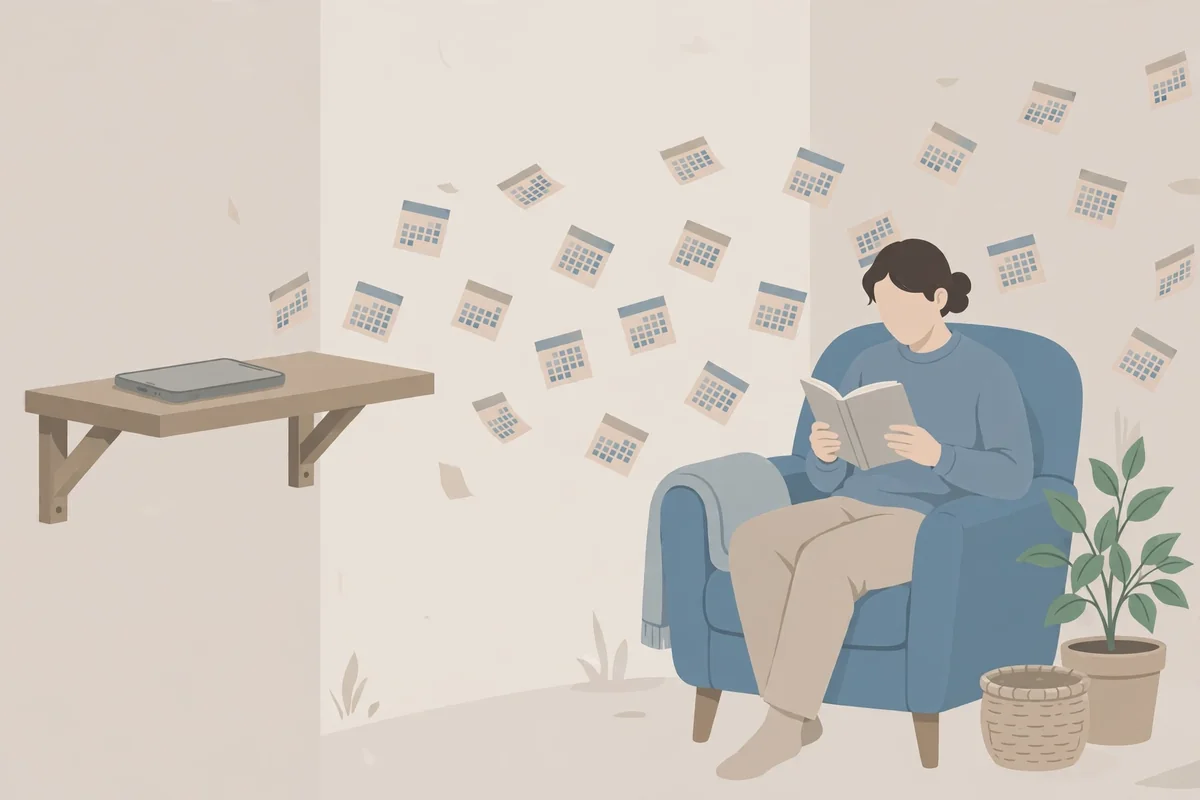
Newport’s core method is the 30-day digital declutter. For one month, you step away from every optional technology in your life: social media, streaming, news apps, games, anything you use out of habit rather than necessity. Work tools and genuinely essential apps stay.
During the month, you fill the freed time with things you actually value: walking, reading, hobbies, time with people. At the end, you reintroduce technologies one by one, but only those that clearly serve your values, and only under rules you set. Most people are shocked by how little comes back. A detailed walkthrough of the framework, including tools like Opal and Brick for enforcing boundaries, is available in SafeTechGuide’s guide to the digital minimalism movement.
5 Practical Steps to Start This Week
- Delete one feed app today: Pick the app you open most mindlessly and remove it from your phone for seven days. You can check it on a computer if you must. Most people find they do not.
- Turn your phone grayscale: A colorless screen is dramatically less appealing. It is the single easiest friction trick, and it takes thirty seconds to enable.
- Set phone-free zones: No phone in the bedroom, no phone at the table. Physical boundaries beat willpower every time.
- Batch your notifications: Turn off everything except calls and messages from real people. Check the rest twice a day, on your schedule, not theirs.
- Replace, don’t just remove: Every hour you free up needs a better use, or the feed will reclaim it. A book on the nightstand beats a phone on the nightstand.
Digital Minimalism vs Digital Detox
People confuse the two, but they are different. A digital detox is a short break, like a weekend offline. Digital minimalism is a permanent philosophy: you redesign your relationship with technology so the break becomes the default.
The honest counterpoint is worth stating too. Some jobs genuinely require constant connectivity, and cutting tools that earn you a living is not minimalism, it is self-sabotage. The goal is intentional use, not purity. A dumbphone is a tool, not a personality.
Key Takeaways
- Digital minimalism means focusing your online time on a small number of activities that strongly support what you value (Cal Newport, 2019).
- The 2026 dumbphone revival is real: dumbphone sales jumped 24% in a year, and UK feature-phone sales rose sharply.
- Research backs it: two weeks without mobile internet improved well-being and attention; a 30-minute social media cap reduced loneliness.
- Start with the 30-day digital declutter, then reintroduce only what earns its place.
Frequently Asked Questions
What is digital minimalism in simple terms?
It is the practice of using technology on purpose instead of by default. You keep only the tools that clearly serve your values, and you set rules for how they are used.
How do I start digital minimalism?
Begin with a 30-day digital declutter: drop every optional technology for a month, fill the time with things you value, then reintroduce only what earns its place under rules you set.
Is digital minimalism the same as a digital detox?
No. A detox is a short break. Digital minimalism is a permanent redesign of how you use technology, so the break becomes the default.
Does digital minimalism improve focus?
The evidence points that way. A PNAS Nexus study found two weeks without mobile internet improved sustained attention, and participants reported better mental health.
Final Thoughts
Your attention is the most valuable thing you own, and right now thousands of engineers are paid to take it. Digital minimalism is simply deciding to spend it on purpose. You do not need a dumbphone to start. You need one honest look at where your hours actually go.
Call to Action
If this helped you rethink your screen time, share it with someone who checks their phone before their eyes are fully open. Explore the Aziz Publishing Knowledge Library for more guides on habits, including deep work and 7 morning habits for focus and discipline.