Ever wonder why you keep reaching for your phone even when nothing exciting is waiting there? The answer isn’t weak willpower — it’s a chemical playing a game you didn’t know you were in.
Your Brain’s Reward System Isn’t What You Think
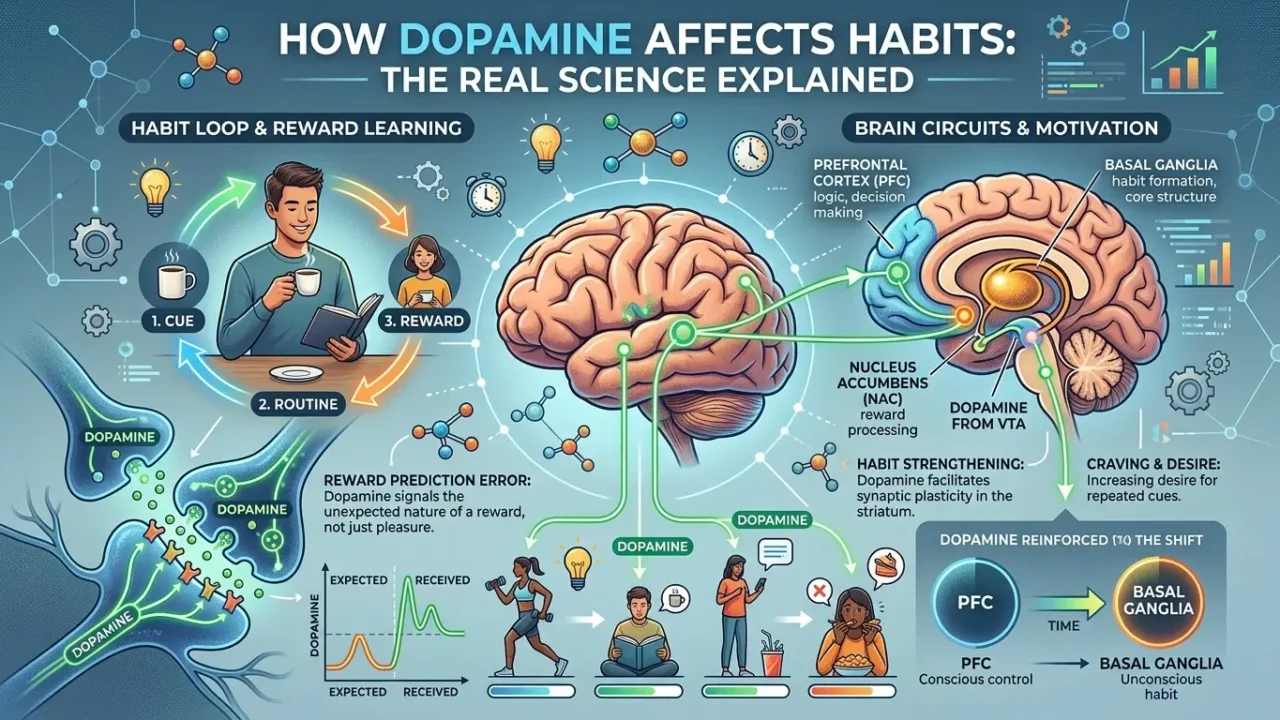
Most people assume dopamine is the brain’s “pleasure chemical,” a reward that arrives once something good happens. That assumption feels intuitive, but it’s actually backwards, and it’s the reason so many habit-change strategies quietly fail before they even begin. Dopamine doesn’t wait for the reward to show up. It fires beforehand, in anticipation of something good, which means it’s less about enjoyment and more about desire.
The Real Job of Dopamine
Dopamine’s actual role is to make you want things, not to make you enjoy them once you have them. It spikes the moment your brain predicts a reward is coming, and that spike is what pushes you toward action. This explains why compulsive behaviors, like endlessly scrolling social media, can feel urgent and irresistible even when they aren’t particularly satisfying in the moment.
How Doomscrolling Affects Your Brain and Mental Health
Why Habits Form Around Anticipation
Every habit follows a familiar loop: a cue triggers a craving, the craving drives a response, and the response delivers a reward. Dopamine’s biggest spike happens during the craving stage, long before the reward is ever delivered. This is exactly why breaking a habit feels so much harder than logic would suggest. You’re not really battling the reward itself, since by the time you get it, the dopamine has already done its work.
The Dopamine Prediction Error
Your brain is constantly running a background calculation, comparing the reward it expected to the reward it actually received. Neuroscientists call this a prediction error, and it turns out to shape future behavior more powerfully than the reward itself does. When a reward exceeds expectations, dopamine surges and cements the habit deeper into your routine. When a reward falls short of what was anticipated, motivation quietly fades, even if the outcome was still objectively good.
How This Builds Good Habits — and Sabotages Bad Ones
Here’s where things get genuinely useful: you can harness this system intentionally. Small, unpredictable rewards create stronger dopamine responses than large, predictable ones ever could, which is exactly why gamified habit trackers, streaks, and surprise wins are so effective at keeping people engaged. Unfortunately, the exact same mechanism is what makes junk food, social media feeds, and gambling apps so addictive, since they’re deliberately engineered around variable rewards.
How Anxiety & Depression Affect the Way You Think
Why Willpower Alone Doesn’t Work
Willpower tries to override dopamine with logic, but dopamine operates below conscious thought. That’s why “just don’t do it” rarely works long-term. Instead, successful habit change works with dopamine — by redesigning cues and rewards, not fighting cravings head-on.
Practical Ways to Reset Your Dopamine System
Start by removing instant-reward triggers, like phone notifications or unlimited snacking access. This lowers baseline dopamine spikes tied to bad habits. Then, attach small, satisfying rewards to habits you want to build. Over time, your brain rewires its “wanting” system toward better behaviors.
The Bigger Picture on Dopamine and Behavior
Dopamine isn’t good or bad — it’s neutral fuel for motivation. The real question is what you’re training it to chase. Once you understand this system, habits stop feeling like a mystery. They become something you can actually engineer. Understanding dopamine changes how you see every habit — good or bad. It’s not about self-control; it’s about designing your environment and rewards intelligently. When you work with your brain’s wiring instead of against it, lasting change becomes far easier to achieve.
Final Thought
At the end of the day, dopamine isn’t your enemy — it’s just doing its job a little too well in a world designed to exploit it. The apps, snacks, and quick hits of validation around you aren’t accidental; they’re built by people who understand this exact system better than most of us do. But that knowledge cuts both ways.
Call to Action
If this changed how you think about your habits, share it with someone stuck in a loop they can’t break — and try applying one small dopamine hack this week. Continue exploring the Aziz Publishing Knowledge Library for evidence-based articles on psychology, mindset, habits, productivity, and emotional well-being. The more you understand how your mind works, the more intentionally you can shape the way you think, decide, and live.

