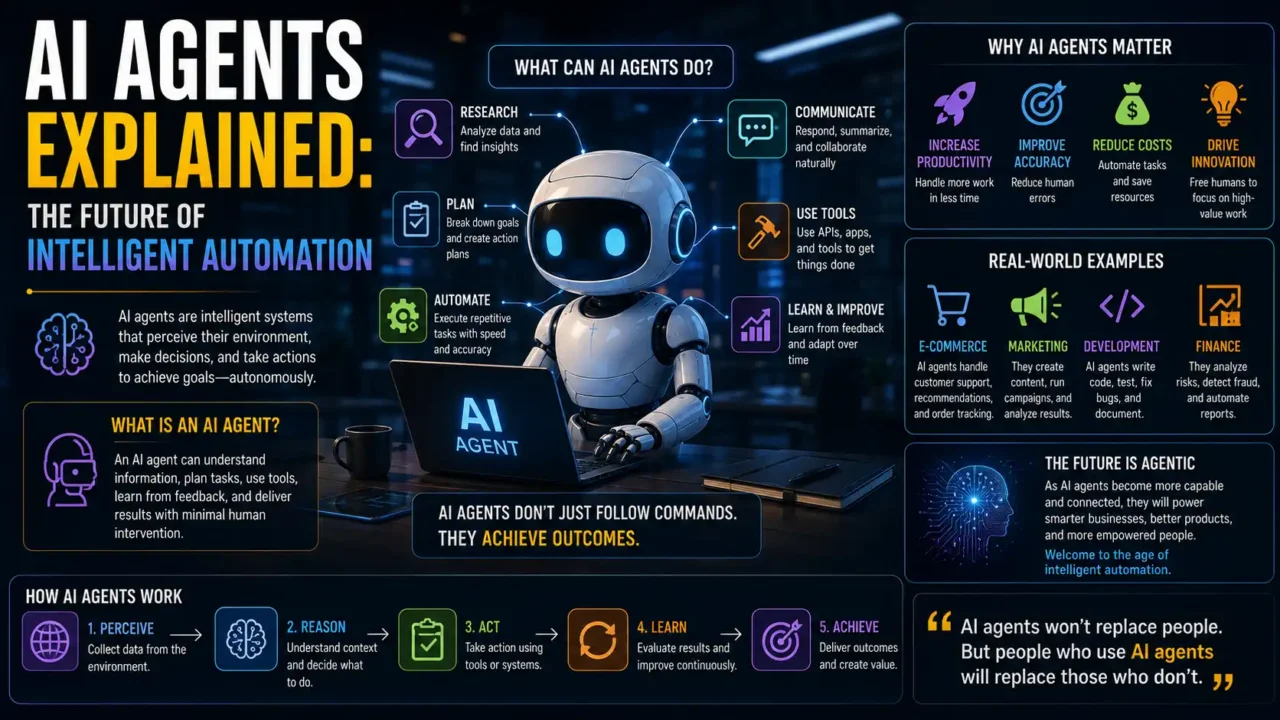
Automation used to mean rigid, rule-based systems that broke the moment something unexpected happened. AI agents are changing that entirely, bringing genuine judgment and adaptability to tasks that used to require constant human oversight. Here’s what’s actually driving this shift, and where it’s headed next.
What Sets AI Agents Apart From Regular Software
Traditional software follows fixed, pre-programmed instructions without any real flexibility. AI agents, by contrast, can reason through goals, adapt to new information, and decide how to proceed. This flexibility is what makes them fundamentally different from older forms of automation.
Automating Multi-Step Workflows
Unlike simple automation scripts, AI agents can handle tasks involving multiple interconnected steps. They can research information, make decisions, and take follow-up actions without needing constant human input. This ability to manage entire workflows is transforming how automation is used across industries.
How AI Agents Work: The Next Evolution Beyond Chatbots
The Growing Role of Agents in Business
Companies are increasingly using AI agents to handle tasks like customer support, data analysis, and scheduling. These agents can operate continuously, handling routine work while freeing employees for more strategic tasks. This shift is helping businesses scale operations without proportionally increasing staff.
Personal Productivity and Everyday Use Cases
Beyond business, AI agents are starting to assist with everyday personal tasks like managing emails and organizing schedules. Some agents can even handle basic research or drafting tasks with minimal supervision. This growing accessibility is bringing intelligent automation directly into daily personal life.
How Agents Make Decisions Along the Way
AI agents use reasoning processes to break down complex goals into smaller, actionable steps. At each stage, they evaluate available information and adjust their approach based on results. This decision-making ability is what allows agents to handle unpredictable, real-world situations more effectively.
AI Agents vs Chatbots: What’s the Real Difference?
The Importance of Human Oversight
Despite their growing capabilities, AI agents still benefit significantly from human review, especially for high-stakes decisions. Oversight helps catch errors, correct misunderstandings, and ensure alignment with actual user intent. This balance between automation and human involvement remains essential as the technology continues developing.
Industries Likely to Be Transformed First
Fields like customer service, research, software development, and administrative work are already seeing significant AI agent adoption. These industries involve repetitive, multi-step tasks that align well with current agent capabilities. As reliability improves, adoption is likely to expand into even more complex industries.
What This Means for the Future of Work
As AI agents become more capable, the nature of many jobs will likely shift toward oversight and strategic thinking. Routine, repetitive tasks may increasingly be handled by agents, freeing humans for higher-value work. Understanding this shift now helps individuals and businesses prepare for an increasingly automated future.
Final Thoughts
AI agents represent a meaningful step toward truly intelligent automation, capable of reasoning, planning, and executing tasks independently. From business operations to personal productivity, their impact is already becoming noticeable across multiple areas. As this technology continues maturing, AI agents are likely to become a defining feature of how work gets done.
Call to Action
Do you think AI agents will change how you work? Share this article with someone curious about the future of automation, and drop your thoughts in the comments below. Explore the Aziz Publishing Knowledge Library for in-depth, evidence-based articles on artificial intelligence, emerging technologies, productivity, and the future of work to stay informed in an increasingly AI-driven world.