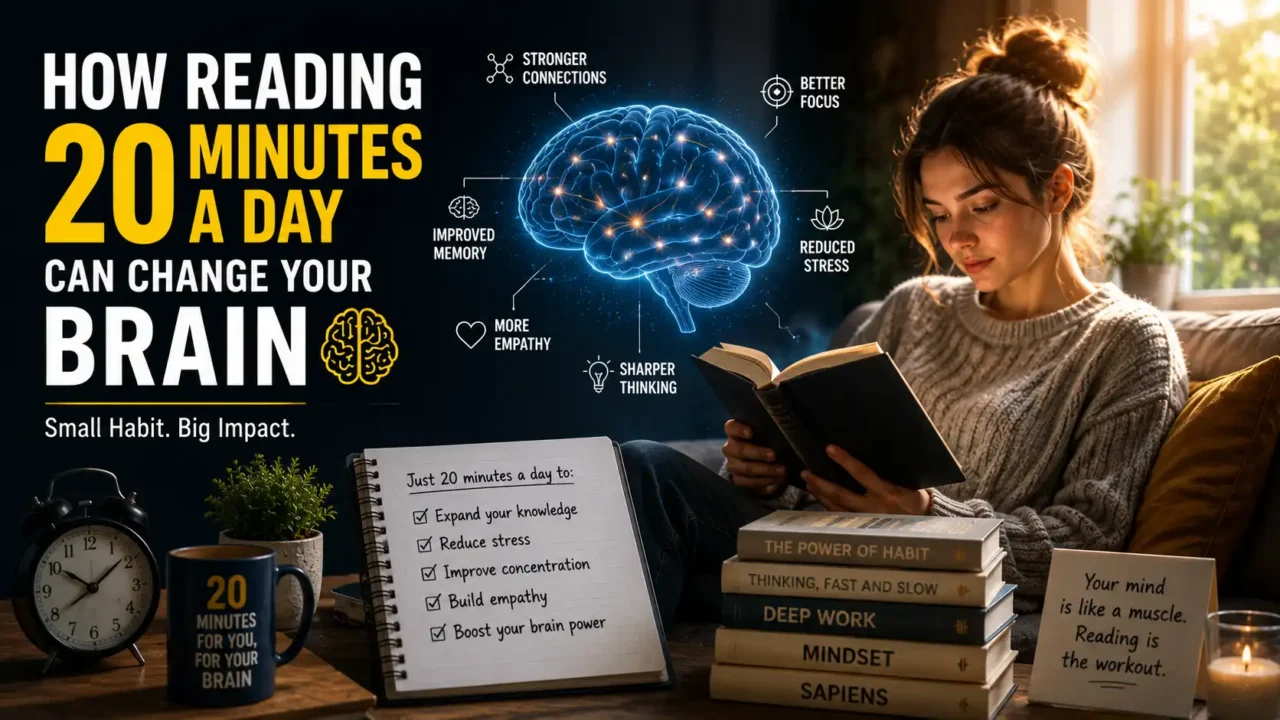
Reading is often described as a hobby, a form of entertainment, or a way to acquire knowledge. While all of those descriptions are true, they overlook something more profound. Reading is also one of the most effective forms of mental training available. Every time you read a thoughtful book, your brain performs an extraordinary series of tasks: it interprets language, forms mental images, connects new ideas with existing knowledge, evaluates arguments, predicts outcomes, and stores information for future use. Few everyday activities engage so many cognitive systems simultaneously.
The remarkable part is that these benefits do not require hours of study. Research in neuroscience and psychology suggests that a consistent reading habit—even as little as 20 minutes a day—can strengthen attention, improve memory, expand vocabulary, increase empathy, and encourage deeper thinking over time. Like physical exercise, the greatest changes do not come from a single intense session but from regular repetition.
The question is not whether reading changes the brain. Modern neuroscience has shown that it does. The more interesting question is how such a small daily habit can gradually reshape the way we think, learn, and understand the world.
Reading Builds a More Adaptable Brain
The human brain possesses an extraordinary characteristic known as neuroplasticity, the ability to reorganize itself by forming and strengthening neural connections throughout life. Every new skill, experience, and piece of knowledge slightly alters the brain’s structure and function. Reading is particularly effective because it combines multiple forms of mental activity at once.
When reading a nonfiction book, the brain analyzes ideas, compares information with prior knowledge, and evaluates evidence. Reading fiction activates many of the same language networks while also engaging regions involved in imagination, emotion, and social understanding. The brain is not merely decoding words on a page; it is constructing entire worlds, anticipating events, and simulating experiences.
Over months and years, this repeated mental exercise strengthens the neural pathways responsible for learning and reasoning. Just as muscles become stronger through repeated resistance, cognitive abilities improve through regular intellectual challenge.
Deep Reading Improves Attention in a Distracted World
One of the greatest challenges of modern life is maintaining sustained attention. Smartphones, social media, notifications, and endless streams of digital content encourage constant switching between tasks. Over time, many people become accustomed to consuming information in short fragments rather than following a single complex idea from beginning to end.
Reading books requires the opposite.
To understand an argument or follow a narrative, the mind must remain engaged for an extended period. This sustained concentration trains attentional control, allowing the brain to resist distractions more effectively. Instead of reacting to every new stimulus, readers practice directing their focus voluntarily.
Even reading for twenty uninterrupted minutes each day strengthens this ability. The improvement may feel subtle at first, but consistent practice gradually increases the capacity for deep concentration, benefiting work, study, and problem-solving far beyond reading itself.
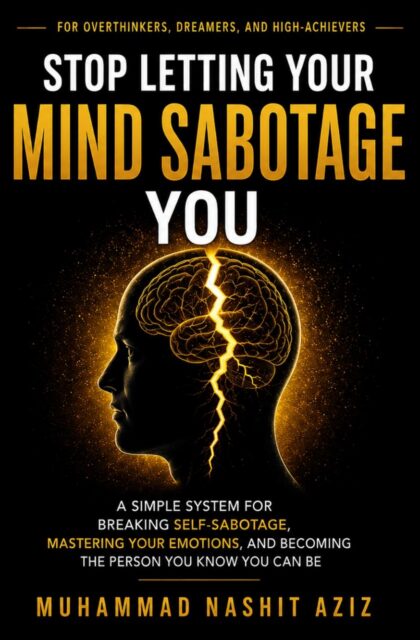
10 Life-Changing Psychology Books Everyone Should Read
Memory Improves Through Meaningful Connections
Memory is not strengthened simply by exposing the brain to information. Lasting memory develops when new ideas connect with existing knowledge.
Books naturally encourage this process. A chapter builds upon previous chapters, arguments develop logically, and concepts reinforce one another over time. As readers compare unfamiliar ideas with their own experiences, the brain forms richer networks of association that make information easier to retrieve later.
This differs significantly from consuming isolated facts through short online posts. Fragmented information often disappears quickly because it lacks meaningful context. Books provide structure, allowing knowledge to become part of an interconnected mental framework rather than remaining as disconnected pieces of information.
The result is not merely remembering more facts but developing a deeper understanding of how ideas relate to one another.
Reading Strengthens Empathy and Perspective
One of the most fascinating discoveries in psychology is that reading—particularly literary fiction—can improve a person’s ability to understand the thoughts, emotions, and motivations of others. Researchers suggest that following complex characters encourages readers to practice what psychologists call theory of mind, the ability to recognize that other people possess beliefs, intentions, and experiences different from our own.
Even nonfiction contributes to this process by exposing readers to unfamiliar cultures, historical events, scientific discoveries, and philosophical perspectives.
Every book expands the boundaries of personal experience.
A person can learn about entrepreneurship without founding a company, understand historical events without living through them, or explore different cultures without traveling internationally. Reading allows the brain to simulate experiences that would otherwise remain inaccessible.
Over time, this broadens perspective and encourages more thoughtful, less reactive decision-making.
Small Daily Habits Create Compounding Results
The greatest mistake people make is assuming that meaningful change requires dramatic effort.
Twenty minutes of reading may not feel transformative after a single day. Yet cognitive development follows the principle of accumulation rather than immediate reward. Reading twenty minutes every day adds up to more than 120 hours of focused learning each year.
More importantly, knowledge compounds.
A book about psychology improves understanding of behavior. That understanding makes the next book about leadership more meaningful. A book on economics changes how news articles are interpreted. History provides context for current events. Philosophy sharpens critical thinking across every subject.
Each book increases the value of the books that follow.
The brain gradually becomes better equipped to recognize patterns, connect ideas, and evaluate complex information because it possesses a richer foundation of knowledge upon which new learning can build.
The Best Self-Improvement Books That Actually Change Behavior
Building a Reading Habit That Lasts
Many people fail to establish a reading habit because they focus on ambitious goals rather than consistent routines. Attempting to read several hours every day often leads to discouragement when life becomes busy.
A smaller commitment proves far more sustainable.
Reading twenty minutes after breakfast, before bed, or during a lunch break creates a predictable routine that gradually becomes automatic. Removing distractions, keeping a book easily accessible, and choosing subjects that genuinely spark curiosity also increase the likelihood of consistency.
The objective is not to finish as many books as possible.
It is to make reading a permanent part of daily life.
Over months, consistency produces greater benefits than occasional periods of intense effort followed by long interruptions.
Conclusion
Reading twenty minutes a day may seem like a modest habit, but its long-term effects extend far beyond acquiring information. Regular reading strengthens attention in an increasingly distracted world, reinforces memory through meaningful connections, expands vocabulary, develops empathy, and encourages the kind of deep thinking that modern life often discourages.
Perhaps the most important transformation is not neurological but intellectual.
Every book changes how future books are understood. Every new idea reshapes existing knowledge. Every reading session quietly expands the mental framework through which the world is interpreted.
The brain becomes what it repeatedly practices.
Choosing to read for just twenty minutes each day is ultimately choosing to invest in clearer thinking, broader perspective, and lifelong learning. The pages may close at the end of each session, but the changes they create continue long afterward.
Call to Action
Reading is one of the few daily habits that strengthens knowledge, attention, and perspective at the same time. Continue exploring the Aziz Publishing Knowledge Library for evidence-based articles on books, psychology, productivity, habits, and lifelong learning to help you think more clearly and grow more intentionally.