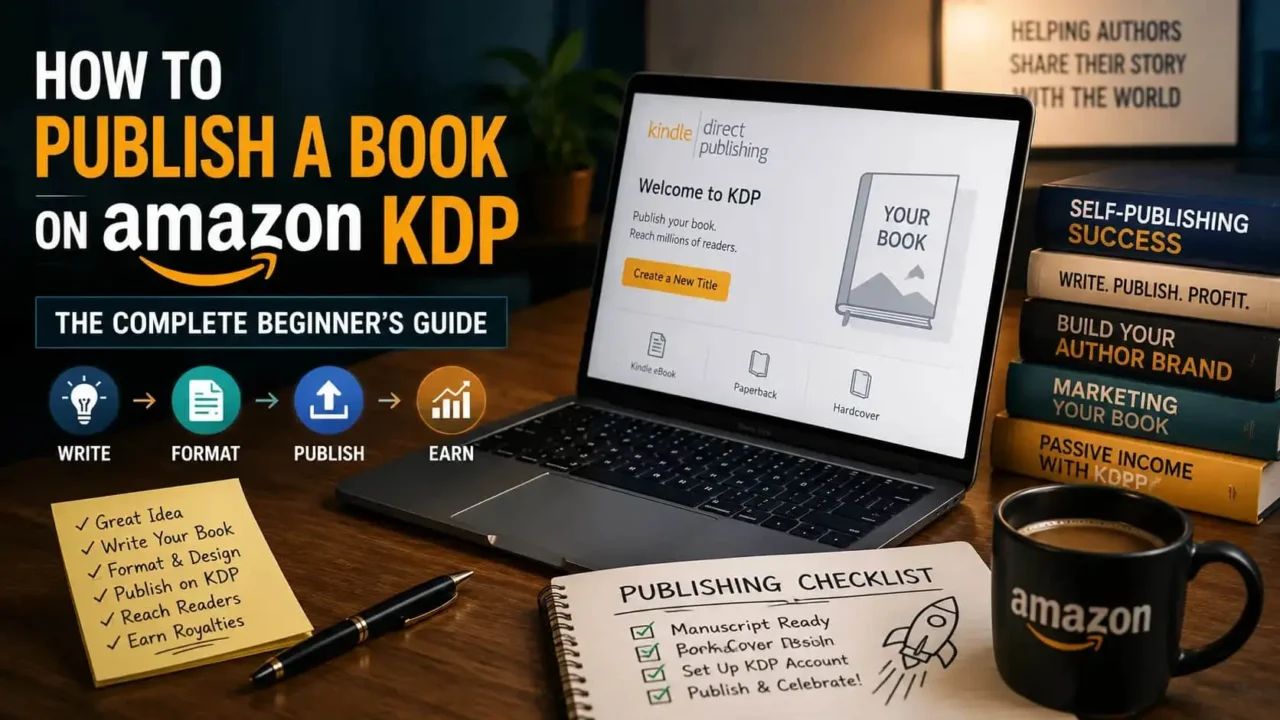
Publishing a book no longer requires a literary agent, a traditional publishing contract, or thousands of dollars in upfront investment. Today, anyone with a well-written manuscript can publish a book that becomes available to millions of readers worldwide through Amazon Kindle Direct Publishing (KDP). This shift has transformed publishing from an industry controlled by gatekeepers into one where authors have direct access to the global marketplace.
Yet publishing on Amazon KDP is not as simple as uploading a document and waiting for sales. Every day, thousands of new books appear on Amazon, and only a small percentage attract consistent readers. The difference is rarely luck. It usually comes down to understanding how KDP works, preparing a professional product, and making thoughtful publishing decisions before pressing the “Publish” button.
This guide explains the complete Amazon KDP publishing process for beginners in 2026. Rather than focusing only on the technical steps, it also explores why each decision matters and how to avoid the mistakes that prevent many first-time authors from succeeding.
Step 1: Finish the Right Book Before Thinking About Publishing
Many first-time authors become excited about cover design, pricing, or marketing before completing a strong manuscript. In reality, every successful publishing strategy begins with a book that delivers genuine value to readers.
Whether writing fiction or nonfiction, ask a simple question before moving forward:
Who is this book for, and what experience or transformation should readers gain from it?
A clear purpose shapes every chapter, improves reader satisfaction, and increases the likelihood of positive reviews. Before publication, revise the manuscript carefully, eliminate unnecessary repetition, and consider professional editing if possible. Readers quickly notice poor grammar, weak structure, or inconsistent formatting, and those issues often affect reviews more than the quality of the ideas themselves.
Publishing is permanent in the eyes of many readers. Taking extra time before release usually produces better long-term results than rushing to market.
Step 2: Prepare Professional Interior and Cover Files
Amazon KDP accepts both ebooks and print books, but each requires properly formatted files. The manuscript should have consistent headings, margins, page breaks, fonts, and spacing. If publishing a paperback or hardcover, the interior should match the selected trim size and printing specifications.
The cover deserves equal attention.
Readers make judgments within seconds, and your cover is often the first impression they receive. An effective cover communicates genre, professionalism, and quality immediately. A business book should look different from a fantasy novel, and a psychology book should create different expectations than a cookbook.
A professional cover does not guarantee sales, but an amateur cover can significantly reduce them, regardless of how strong the manuscript may be.
The Biggest Mistakes First-Time Authors Make
Step 3: Create Your Amazon KDP Book Listing
Uploading files is only one part of publishing. The book’s product page strongly influences whether readers decide to click, read the description, and ultimately purchase.
Begin with a clear, searchable title and, where appropriate, a descriptive subtitle containing relevant keywords. Your book description should explain what readers will learn or experience while emphasizing benefits rather than simply summarizing chapters.
Choosing the correct categories and keywords is equally important. These help Amazon understand where your book belongs and which readers are most likely to find it. Effective keywords describe the problems readers are trying to solve rather than isolated words. For example, “time management for students” is generally more useful than simply “productivity.”
Good metadata improves discoverability without relying on advertising alone.
Step 4: Understand ISBNs, Copyright, and Publishing Rights
Many beginners worry about ISBNs, but Amazon simplifies this process. Ebook editions published through KDP do not require an ISBN. Paperback and hardcover editions may use either a free ISBN provided by Amazon or one purchased independently if the author wants greater publishing flexibility.
Copyright is another common source of confusion.
In most countries, including the United States, copyright exists automatically once an original work is created in tangible form. Publishing through Amazon does not transfer ownership of your intellectual property. Authors generally retain copyright while granting Amazon the rights necessary to distribute the book through its platform.
Understanding these distinctions helps authors make informed decisions about future publishing opportunities.
Step 5: Set Pricing and Distribution Carefully
Pricing affects more than royalties.
A very low price may reduce perceived value, while an excessively high price can discourage potential buyers. Research books within your category to understand typical pricing before making a decision.
Amazon also allows authors to choose where books will be distributed. Some authors publish exclusively through Amazon’s Kindle Unlimited program, while others prefer wider distribution through multiple retailers. Neither approach is universally better. The appropriate choice depends on long-term publishing goals, marketing strategy, and target audience.
Think beyond immediate sales.
Pricing and distribution influence discoverability, readership, and future opportunities.
Step 6: Review Everything Before Publishing
One of the most common mistakes first-time authors make is rushing through the final review process.
Before approving publication, carefully examine the ebook preview and print preview. Look for formatting problems, missing images, inconsistent fonts, incorrect page breaks, and typographical errors. Read the product description as though you were encountering the book for the first time.
Small mistakes can reduce reader confidence even when the manuscript itself is excellent.
Professional publishing depends on careful attention to detail.
How to Write a Nonfiction Book People Actually Finish
Publishing Is Only the Beginning
Many new authors believe that publishing marks the end of the journey.
In reality, it marks the beginning.
Once your book becomes available, your attention should gradually shift toward helping readers discover it. This may include building an author website, writing articles related to your subject, creating an email newsletter, engaging with readers on social media, requesting honest reviews, or appearing on podcasts and interviews.
Successful independent authors rarely rely on a single launch week.
Instead, they build long-term visibility by consistently creating valuable content and developing trust with their audience.
Every book becomes easier to market when readers already know the author behind it.
Conclusion
Amazon KDP has made publishing more accessible than at any other time in history. Authors now have the opportunity to share their ideas with readers around the world without waiting for traditional publishing approval. However, accessibility should not be confused with simplicity. Successful publishing requires thoughtful preparation, professional presentation, strategic positioning, and a commitment to continuous improvement.
The technical process of publishing a book can be completed in a single day.
Building a meaningful publishing career takes much longer.
Every decision—from manuscript quality and cover design to pricing, keywords, and reader engagement—contributes to the long-term success of your work.
Publishing your first book is not simply about making it available online.
It is about beginning a relationship with readers built on trust, value, and consistently high-quality writing.
Call to Action
Publishing your first book is one of the most rewarding creative milestones, but long-term success comes from continually improving your craft, understanding your readers, and learning how the publishing industry works. Explore the Aziz Publishing Knowledge Library for practical guides on writing & self-publishing, book marketing, productivity, and building a sustainable career as an independent author.