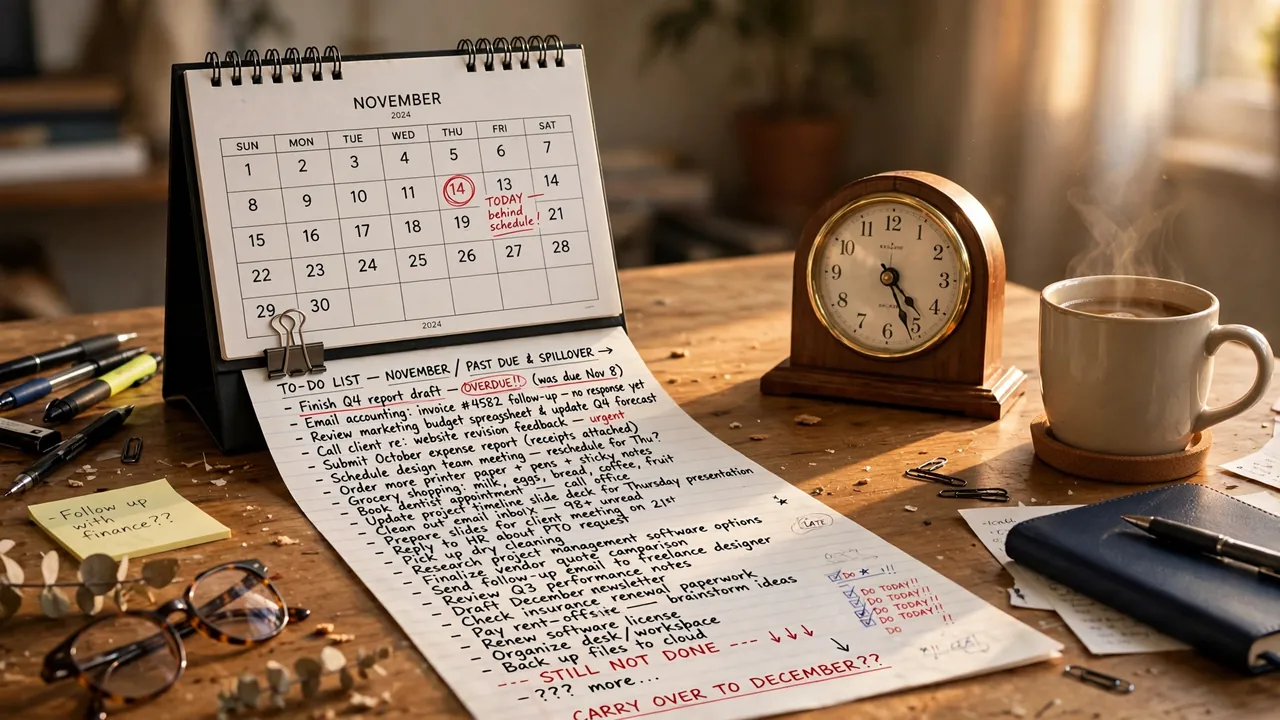
In 2026, several productivity guides returned to a bias first named in 1979: smart people keep underestimating how long their own work will take. Here is what the planning fallacy is, the thesis study that proved it, and a practical fix that uses your own history instead of your hopes.
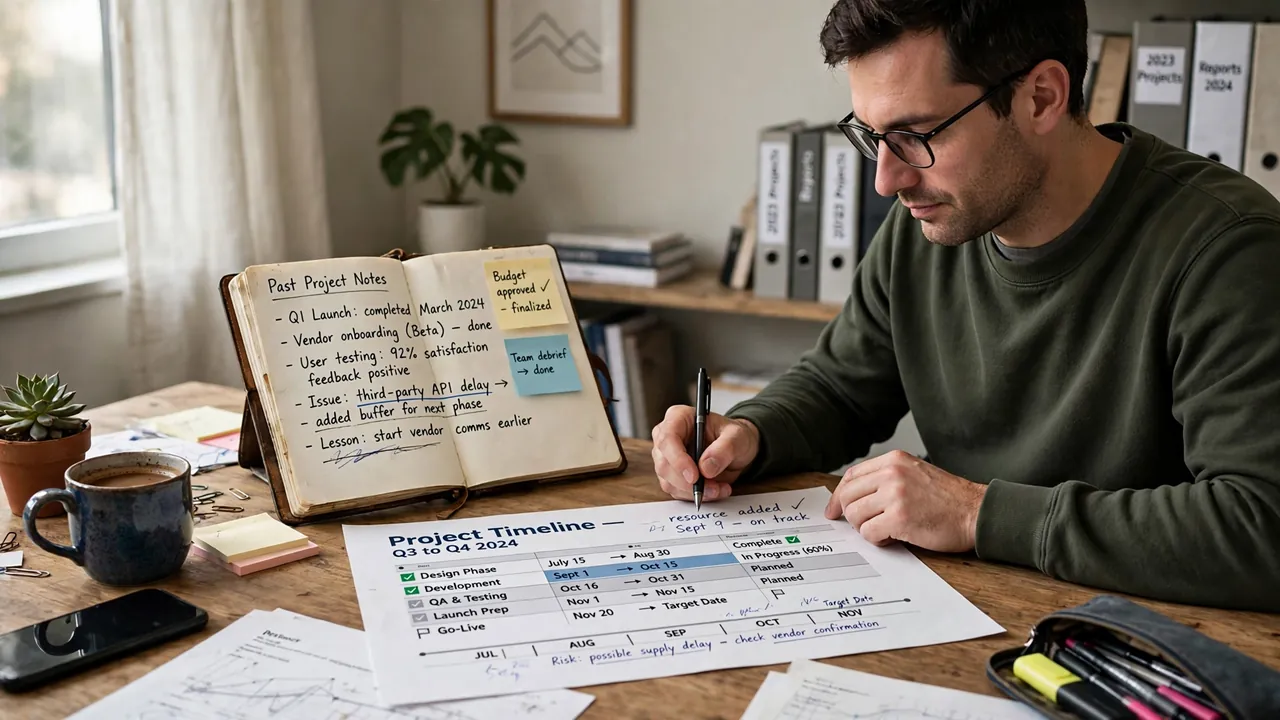
The Thesis Study That Exposed the Bias
Daniel Kahneman and Amos Tversky coined the term planning fallacy in 1979. They described it as a systematic tendency to underestimate the time, cost and risk of future work, even when similar work has run late before. The cleanest demonstration came fifteen years later, from Roger Buehler, Dale Griffin and Michael Ross, who studied 37 psychology students writing honours theses.
The students were asked to predict when they would finish, and their average realistic prediction was 33.9 days. Their average actual time was 55.5 days, a gap of 21.6 days, and only about 30 percent finished by the date they had predicted. Even their worst case predictions, an average of 48.6 days if everything went badly, still fell short of reality. That is what makes the planning fallacy a bias rather than bad luck: the error runs in one direction, again and again, as shown in a 2026 guide to the planning fallacy.
The same pattern appears far beyond student essays. The Sydney Opera House was estimated to take four years and cost 7 million dollars, and it took fourteen years and cost 102 million dollars. Big projects and small tasks share the same flaw, because the flaw is in how the human mind builds a forecast, not in the size of the job.
Why the Inside View Beats Your Own History
Kahneman drew a sharp line between two ways of predicting. The inside view plans from the details of this specific project: your skills, your team, your plan, and the smooth story of how it should unfold. The outside view asks a different question: what usually happens when people attempt something like this. The planning fallacy thrives because almost everyone defaults to the inside view and never checks the outside view.
When Buehler and his colleagues asked students to think aloud while estimating, about three quarters of their thoughts were future scenarios of the plan going smoothly. Only about 7 percent touched on relevant past experience, and only about 3 percent considered anything that might go wrong. The imagined version of the task had no illness in it, no late delivery, and no week where energy simply ran low. That imagined version then became the deadline, and the deadline then looked like a promise.
Optimism plays its part, but it is not the whole story. People also underestimate their own completion times more than other people’s, and motivation adds pressure to fit the work into the time available rather than the time it truly needs. The result feels personal, like a failure of discipline, when it is really a predictable error in forecasting, a point explained in a 2026 guide to why you underestimate time.
Where the Planning Fallacy Shows Up Most
The bias is strongest where the work is new, important, and hard to break into pieces, because those are the jobs where the inside view feels most convincing and past data feels least relevant.
- Home projects: A weekend renovation becomes a month of evenings, because each step hides a trip to the store, a wrong part, or a drying time nobody counted.
- Work launches: A product launch slips because approval, testing, and fixes were each assumed to take a day, when each usually takes several.
- Writing and study: An essay planned for two hours takes five, because research, drafting, and editing were counted as one smooth task instead of three separate jobs.
- Moving and travel: A move planned for one day stretches into a weekend, because packing, cleaning, and unpacking were never listed as full tasks.
- Software and creative work: A feature estimated in days ships in weeks, because the unknown parts of the work only reveal themselves once building starts.
Notice what these cases share: the plan counted the work itself but not the friction around it. Waiting, revising, fixing, and recovering are real work too, and a plan that leaves them out will always look fast on paper and late in real life. That is also why the bias pairs so naturally with time blocking explained, where the calendar forces you to give friction a slot, and with ivy lee method explained, where a short daily list limits how much optimism can fit into one day.
How to Estimate Like an Outsider
The fix for the planning fallacy is not to try harder or to guess lower. It is to plan like an outsider looking at your own project, using real past data instead of a smooth story about the future. Psychologists call this reference class forecasting, and it has three simple steps.
First, find your reference class: three to five similar tasks you have actually finished, not similar tasks you wish you had finished. Second, write down how long each one truly took, including the waiting and fixing time. Third, use that range as your starting estimate, not the best case you can imagine. If similar reports took four to six days, plan for five days plus a buffer, even if this report feels like a three day job. A plain definition of the bias and this outside view method is given in a cognitive psychology guide to the planning fallacy.
Then protect the estimate with two habits. Add an explicit buffer of 25 to 50 percent for unfamiliar work, and break the task into smaller steps before you estimate at all, because a single big number hides the friction that small steps reveal. Finally, use an if then plan for the most likely delay: if approval takes more than two days, then I will start the next section while I wait. That plan improves both the estimate and the execution, because it turns a surprise into a step you already chose.
- The planning fallacy is the systematic tendency to underestimate the time, cost and risk of future work, named by Kahneman and Tversky in 1979.
- In the 1994 thesis study, 37 students predicted an average of 33.9 days, actually took 55.5 days, and only about 30 percent finished by their predicted date.
- The cause is the inside view: planning from the details of this project while ignoring the base rate of similar projects, with most thoughts spent on a smooth future rather than on past experience.
- The fix is reference class forecasting: find three to five similar finished tasks, use their real times as your starting estimate, and add a buffer for unfamiliar work.
- Break large tasks into smaller steps before estimating, and write an if then plan for the most likely delay, so a surprise becomes a step you already chose.
Frequently Asked Questions
What is the planning fallacy in simple terms?
The planning fallacy is the tendency to underestimate how long, expensive, or difficult a future task will be, even when you have done similar tasks before and they ran late. It is a systematic bias, not random bad luck, because the error almost always runs in the optimistic direction.
Why do smart people still fall for the planning fallacy?
Expertise does not remove it, because the inside view feels like careful planning. Experts build a detailed story of their own project and skip the base rate of similar projects, so their forecast stays optimistic even when their own history says otherwise.
What is reference class forecasting?
Reference class forecasting is the outside view method for estimating: find similar tasks that are already finished, record how long they truly took, and use that range as your starting estimate for the new task. It replaces a best case story with real past data.
How much buffer should I add to an estimate?
For familiar work, a small buffer of 10 to 20 percent is often enough. For unfamiliar work, add 25 to 50 percent, and break the task into smaller steps first, because small steps reveal waiting, revising, and fixing time that a single big estimate hides.
Final Thoughts
Missing a deadline does not prove you are lazy or undisciplined. More often it proves your estimate was built from a smooth story instead of your own history. Plan like an outsider, add a buffer, and let your past projects set the date, and your plans will start to feel less like promises and more like forecasts you can trust.
Call to Action
If this guide helped you see why your estimates keep slipping, share it with someone whose weekend project always becomes a month. Explore the Aziz Publishing Knowledge Library for more guides on productivity, including deliberate practice explained and parkinsons law explained.

