Wellness influencers swear cold showers fixed their anxiety, boosted their mood, and changed their life. The actual research tells a more modest, more honest story. Here’s what the evidence genuinely supports, and where the hype has outrun the science.
Where the Cold Shower Trend Actually Came From
Cold water immersion has roots in traditional practices like Nordic winter swimming and Japanese misogi rituals, long before it became a wellness trend. It gained modern momentum through figures like Wim Hof, whose method combines cold exposure with specific breathing techniques and has attracted genuine scientific curiosity. Public health messaging campaigns have since popularized simple cold showers as an accessible version of these older practices. This popularity, though, has outpaced the amount of rigorous research actually available to support it.
What Happens Physiologically During Cold Exposure
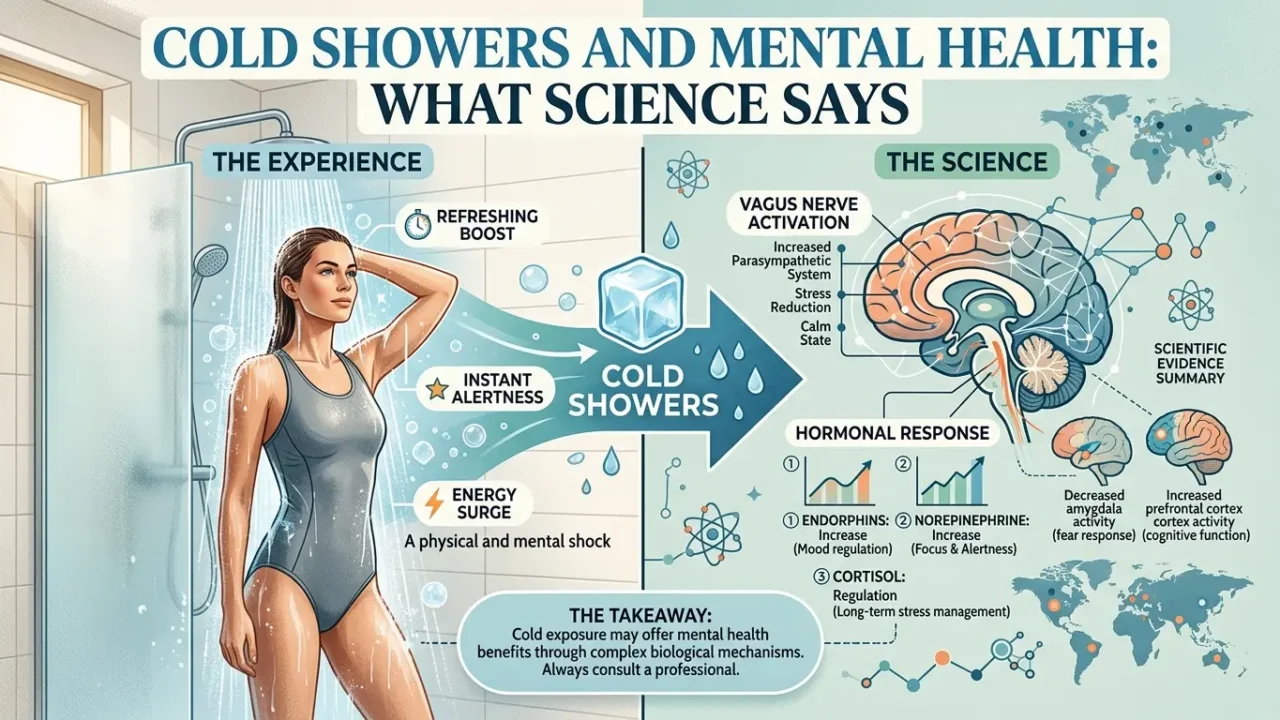
Cold exposure activates your sympathetic nervous system, triggering the release of noradrenaline, adrenaline, and beta-endorphins into your bloodstream. The skin’s high density of cold receptors sends an intense wave of electrical signals to the brain, which researchers believe may produce mood-related effects. This is one proposed mechanism behind reported cold shower benefits, though researchers note it remains a hypothesis rather than a fully confirmed pathway. Understanding this mechanism helps explain why cold exposure produces such a strong initial reaction throughout the body.
Why You Feel Bad for No Reason: The Psychology
The Research on Depression Specifically
A frequently cited 2008 study proposed adapted cold showers, brief 2 to 3 minute sessions at around 68°F, as a potential depression treatment based on this neuroendocrine mechanism. However, the study’s own authors acknowledged their practical testing involved a statistically insignificant number of people, most of whom didn’t even have diagnosable depression. The paper explicitly called for wider, more rigorous studies to actually test the hypothesis properly. This is one of the most cited papers in the entire cold shower conversation, and it was explicitly preliminary from the start.
The Research on Anxiety Is Even Thinner
Current evidence on cold showers specifically for anxiety remains limited, with researchers noting that more rigorous studies are needed before drawing firm conclusions. Some proposed mechanisms, like activation of the diving response, have shown promise for reducing panic symptoms in related research, but direct evidence for standard cold showers specifically remains sparse. Much of the existing research on anxiety draws on related practices, like cold water swimming, rather than home showers specifically. This distinction matters, since swimming involves additional variables, exercise, social context, and duration, that a quick home shower doesn’t replicate.
What More Recent Trials Have Actually Found
A more recent randomized trial compared a cold-water and breathing intervention to a warm-shower control group in women with high stress and depressive symptoms. Both groups showed significant, sustained improvements in depression and anxiety symptoms, but researchers found no meaningful difference between the cold and warm conditions overall. The cold-water group did report greater reductions specifically in daily stress rumination, a narrower but genuine finding worth noting. This pattern, real but modest and inconsistent effects, shows up repeatedly across the current body of research.
Why It’s Hard to Isolate Cold Exposure’s Specific Effect
Many cold exposure studies combine it with breathing techniques, structured routines, or social elements, making it genuinely difficult to isolate what’s actually driving any reported benefit. A sense of accomplishment from completing something deliberately uncomfortable could itself explain part of the mood boost, separate from any physiological cold-specific mechanism. Researchers have specifically flagged this confound as a reason firm conclusions remain elusive. Ongoing systematic reviews are underway specifically to address this gap and separate genuine cold-specific effects from these confounding factors.
Why Your Brain Keeps Expecting Something Bad to Happen
What This Means If You Want to Try It
If you’re generally healthy and curious, brief cold showers appear reasonably safe for most people and carry minimal reported side effects in existing research. Treat any mood benefit as a possible, modest bonus rather than a proven mental health treatment, since the current evidence simply doesn’t support that stronger claim yet. If you have a heart condition or other relevant health concerns, check with a doctor first, since cold exposure does trigger real cardiovascular responses. Setting realistic expectations prevents disappointment and keeps you from replacing genuinely evidence-based treatment with an unproven wellness trend.
The Honest Bottom Line
The evidence for cold showers and mental health is genuinely mixed, some studies show real but modest effects, others show no meaningful difference from warm water at all. What exists so far is promising enough to justify further research, but nowhere near strong enough to call cold showers a proven depression or anxiety treatment. This is a case where the wellness hype has clearly outpaced what rigorous science can currently confirm. Treating it as a plausible, low-risk experiment rather than a guaranteed fix is the most accurate way to approach it.
Final Thoughts
Cold showers may offer a modest mood boost for some people, but current research doesn’t support the dramatic mental health claims common in wellness content. The honest picture is promising but preliminary, worth trying cautiously, not worth replacing established treatment.
This article discusses mental health research from a general, informational perspective. If you’re experiencing depression or anxiety, please consider reaching out to a mental health professional for personalized support.
Call to Action
If you’re curious, try a short cold shower this week and track how you actually feel, rather than assuming the hype applies to you automatically. If this breakdown helped you separate fact from wellness marketing, share it with someone currently convinced cold showers are a cure-all. Continue exploring the Aziz Publishing Knowledge Library for evidence-based articles on psychology, mindset, habits, productivity, and emotional well-being. The more you understand how your mind works, the more intentionally you can shape the way you think, decide, and live.

