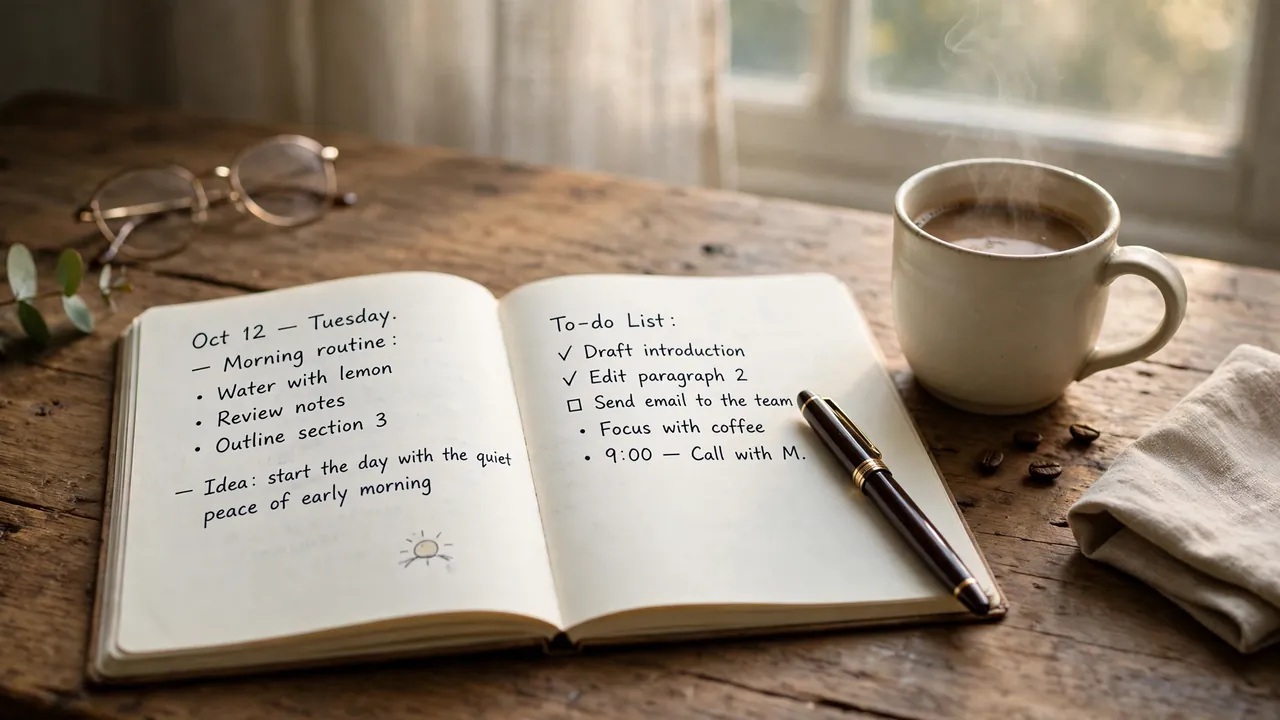
Three pages of handwriting, done before the day has a chance to interrupt you, can change how you think and write. That is the whole promise of morning pages, a daily practice from Julia Cameron’s The Artist’s Way that has quietly survived for more than thirty years. Here is what the practice actually is, what the research says about it, and how to start tomorrow morning.
What Morning Pages Actually Are
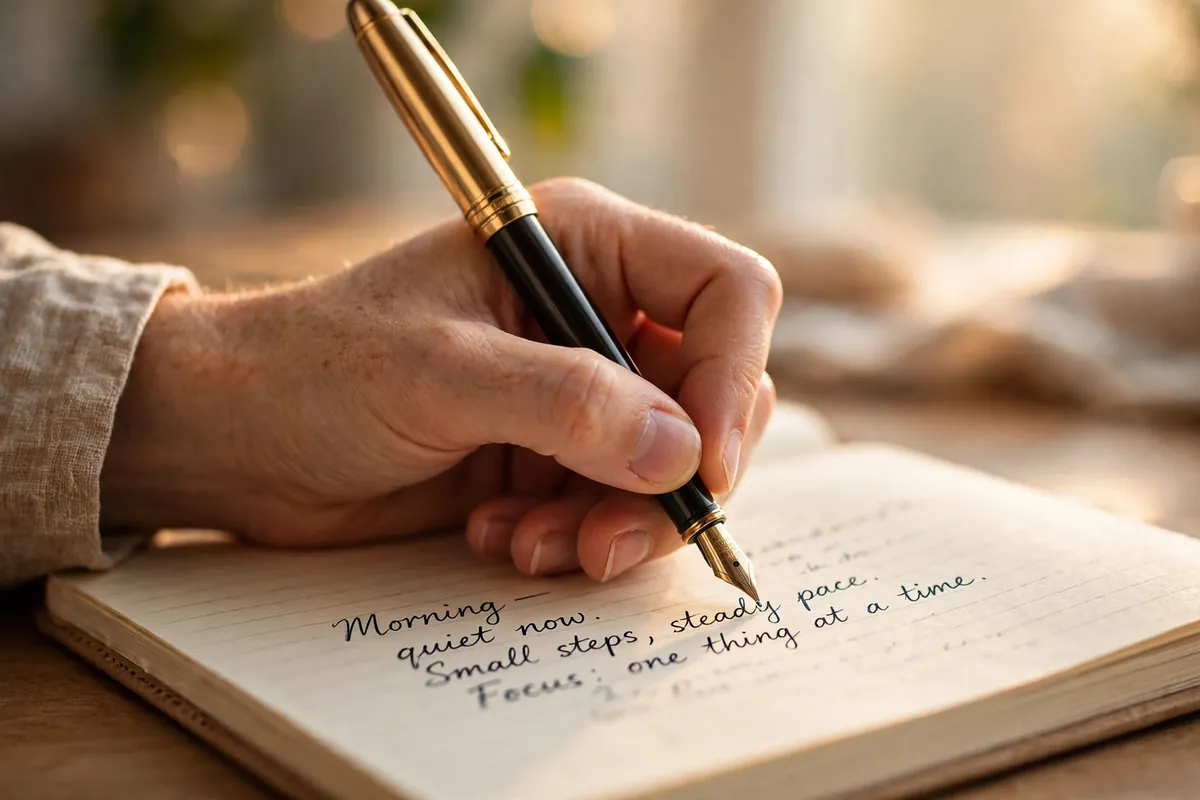
Morning pages are three pages of longhand, stream of consciousness writing done first thing in the morning, before email, social media, or conversation. You write about absolutely anything that is in your head, with no topic, no structure, and no intention of anyone ever reading it. The only rule that matters is that you keep the pen moving until the three pages are full.
The pages are not a diary, a gratitude list, or a draft of anything. Cameron is specific about this: grammar, spelling, and coherence do not matter, and quantity matters more than quality. You are not trying to produce good writing. You are not even trying to make sense. You are simply following your thoughts onto the page, as described in a complete guide to Julia Cameron’s morning pages practice.
Three pages is roughly 750 words, and most people finish in twenty to thirty minutes. The length is deliberate. The first page usually holds the obvious stuff, the complaints and the to do list. By the third page, the mental clutter has thinned out, and the writing often turns more honest and more surprising.
Where the Practice Comes From
Julia Cameron introduced morning pages in The Artist’s Way, her 1992 book about creativity and creative recovery. She developed the practice while teaching blocked artists and writers, and she made it one of the two core tools of her twelve week course. The other tool is the weekly Artist Date, a solo outing taken purely for pleasure, as explained in a guide to the psychology of the morning page.
Cameron calls the pages “draining the swamp.” The image is simple: your mind wakes up full of leftover worries, half formed plans, and the residue of yesterday, and the pages drain that murk away so clearer thoughts can surface. She observed that her students returned to their creative work more freely after the practice became a habit, not because the pages contained anything useful, but because the act of writing them had quieted something.
That something has a name in Cameron’s work: the censor. It is the inner critic that shows up most powerfully when you are trying to produce something considered, something you expect others to see. Morning pages bypass it precisely because they are not trying to be anything worth reading.
Why Writing by Hand Matters
Cameron insists the pages must be handwritten, and the insistence is not nostalgia. Handwriting is slower than typing, which forces you to stay present with each word instead of outrunning your own thoughts. You also cannot easily delete. The mess stays on the page, and that teaches tolerance for imperfection, a skill many anxious and perfectionistic people desperately need.
The science backs up the distinction. A 2025 review in Life, published by MDPI, confirmed that handwriting engages broader neural networks than typing, including the motor cortex, the visual word form area, and Broca’s area, producing deeper cognitive processing. Typing is faster than thinking for many people, which lets the conscious mind stay in control. Handwriting slows the whole process down until the thinking and the writing move at the same speed.
The timing matters just as much as the method. Writing first thing in the morning catches thoughts before the analytical mind is fully engaged and before the day’s demands have set their priorities. You are putting your own words on the page before the day fills your head with everyone else’s, as explained in a guide to what morning pages are and why they help.
What the Research Actually Says
Morning pages were not designed as a scientific intervention, so there is no clinical trial of the practice itself. But the mechanisms behind it have real research support, and the honest case for the pages rests on that support rather than on Cameron’s claims alone.
The strongest support comes from James Pennebaker’s expressive writing research, which began at the University of Texas in the 1980s. Pennebaker found that people who wrote about emotional experiences for 15 to 20 minutes across several consecutive days reported better mood, fewer physical symptoms, and improved working memory than people who wrote about superficial topics. The effect was not large in any single study, but it has been replicated across many populations and circumstances.
Morning pages sit adjacent to this research rather than squarely within it. The pages are not about a single emotional event, and they are not reviewed afterward. Still, the core mechanism is the same: putting unfiltered thoughts and feelings onto paper tends to reduce their intrusive recurrence. The pages also function as a cognitive dump. On waking, most people carry a residue of dream logic and half formed worries that occupies working memory. Writing it out clears space for the day.
What the research does not support is the idea that morning pages will hand you brilliant ideas or fix writer’s block on their own. They are not a magic cure, and there is no requirement to emerge from your notebook each morning with a life change. Their benefit is regular, unjudged writing time, and that benefit compounds quietly over weeks, not overnight.
How to Start Tomorrow Morning
Starting is deliberately simple, and keeping it simple is part of the point. You need a notebook, a pen, and a morning. Everything else is optional, and adding tools or apps usually makes the practice harder to keep, not easier. It also pairs well with a steady morning routine, as covered in seven morning habits for focus and discipline.
- Keep a notebook by your bed: Put the notebook and pen where you will see them before your phone. If the phone comes first, the pages will not happen. The physical setup is the whole system.
- Write three pages, longhand: Fill three pages, about 750 words, without stopping to think or edit. If you run out of things to say, write that you have run out of things to say, and keep going until the pages are full.
- Do it before anything else: Write before email, news, conversation, or breakfast if you can. The pages work because they catch your mind before the day claims it. Even fifteen minutes earlier than usual is enough to start.
- Do not reread them the same day: Reading the pages right after writing pulls you back into the content and undoes the clearing effect. Let them sit. Cameron suggests waiting weeks before looking back, and only then if you want to.
- Give it two weeks, not two days: The first few mornings feel awkward and boring, and that is normal. Most people who keep the practice report the shift around week two, when the pages stop feeling like a chore and start feeling like a clearing. Judge it then, not on day one.
If three pages feels impossible, start with one page and build up over a week. The habit matters more than the page count at the start. What matters is showing up every morning with a pen, before the world gets a vote on what you think about, as covered in a beginner’s guide to publishing your first book.
- Morning pages are three pages of longhand, stream of consciousness writing done first thing in the morning, about absolutely anything, with no audience and no editing.
- Julia Cameron introduced the practice in The Artist’s Way (1992). She calls it “draining the swamp”: the pages clear mental clutter so clearer thoughts can surface, and they quiet the inner critic Cameron calls the censor.
- Handwriting matters because it is slower than typing and engages broader neural networks. A 2025 review in Life confirmed handwriting produces deeper cognitive processing than typing.
- James Pennebaker’s expressive writing research supports the mechanism: writing about emotional experiences for 15 to 20 minutes across several days reduced stress and intrusive thoughts and improved working memory.
- Start tomorrow: keep a notebook by your bed, write three pages before anything else, do not reread them the same day, and judge the practice after two weeks, not two days.
Frequently Asked Questions
What are morning pages?
Morning pages are three pages of longhand, stream of consciousness writing done first thing in the morning, about absolutely anything. The practice comes from Julia Cameron’s 1992 book The Artist’s Way. You write with no topic, no structure, and no audience, and you do not reread the pages the same day.
Do morning pages have to be handwritten?
Yes, according to Cameron, and the rule has a reason. Handwriting is slower than typing, which forces you to stay present with each word, and you cannot easily delete, which teaches tolerance for imperfection. A 2025 review in Life found handwriting engages broader neural networks than typing, producing deeper cognitive processing.
How long do morning pages take?
Three pages is roughly 750 words, and most people finish in twenty to thirty minutes. The first page usually holds the obvious complaints and to do lists. By the third page the mental clutter has thinned, and the writing often turns more honest. If three pages feels impossible, start with one page and build up over a week.
Do morning pages actually work?
There is no clinical trial of morning pages themselves, but the mechanism has research support. James Pennebaker’s expressive writing studies found that writing about emotional experiences for 15 to 20 minutes across several days reduced stress and intrusive thoughts and improved working memory. The pages are not a magic cure for writer’s block, and their benefit compounds over weeks, not overnight.
Final Thoughts
Morning pages ask for almost nothing: a notebook, a pen, and twenty quiet minutes before the day starts. What they give back is a mind with less clutter in it and a writer who is less afraid of the blank page. That is a small trade, and it is why a practice from 1992 is still being updated and discussed in 2026.
Call to Action
If this guide makes you want to try the practice, share it with someone who has been meaning to write more and never starts. Explore the Aziz Publishing Knowledge Library for more guides on writing and publishing, including how to build a personal brand as a writer and how to write a nonfiction book people actually finish.

